
Lrg1 通过 Cek1 MAP 激酶途径调节白念珠菌中的β(1,3)-葡聚糖掩蔽。
Lrg1 Regulates β (1,3)-Glucan Masking in Candida albicans through the Cek1 MAP Kinase Pathway.
机构信息
Department of Microbiology, The University of Tennessee, Knoxville, Tennessee, USA.
Department of Biochemistry & Cellular and Molecular Biology, The University of Tennessee, Knoxville, Tennessee, USA.
出版信息
mBio. 2019 Sep 17;10(5):e01767-19. doi: 10.1128/mBio.01767-19.
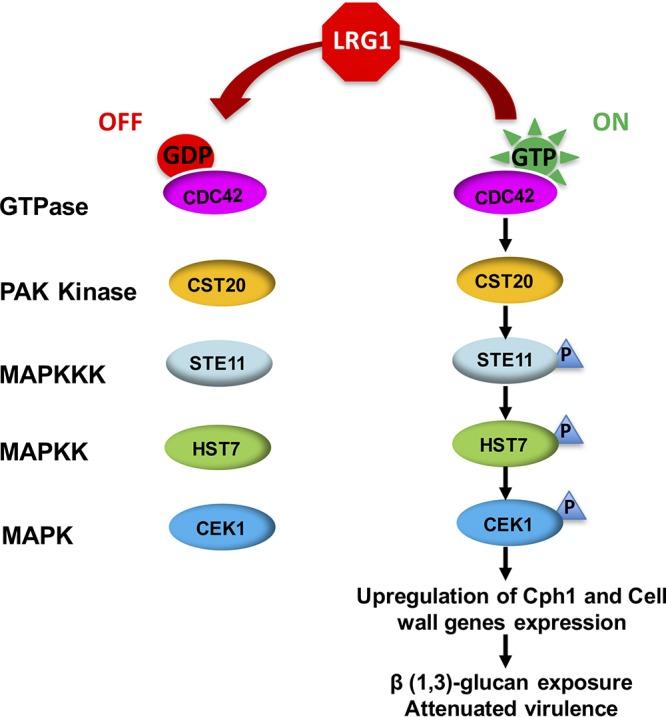
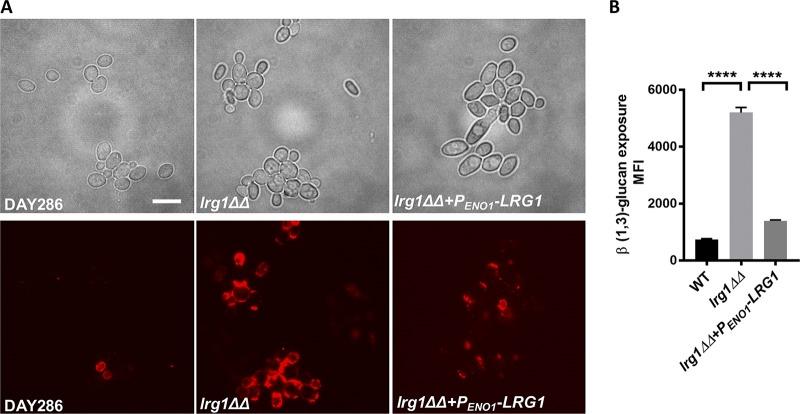
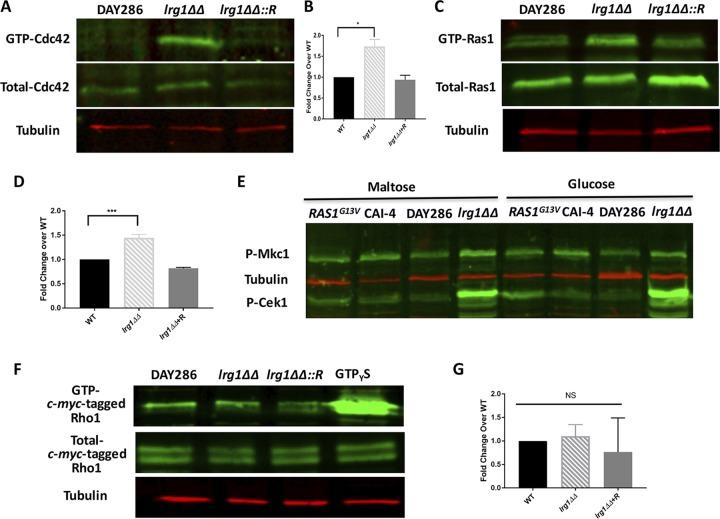
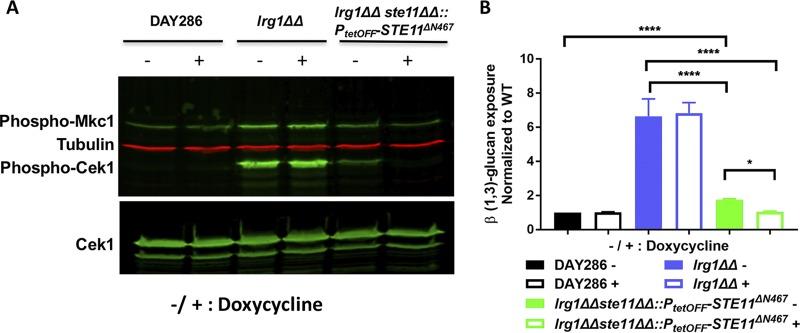
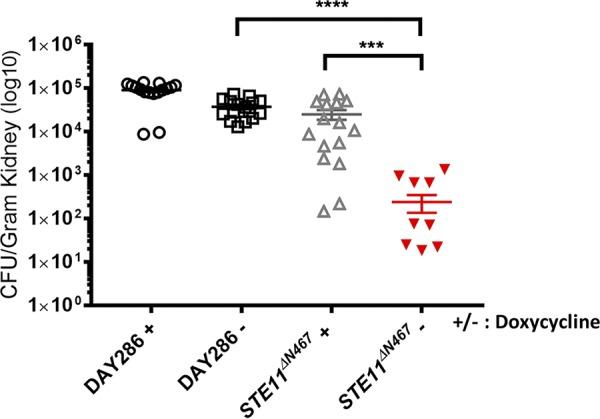
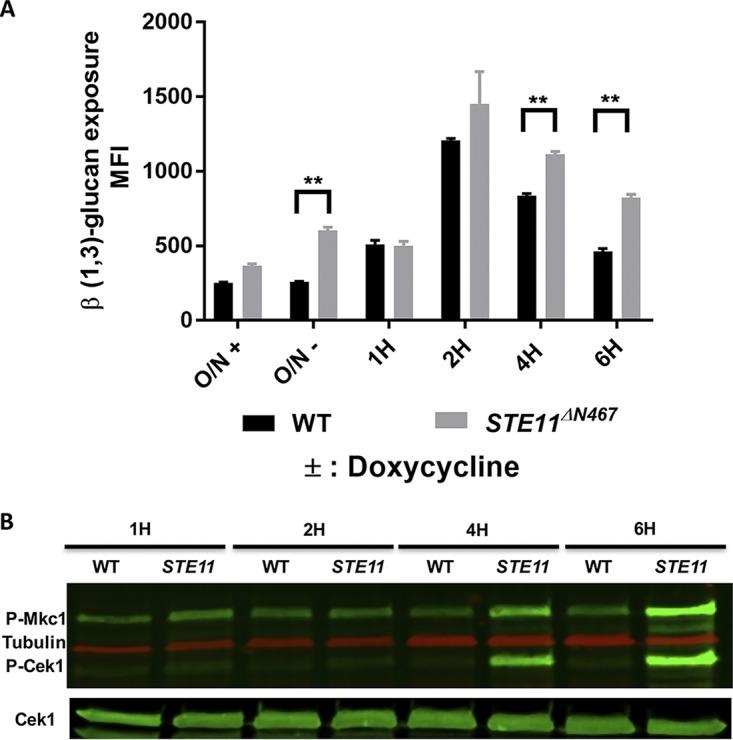
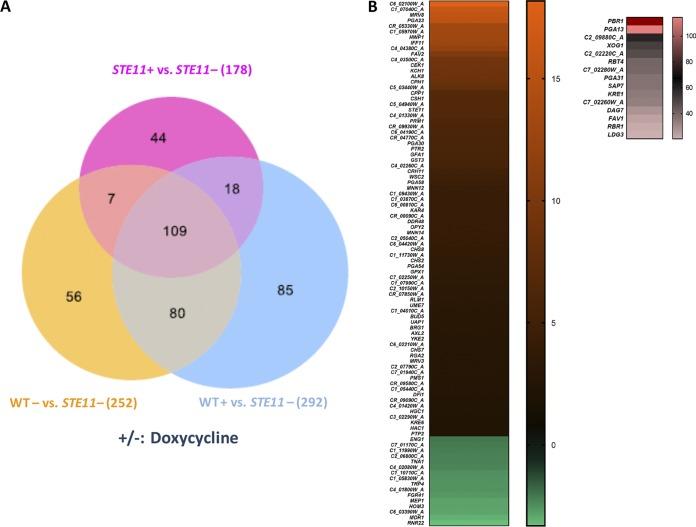
is among the most prevalent opportunistic human fungal pathogens. The ability to mask the immunogenic polysaccharide β (1,3)-glucan from immune detection via a layer of mannosylated proteins is a key virulence factor of We previously reported that hyperactivation of the Cek1 mitogen-activated protein (MAP) kinase pathway promotes β (1,3)-glucan exposure. In this communication, we report a novel upstream regulator of Cek1 activation and characterize the impact of Cek1 activity on fungal virulence. Lrg1 encodes a GTPase-activating protein (GAP) that has been suggested to inhibit the GTPase Rho1. We found that disruption of causes Cek1 hyperactivation and β (1,3)-glucan unmasking. However, when GTPase activation was measured for a panel of GTPases, the mutant exhibited increased activation of Cdc42 and Ras1 but not Rho1 or Rac1. Unmasking and Cek1 activation in the mutant can be blocked by inhibition of the Ste11 MAP kinase kinase kinase (MAPKKK), indicating that the mutant acts through the canonical Cek1 MAP kinase cascade. In order to determine how Cek1 hyperactivation specifically impacts virulence, a doxycycline-repressible hyperactive allele was expressed in In the absence of doxycycline, this allele overexpressed , which induced production of proinflammatory tumor necrosis factor alpha (TNF-α) from murine macrophages. This phenotype correlates with decreased colonization and virulence in a mouse model of systemic infection. The mechanism by which Ste11 causes unmasking was explored with RNA sequencing (RNA-Seq) analysis. Overexpression of Ste11 caused upregulation of the Cph1 transcription factor and of a group of cell wall-modifying proteins which are predicted to impact cell wall architecture. is an important source of systemic infections in humans. The ability to mask the immunogenic cell wall polymer β (1,3)-glucan from host immune surveillance contributes to fungal virulence. We previously reported that the hyperactivation of the Cek1 MAP kinase cascade promotes cell wall unmasking, thus increasing strain immunogenicity. In this study, we identified a novel regulator of the Cek1 pathway called Lrg1. Lrg1 is a predicted GTPase-activating protein (GAP) that represses Cek1 activity by downregulating the GTPase Cdc42 and its downstream MAPKKK, Ste11. Upregulation of Cek1 activity diminished fungal virulence in the mouse model of infection, and this correlates with increased cytokine responses from macrophages. We also analyzed the transcriptional profile determined during β (1,3)-glucan exposure driven by Cek1 hyperactivation. Our report provides a model where Cek1 hyperactivation causes β (1,3)-glucan exposure by upregulation of cell wall proteins and leads to more robust immune detection , promoting more effective clearance.
是最普遍的机会性人类真菌病原体之一。通过一层甘露糖化蛋白掩盖免疫原性多糖β(1,3)-葡聚糖以逃避免疫检测是 的一个关键毒力因素。我们之前报道过,Cek1 丝裂原活化蛋白(MAP)激酶途径的过度激活可促进β(1,3)-葡聚糖的暴露。在本通讯中,我们报告了 Cek1 激活的一种新型上游调节剂,并描述了 Cek1 活性对真菌毒力的影响。Lrg1 编码一种 GTPase 激活蛋白(GAP),据推测它可抑制 GTPase Rho1。我们发现,破坏 会导致 Cek1 过度激活和β(1,3)-葡聚糖的暴露。然而,当测量一组 GTPases 的 GTPase 激活时, 突变体表现出 Cdc42 和 Ras1 的活性增加,但 Rho1 或 Rac1 没有增加。 突变体中的去屏蔽和 Cek1 激活可以被抑制 Ste11 MAP 激酶激酶激酶(MAPKKK)的抑制所阻断,表明 突变体通过典型的 Cek1 MAP 激酶级联反应起作用。为了确定 Cek1 过度激活如何特异性地影响毒力,在 中表达了一种可诱导的、多西环素抑制的活性 等位基因。在没有多西环素的情况下,该等位基因过表达 ,这诱导了来自小鼠巨噬细胞的促炎肿瘤坏死因子α(TNF-α)的产生。这种 表型与系统感染小鼠模型中定植和毒力的降低相关。通过 RNA 测序(RNA-Seq)分析探讨了 Ste11 引起去屏蔽的机制。Ste11 的过表达导致 Cph1 转录因子和一组细胞壁修饰蛋白的上调,这些蛋白被预测会影响细胞壁结构。 是人类全身性感染的重要来源。掩盖宿主免疫监视的免疫原性细胞壁聚合物β(1,3)-葡聚糖的能力有助于真菌毒力。我们之前报道过,Cek1 MAP 激酶级联的过度激活可促进细胞壁去屏蔽,从而增加菌株的免疫原性。在这项研究中,我们鉴定了一种称为 Lrg1 的 Cek1 途径的新型调节剂。Lrg1 是一种预测的 GTPase 激活蛋白(GAP),通过下调 GTPase Cdc42 及其下游 MAPKKK Ste11 来抑制 Cek1 活性。Cek1 活性的上调降低了感染小鼠模型中的真菌毒力,这与巨噬细胞中细胞因子反应的增加相关。我们还分析了由 Cek1 过度激活驱动的β(1,3)-葡聚糖暴露期间的转录谱。我们的报告提供了一个模型,其中 Cek1 过度激活通过上调细胞壁蛋白引起β(1,3)-葡聚糖的暴露,并导致更强大的免疫检测,从而促进更有效的清除。



 Zotero 插件