
利多卡因与Src抑制对乳腺癌手术小鼠模型转移的影响
Effects of Lidocaine and Src Inhibition on Metastasis in a Murine Model of Breast Cancer Surgery.
作者信息
Wall Thomas P, Crowley Peter D, Sherwin Aislinn, Foley Andrew G, Buggy Donal J
机构信息
Department of Anaesthesiology & Perioperative Medicine, Mater University Hospital, School of Medicine, University College Dublin, D07 KH4C Dublin, Ireland.
Conway Institute for Biomolecular and Biomedical Research, School of Medicine University College Dublin, D04 V1W8 Dublin, Ireland.
出版信息
Cancers (Basel). 2019 Sep 22;11(10):1414. doi: 10.3390/cancers11101414.
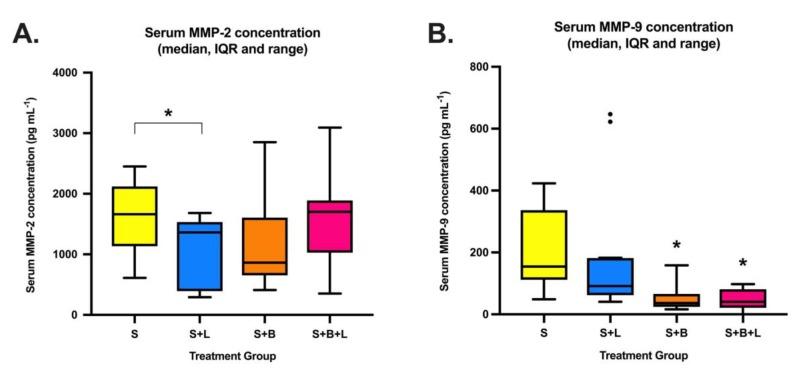
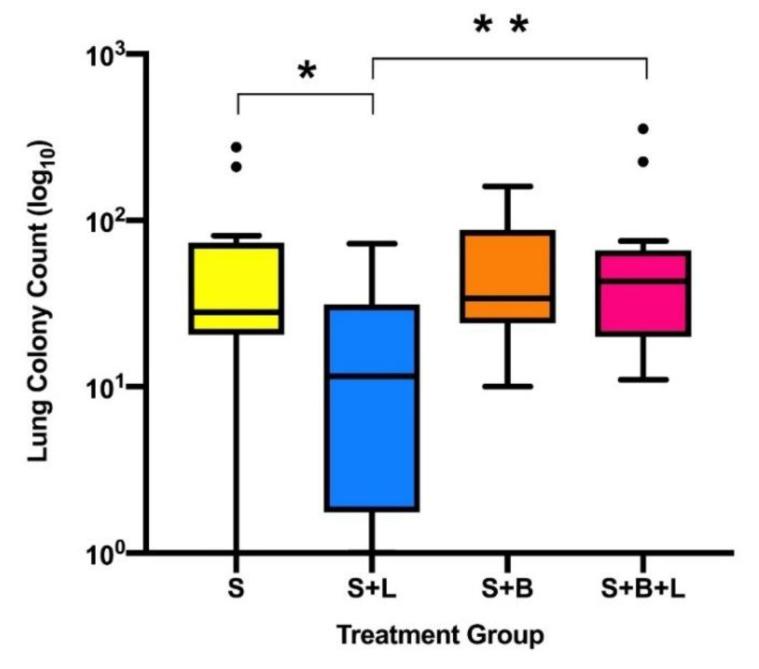
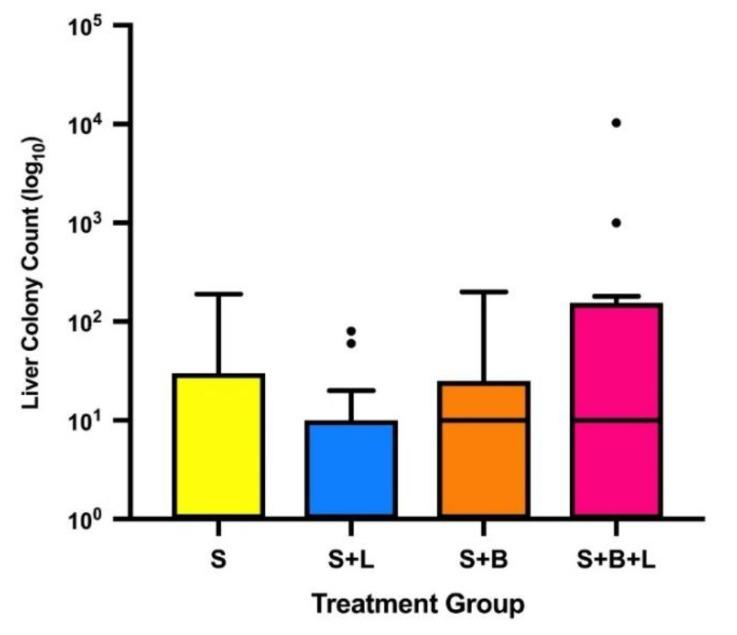
Breast cancer recurs in 20% of patients following intended curative resection. In vitro data indicates that amide local anaesthetics, including lidocaine, inhibit cancer cell metastasis by inhibiting the tyrosine kinase enzyme Src. In a murine breast cancer surgery model, systemic lidocaine reduces postoperative pulmonary metastases. We investigated whether the additional administration of bosutinib (a known Src inhibitor) influences lidocaine's observed beneficial effect in this in vivo model. Female BALB/c mice ( = 95) were inoculated with 25,000 4T1 cells into the mammary fad pad and after 7 days the resulting tumours were excised under sevoflurane anaesthesia. Experimental animals were randomized to one of four treatments administered intravenously prior to excision: lidocaine, bosutinib, both lidocaine and bosutinib in combination, or saline. Animals were euthanized 14 days post-surgery and lung and liver metastatic colonies were evaluated. Post-mortem serum was analysed for MMP-2 and MMP-9, pro-metastatic enzymes whose expression is influenced by the Src pathway. Lidocaine reduced lung, but not liver metastatic colonies versus sevoflurane alone ( = 0.041), but bosutinib alone had no metastasis-inhibiting effect. When combined with lidocaine, bosutinib reversed the anti-metastatic effect observed with lidocaine on sevoflurane anaesthesia. Only lidocaine alone reduced MMP-2 versus sevoflurane ( = 0.044). Both bosutinib ( = 0.001) and bosutinib/lidocaine combined ( = 0.001) reduced MMP-9 versus sevoflurane, whereas lidocaine alone did not. In a murine surgical breast cancer model, the anti-metastatic effects of lidocaine under sevoflurane anaesthesia are abolished by the Src inhibitor bosutinib, and lidocaine reduces serum MMP-2. These results suggest that lidocaine may act, at least partly, via an inhibitory effect on MMP-2 expression to reduce pulmonary metastasis, but whether this is due to an effect on Src or via another pathway remains unclear.
在进行根治性切除术后,20%的乳腺癌患者会出现复发。体外数据表明,包括利多卡因在内的酰胺类局部麻醉药可通过抑制酪氨酸激酶Src来抑制癌细胞转移。在小鼠乳腺癌手术模型中,全身性利多卡因可减少术后肺转移。我们研究了额外给予博舒替尼(一种已知的Src抑制剂)是否会影响利多卡因在该体内模型中观察到的有益效果。将95只雌性BALB/c小鼠的乳腺脂肪垫接种25000个4T1细胞,7天后在七氟醚麻醉下切除产生的肿瘤。实验动物在切除术前被随机分为静脉注射四种治疗方法之一:利多卡因、博舒替尼、利多卡因和博舒替尼联合使用或生理盐水。术后14天对动物实施安乐死,并评估肺和肝转移瘤集落。对死后血清进行MMP-2和MMP-9分析,这两种促转移酶的表达受Src途径影响。与单独使用七氟醚相比,利多卡因可减少肺转移瘤集落,但对肝转移瘤集落无影响(P = 0.041),但单独使用博舒替尼没有转移抑制作用。当与利多卡因联合使用时,博舒替尼逆转了利多卡因在七氟醚麻醉下观察到的抗转移作用。与七氟醚相比,仅利多卡因可降低MMP-2水平(P = 0.044)。博舒替尼(P = 0.001)和博舒替尼/利多卡因联合使用(P = 0.001)均可降低MMP-9水平,而单独使用利多卡因则无此效果。在小鼠手术性乳腺癌模型中,Src抑制剂博舒替尼消除了七氟醚麻醉下利多卡因的抗转移作用,且利多卡因可降低血清MMP-2水平。这些结果表明,利多卡因可能至少部分通过对MMP-2表达的抑制作用来减少肺转移,但这是否是由于对Src的作用或通过另一条途径尚不清楚。

 Zotero 插件