
巴西环境温度与急性心肌梗死死亡率的关系:时间序列分析的生态学研究。
Ambient temperature and mortality due to acute myocardial infarction in Brazil: an ecological study of time-series analyses.
机构信息
Medical Internship Department, School of Medicine, Federal University of Juiz de Fora, Juiz de Fora, MG, Brazil.
Public Health Department, School of Medicine, Federal University of Juiz de Fora, Juiz de Fora, MG, Brazil.
出版信息
Sci Rep. 2019 Sep 24;9(1):13790. doi: 10.1038/s41598-019-50235-8.
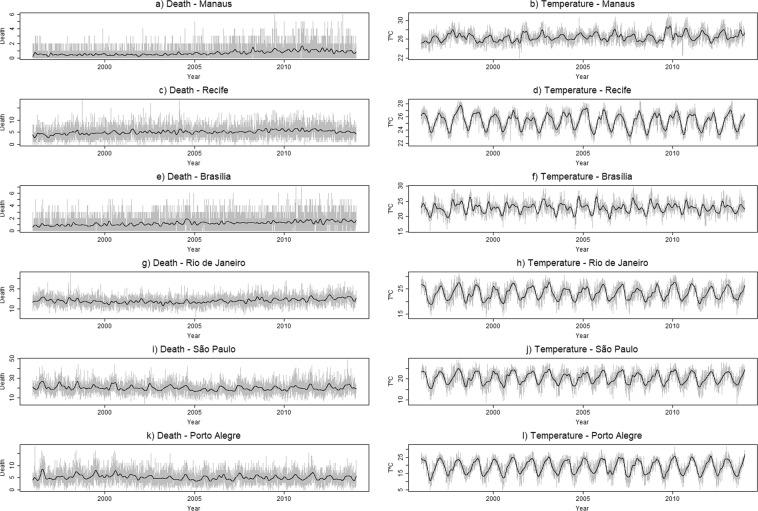
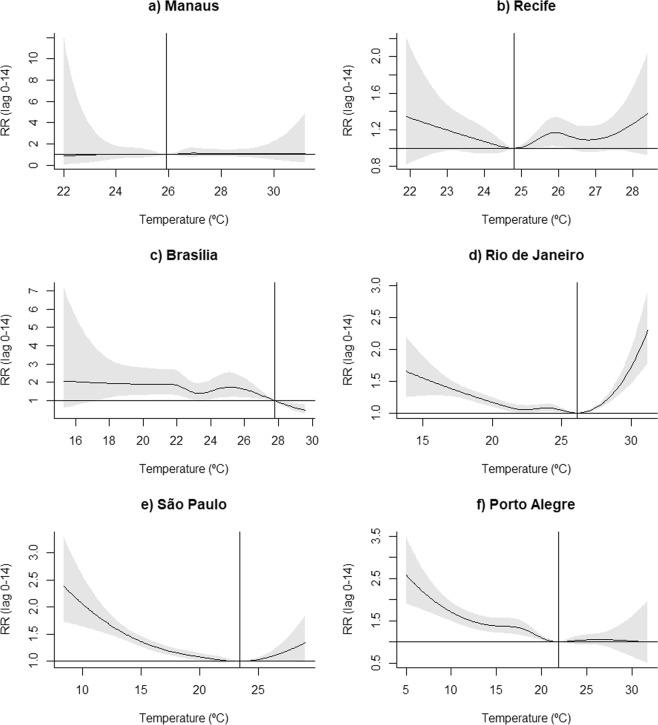
Ambient temperature may lead to decompensation of cardiovascular diseases and deaths by acute myocardial infarction (AMI). Little is known about this relationship in South American countries located in regions of a hot climate. This study aims to investigate the effects of ambient temperature on mortality due to AMI in six Brazilian micro-regions, which present different climates. We analyzed daily records of deaths by AMI between 1996 and 2013. We estimated the accumulate relative and attributable risks with lags of up to 14 days, using distributed non-linear lag model. Micro-regions that were closest to the equator did not show an association between temperature and mortality. The lowest risk temperatures varied between 22 °C and 28 °C, in the Southern region of Brazil and the Midwest region, respectively. Low temperatures associated with the highest mortality risk were observed in the same areas, varying between 5 °C and 15 °C. The number of deaths attributed to cold temperatures varied from 176/year in Brasilia to 661/year in São Paulo and those deaths attributed to hot temperatures in Rio de Janeiro amounted to 115/year. We showed the relative risk and the attributable risk of warmer and colder days in tropical regions. The estimate of the number of deaths due to climate, varying according to each area, is a way of bringing information to those responsible for health policies based on easily-understood measurements.
环境温度可能导致心血管疾病恶化,并引发急性心肌梗死(AMI)导致的死亡。位于炎热气候地区的南美洲国家对这种关系知之甚少。本研究旨在调查巴西六个微地区环境温度对 AMI 死亡率的影响,这些地区具有不同的气候。我们分析了 1996 年至 2013 年期间因 AMI 导致的每日死亡记录。我们使用分布式非线性滞后模型,估计了长达 14 天的滞后时间内的累积相对风险和归因风险。最接近赤道的微地区,温度与死亡率之间没有关联。在巴西南部和中西部地区,最低风险温度分别在 22°C 到 28°C 之间。在同一地区观察到与最高死亡率相关的低温,范围在 5°C 到 15°C 之间。归因于低温的死亡人数在巴西利亚每年为 176 人,在圣保罗每年为 661 人,在里约热内卢归因于高温的死亡人数每年为 115 人。我们展示了热带地区较温暖和较寒冷天气的相对风险和归因风险。根据每个地区的不同,对因气候导致的死亡人数的估计为基于易于理解的指标制定卫生政策的负责人提供了信息。


 Zotero 插件