
共生基因影响共生体和多共生体共生群落之间的微生物相互作用。
Symbiosis Genes Impact Microbial Interactions between Symbionts and Multikingdom Commensal Communities.
机构信息
Max Planck Institute for Plant Breeding Research, Cologne, Germany.
Cluster of Excellence on Plant Sciences, Max Planck Institute for Plant Breeding Research, Cologne, Germany.
出版信息
mBio. 2019 Oct 8;10(5):e01833-19. doi: 10.1128/mBio.01833-19.
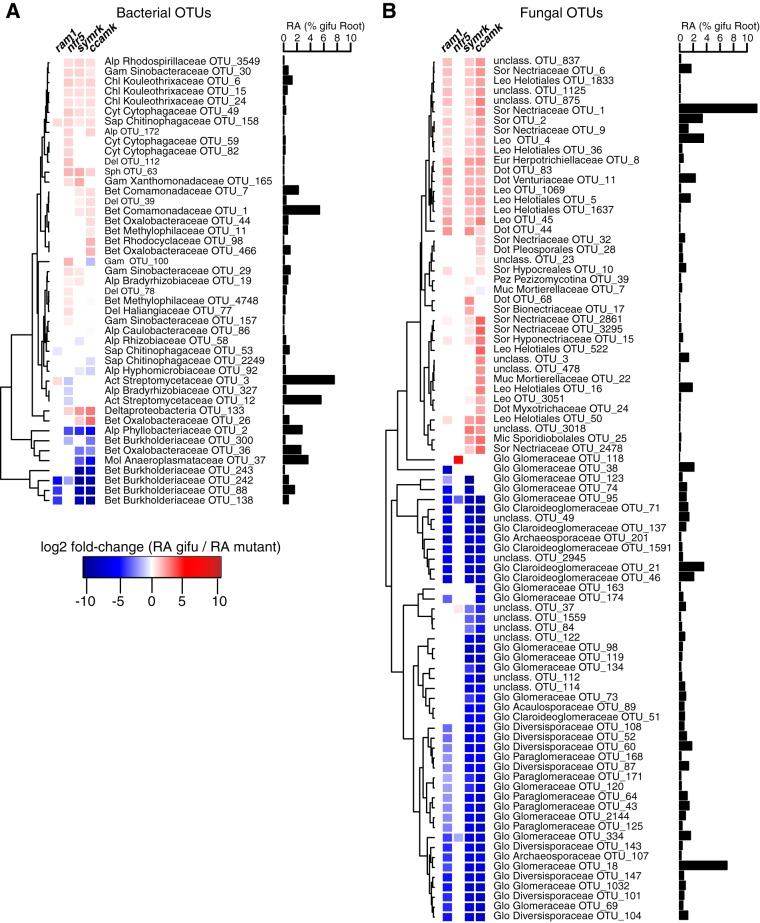
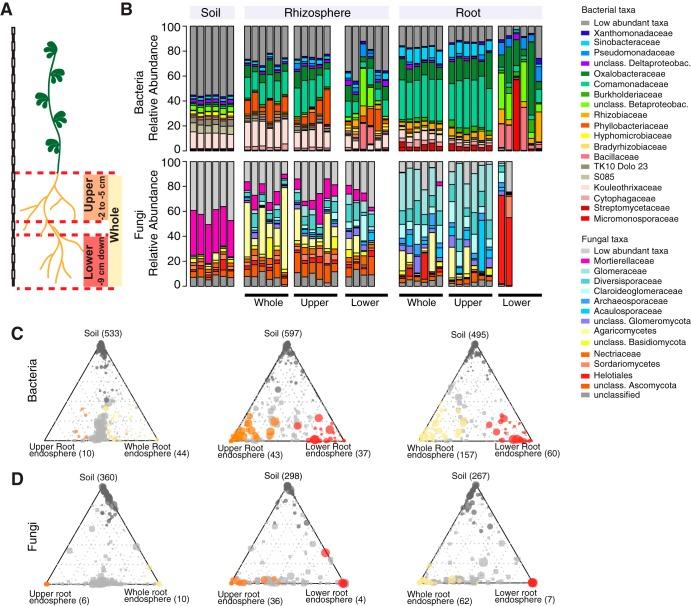
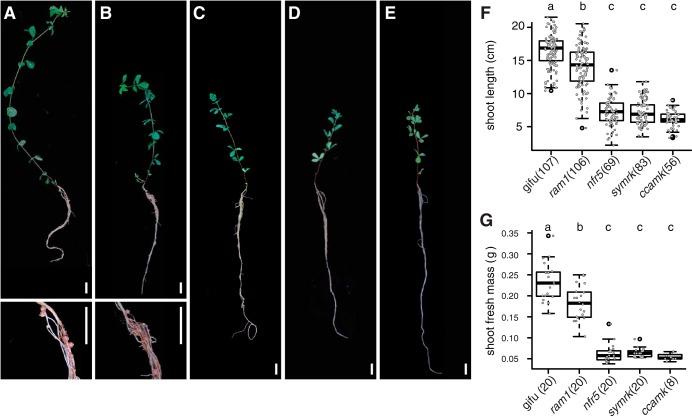
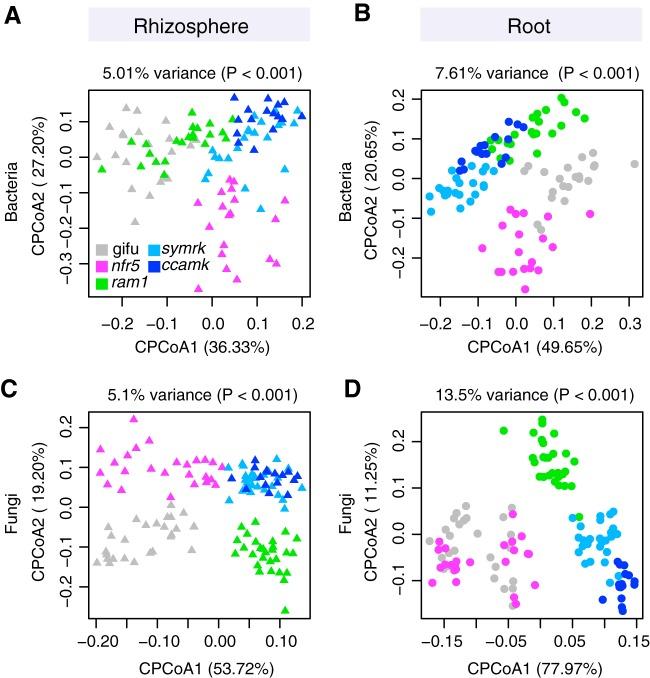
The wild legume engages in mutualistic symbiotic relationships with arbuscular mycorrhiza (AM) fungi and nitrogen-fixing rhizobia. Using plants grown in natural soil and community profiling of bacterial 16S rRNA genes and fungal internal transcribed spacers (ITSs), we examined the role of the symbiosis genes , , , and in structuring bacterial and fungal root-associated communities. We found host genotype-dependent community shifts in the root and rhizosphere compartments that were mainly confined to bacteria in or fungi in mutants, while and plants displayed major changes across both microbial kingdoms. We observed in all AM mutant roots an almost complete depletion of a large number of Glomeromycota taxa that was accompanied by a concomitant enrichment of Helotiales and Nectriaceae fungi, suggesting compensatory niche replacement within the fungal community. A subset of Glomeromycota whose colonization is strictly dependent on the common symbiosis pathway was retained in mutants, indicating that is dispensable for intraradical colonization by some Glomeromycota fungi. However, intraradical colonization by bacteria belonging to the and is dependent on AM root infection, revealing a microbial interkingdom interaction. Despite the overall robustness of the bacterial root microbiota against major changes in the composition of root-associated fungal assemblages, bacterial and fungal cooccurrence network analysis demonstrates that simultaneous disruption of AM and rhizobium symbiosis increases the connectivity among taxa of the bacterial root microbiota. Our findings imply a broad role for symbiosis genes in structuring the root microbiota and identify unexpected microbial interkingdom interactions between root symbionts and commensal communities. Studies on symbiosis genes in plants typically focus on binary interactions between roots and soilborne nitrogen-fixing rhizobia or mycorrhizal fungi in laboratory environments. We utilized wild type and symbiosis mutants of a model legume, grown in natural soil, in which bacterial, fungal, or both symbioses are impaired to examine potential interactions between the symbionts and commensal microorganisms of the root microbiota when grown in natural soil. This revealed microbial interkingdom interactions between the root symbionts and fungal as well as bacterial commensal communities. Nevertheless, the bacterial root microbiota remains largely robust when fungal symbiosis is impaired. Our work implies a broad role for host symbiosis genes in structuring the root microbiota of legumes.
野生豆科植物与丛枝菌根(AM)真菌和固氮根瘤菌形成互利共生关系。使用生长在自然土壤中的植物,并对细菌 16S rRNA 基因和真菌内部转录间隔区(ITS)进行群落分析,我们研究了共生基因、、、和在构建细菌和真菌根相关群落中的作用。我们发现,宿主基因型依赖的根和根际区室群落变化主要局限于或突变体中的细菌,而或植物在两个微生物王国中都显示出主要变化。我们观察到,在所有 AM 突变体的根中,大量的球囊霉科真菌类群几乎完全耗尽,同时伴随着座囊菌目和蜡壳菌科真菌的富集,这表明真菌群落中存在补偿性生态位替代。在或突变体中保留了严格依赖共同共生途径定殖的球囊霉科真菌的一个亚群,表明对于一些球囊霉科真菌来说,是可有可无的。然而,属于和的细菌的根内定殖依赖于 AM 根的感染,这揭示了微生物的种间相互作用。尽管细菌根微生物组的整体稳健性不受根相关真菌组合组成变化的影响,但细菌和真菌的共现网络分析表明,同时破坏 AM 和根瘤菌共生会增加细菌根微生物组中分类群之间的连接。我们的研究结果表明,共生基因在构建根微生物组方面起着广泛的作用,并确定了根共生体与共生群落之间意想不到的微生物种间相互作用。在植物中,对共生基因的研究通常集中在根系与土壤固氮根瘤菌或丛枝菌根真菌之间的二元相互作用上,这些研究是在实验室环境中进行的。我们利用野生型和共生突变体的模式豆科植物,在自然土壤中生长,其中细菌、真菌或两者的共生都受到损害,以研究在自然土壤中生长时,根共生体与根微生物组中的共生微生物之间可能存在的相互作用。这揭示了根共生体与真菌和细菌共生体之间的微生物种间相互作用。然而,当真菌共生受到损害时,细菌根微生物组在很大程度上仍然稳健。我们的工作意味着宿主共生基因在豆科植物根微生物组的结构中起着广泛的作用。

 Zotero 插件