
基因组平衡:两个基因组建立同步以调节细胞命运和功能。
Genomic Balance: Two Genomes Establishing Synchrony to Modulate Cellular Fate and Function.
机构信息
The Mitochondrial Genetics Group, The Robinson Research Institute and The School of Medicine, Adelaide Health and Medical Sciences Building, The University of Adelaide, Adelaide, SA 5005, Australia.
出版信息
Cells. 2019 Oct 23;8(11):1306. doi: 10.3390/cells8111306.
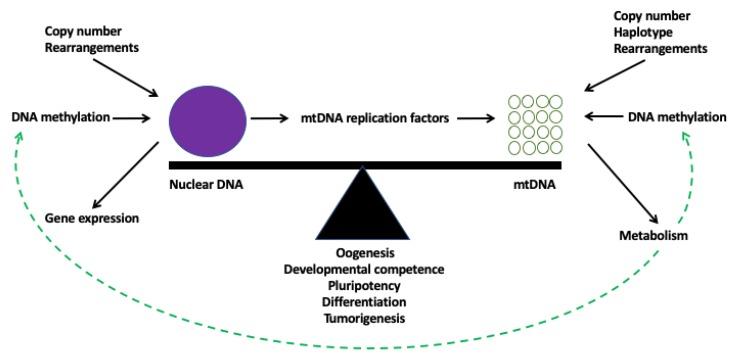
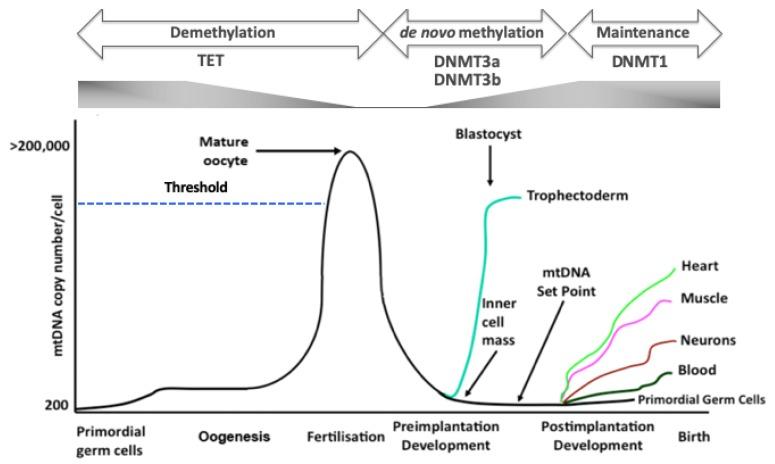
It is becoming increasingly apparent that cells require cooperation between the nuclear and mitochondrial genomes to promote effective function. However, it was long thought that the mitochondrial genome was under the strict control of the nuclear genome and the mitochondrial genome had little influence on cell fate unless it was extensively mutated, as in the case of the mitochondrial DNA diseases. However, as our understanding of the roles that epigenetic regulators, including DNA methylation, and metabolism play in cell fate and function, the role of the mitochondrial genome appears to have a greater influence than previously thought. In this review, I draw on examples from tumorigenesis, stem cells, and oocyte pre- and post-fertilisation events to discuss how modulating one genome affects the other and that this results in a compromise to produce functional mature cells. I propose that, during development, both of the genomes interact with each other through intermediaries to establish genomic balance and that establishing genomic balance is a key facet in determining cell fate and viability.
越来越明显的是,细胞需要核基因组和线粒体基因组之间的合作,以促进有效的功能。然而,长期以来人们一直认为线粒体基因组受到核基因组的严格控制,除非线粒体基因组发生广泛突变,如线粒体 DNA 疾病,否则它对细胞命运几乎没有影响。然而,随着我们对表观遗传调节剂(包括 DNA 甲基化和代谢)在细胞命运和功能中的作用的理解的加深,线粒体基因组的作用似乎比以前认为的更为重要。在这篇综述中,我从肿瘤发生、干细胞以及卵母细胞受精前和受精后事件中举例讨论了调节一个基因组如何影响另一个基因组,以及这导致了功能成熟细胞的功能障碍。我提出,在发育过程中,两个基因组通过中间产物相互作用,以建立基因组平衡,而建立基因组平衡是决定细胞命运和活力的关键方面。

 Zotero 插件