
葡萄牙僧帽水母的形态和发育。
Morphology and development of the Portuguese man of war, Physalia physalis.
机构信息
Department of Ecology and Evolutionary Biology, Brown University, Providence, RI, 02912, USA.
Collège de France, Center for Interdisciplinary Research in Biology, 75005, Paris, France.
出版信息
Sci Rep. 2019 Oct 29;9(1):15522. doi: 10.1038/s41598-019-51842-1.
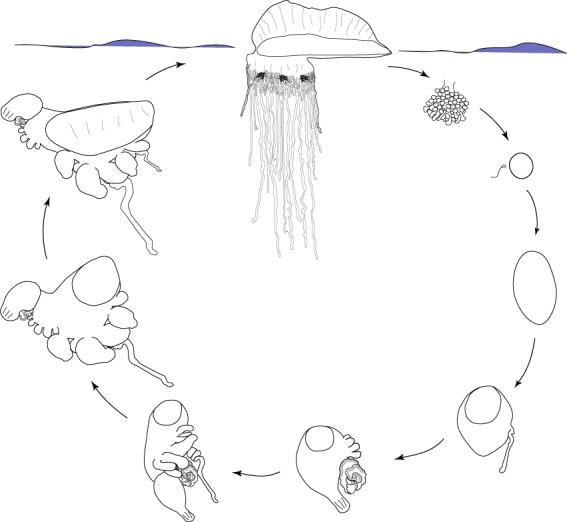
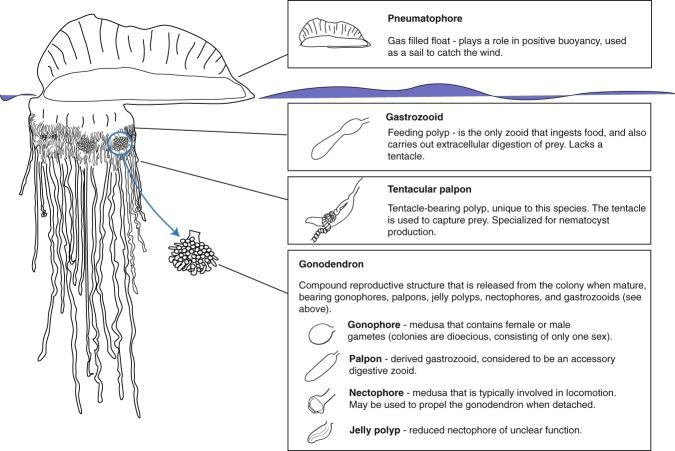
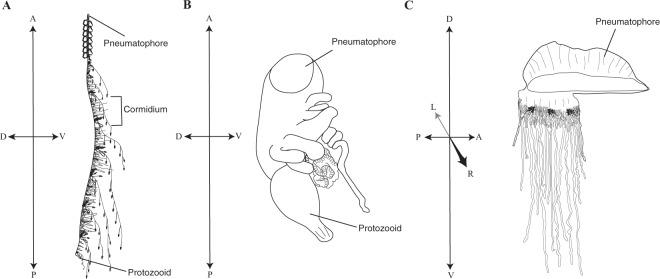
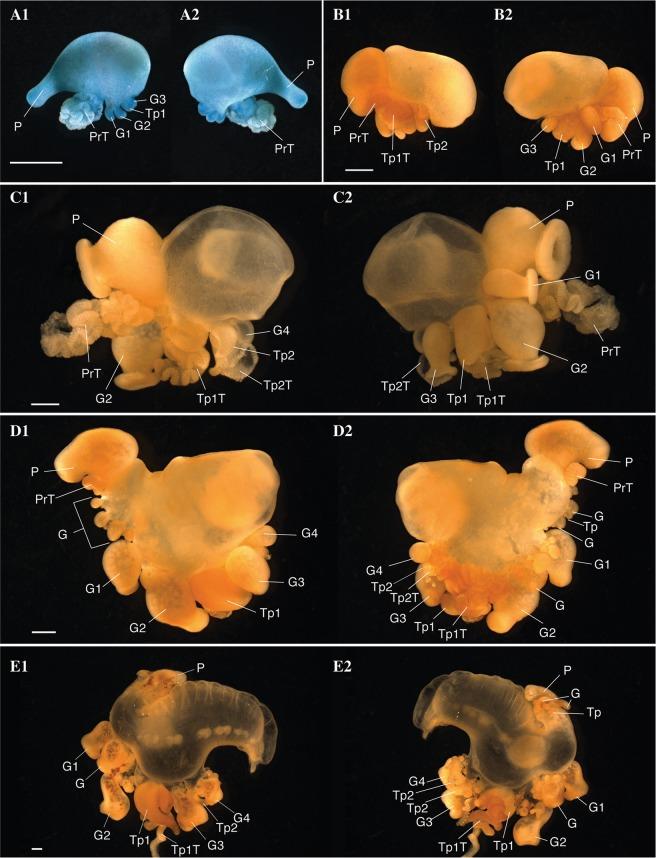
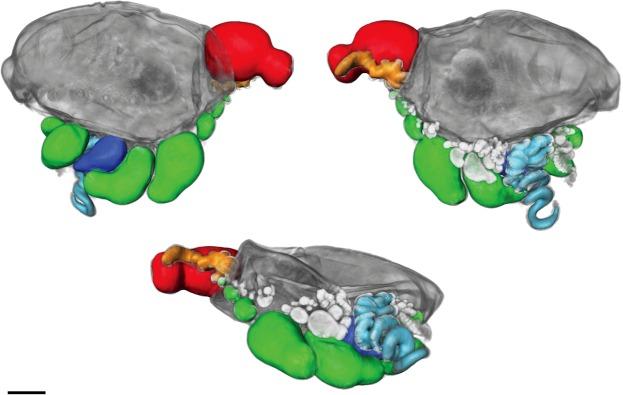
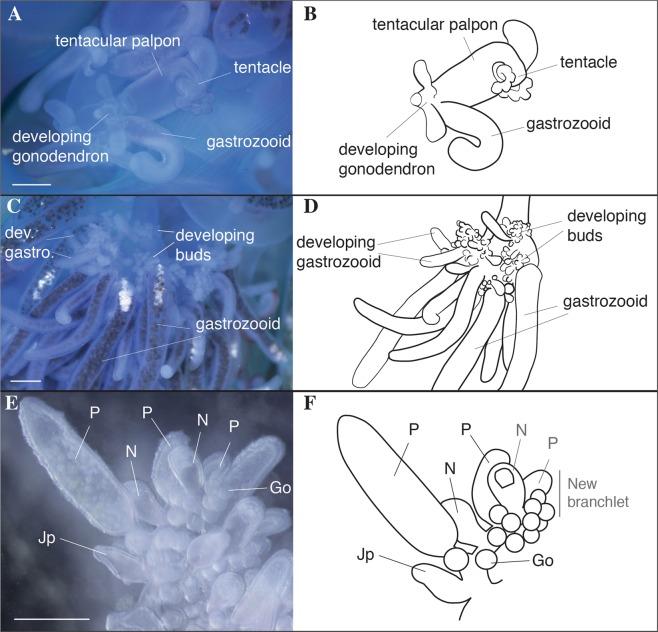
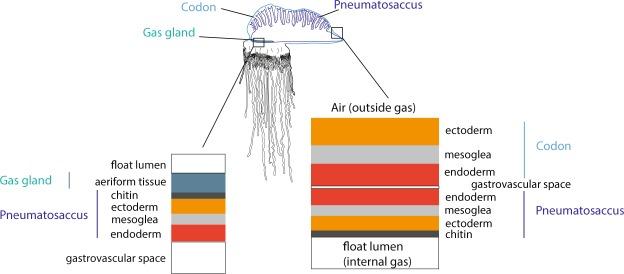
The Portuguese man of war, Physalia physalis, is one of the most conspicuous, but poorly understood members of the pleuston, a community of organisms that occupy a habitat at the sea-air interface. Physalia physalis is a siphonophore that uses a gas-filled float as a sail to catch the wind. The development, morphology, and colony organization of P. physalis is very different from all other siphonophores. Here, we look at live and fixed larval and juvenile specimens, and use optical projection tomography to build on existing knowledge about the morphology and development of this species. We also propose a framework for homologizing the axes with other siphonophores, and also suggest that the tentacle bearing zooids should be called tentacular palpons. Previous descriptions of P. physalis larvae, especially descriptions of budding order, were often framed with the mature colony in mind. However, we use the simpler organization of larvae and the juvenile specimens to inform our understanding of the morphology, budding order, and colony organization in the mature specimen. Finally, we review what is known about the ecology and lifecycle of P. physalis.
葡萄牙战舰,Physalia physalis,是浮游动物中最显眼但了解甚少的成员之一,浮游动物是栖息在海洋与空气界面的生物群落。Physalia physalis 是一种使用充满气体的浮标作为帆来捕捉风的水螅虫。P. physalis 的发育、形态和群体组织与所有其他水螅虫都非常不同。在这里,我们观察了活体和固定的幼虫和幼体标本,并使用光学投影断层扫描来扩展我们对该物种形态和发育的现有知识。我们还提出了一个与其他水螅虫同源化轴的框架,并建议将带有触手的原基称为触手 palpons。以前对 P. physalis 幼虫的描述,尤其是对出芽顺序的描述,通常是基于成熟群体的。然而,我们利用幼虫和幼体标本的简单组织来了解成熟标本的形态、出芽顺序和群体组织。最后,我们回顾了关于 P. physalis 的生态学和生命周期的已知知识。

 Zotero 插件