
支气管肺泡灌洗液中细胞外囊泡的分离与鉴定:不同方法的综述与比较。
Isolation and characterization of extracellular vesicles from Broncho-alveolar lavage fluid: a review and comparison of different methods.
机构信息
Division of Pulmonary and Critical Care Medicine, Department of Medicine, Boston University Medical Campus, 72 E Concord St. R304, Boston, MA, 02118, USA.
出版信息
Respir Res. 2019 Oct 30;20(1):240. doi: 10.1186/s12931-019-1210-z.
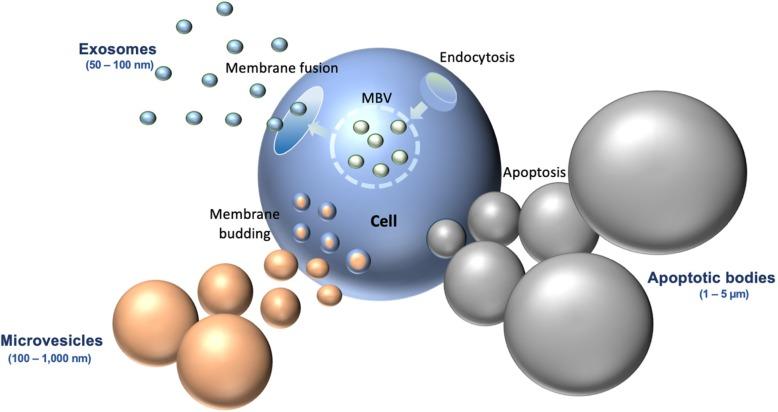
Extracellular vesicles (EVs) are cell-derived membranous vesicles secreted by cells into the extracellular space, which play a role in cell to cell communication. EVs are categorized into 3 groups depending on their size, surface marker, and method of release from the host cell. Recently, EVs have become of interest in the study of multiple disease etiologies and are believed to be potential biomarkers for many diseases. Multiple different methods have been developed to isolate EVs from different samples such as cell culture medium, serum, blood, and urine. Once isolated, EVs can be characterized by technology such as nanotracking analysis, dynamic light scattering, and nanoscale flow cytometry. In this review, we summarize the current methods of EV isolation, provide details into the three methods of EV characterization, and provide insight into which isolation approaches are most suitable for EV isolation from bronchoalveolar lavage fluid (BALF).
细胞外囊泡 (EVs) 是由细胞分泌到细胞外空间的细胞来源的膜性囊泡,在细胞间通讯中发挥作用。根据其大小、表面标志物和从宿主细胞释放的方式,EVs 分为 3 组。最近,EVs 在多种疾病病因的研究中引起了关注,被认为是许多疾病的潜在生物标志物。已经开发出多种不同的方法来从不同的样本中分离 EVs,例如细胞培养液、血清、血液和尿液。一旦分离出来,EVs 可以通过纳米跟踪分析、动态光散射和纳米级流式细胞术等技术进行表征。在这篇综述中,我们总结了目前 EV 分离的方法,详细介绍了 EV 三种表征方法,并深入探讨了从支气管肺泡灌洗液 (BALF) 中分离 EV 最适合的方法。

 Zotero 插件