
急性髓系白血病的遗传与免疫格局之间的相互作用:风险分层和治疗的机制及意义
The Interplay Between the Genetic and Immune Landscapes of AML: Mechanisms and Implications for Risk Stratification and Therapy.
作者信息
Mendez Lourdes M, Posey Ryan R, Pandolfi Pier Paolo
机构信息
Department of Medicine and Pathology, Cancer Research Institute, Beth Israel Deaconess Cancer Center, Beth Israel Deaconess Medical Center, Harvard Medical School, Boston, MA, United States.
Ludwig Center at Harvard, Harvard Medical School, Boston, MA, United States.
出版信息
Front Oncol. 2019 Nov 7;9:1162. doi: 10.3389/fonc.2019.01162. eCollection 2019.
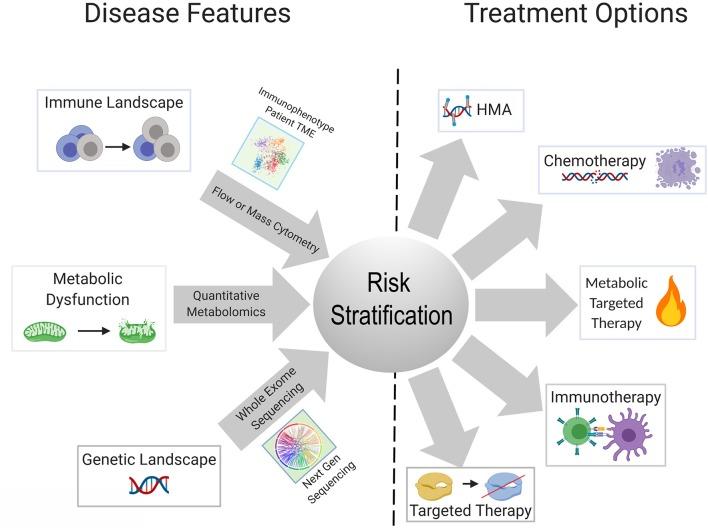
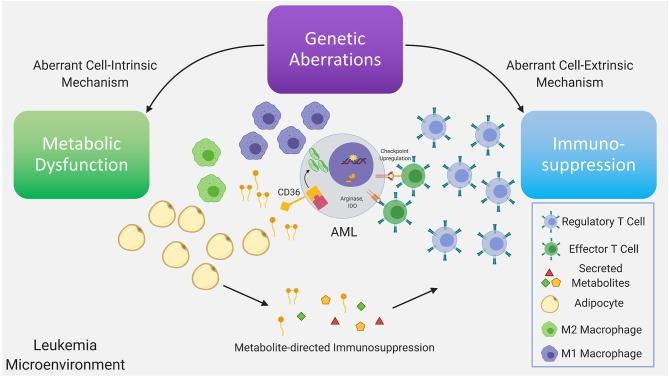
AML holds a unique place in the history of immunotherapy by virtue of being among the first malignancies in which durable remissions were achieved with "adoptive immunotherapy," now known as allogeneic stem cell transplantation. The successful deployment of unselected adoptive cell therapy established AML as a disease responsive to immunomodulation. Classification systems for AML have been refined and expanded over the years in an effort to capture the variability of this heterogeneous disease and risk-stratify patients. Current systems increasingly incorporate information about cytogenetic alterations and genetic mutations. The advent of next generation sequencing technology has enabled the comprehensive identification of recurrent genetic mutations, many with predictive power. Recurrent genetic mutations found in AML have been intensely studied from a cell intrinsic perspective leading to the genesis of multiple, recently approved targeted therapies including IDH1/2-mutant inhibitors and FLT3-ITD/-TKD inhibitors. However, there is a paucity of data on the effects of these targeted agents on the leukemia microenvironment, including the immune system. Recently, the phenomenal success of checkpoint inhibitors and CAR-T cells has re-ignited interest in understanding the mechanisms leading to immune dysregulation and suppression in leukemia, with the objective of harnessing the power of the immune system via novel immunotherapeutics. A paradigm has emerged that places crosstalk with the immune system at the crux of any effective therapy. Ongoing research will reveal how AML genetics inform the composition of the immune microenvironment paving the way for personalized immunotherapy.
急性髓系白血病(AML)在免疫治疗史上占据独特地位,因为它是最早通过“过继性免疫治疗”(现称为异基因干细胞移植)实现持久缓解的恶性肿瘤之一。未选择的过继性细胞疗法的成功应用使AML成为一种对免疫调节有反应的疾病。多年来,AML的分类系统不断完善和扩展,以努力捕捉这种异质性疾病的变异性并对患者进行风险分层。当前的系统越来越多地纳入细胞遗传学改变和基因突变的信息。下一代测序技术的出现使得能够全面鉴定复发性基因突变,其中许多具有预测能力。从细胞内在角度对AML中发现的复发性基因突变进行了深入研究,从而催生了多种最近获批的靶向疗法,包括IDH1/2突变抑制剂和FLT3-ITD/-TKD抑制剂。然而,关于这些靶向药物对白血病微环境(包括免疫系统)影响的数据却很少。最近,检查点抑制剂和嵌合抗原受体T细胞(CAR-T细胞)的显著成功重新点燃了人们对了解白血病中导致免疫失调和抑制机制的兴趣,目的是通过新型免疫疗法利用免疫系统的力量。一种范式已经出现,即与免疫系统的相互作用是任何有效治疗的关键。正在进行的研究将揭示AML遗传学如何影响免疫微环境的组成,为个性化免疫治疗铺平道路。
 Zotero 插件