
微小RNA-1296的表达与非小细胞肺癌的预后相关,并通过Wnt信号通路抑制细胞增殖和侵袭。
MicroRNA-1296 expression is associated with prognosis and inhibits cell proliferation and invasion by Wnt signaling in non-small cell lung cancer.
作者信息
Deng Haiqing, Xie Changping, Ye Yi, Du Zhenglong
机构信息
Department of Cardiothoracic Surgery, The Second People's Hospital of Qinzhou, Qinzhou, Guangxi 535000, P.R. China.
出版信息
Oncol Lett. 2020 Jan;19(1):623-630. doi: 10.3892/ol.2019.11154. Epub 2019 Nov 28.
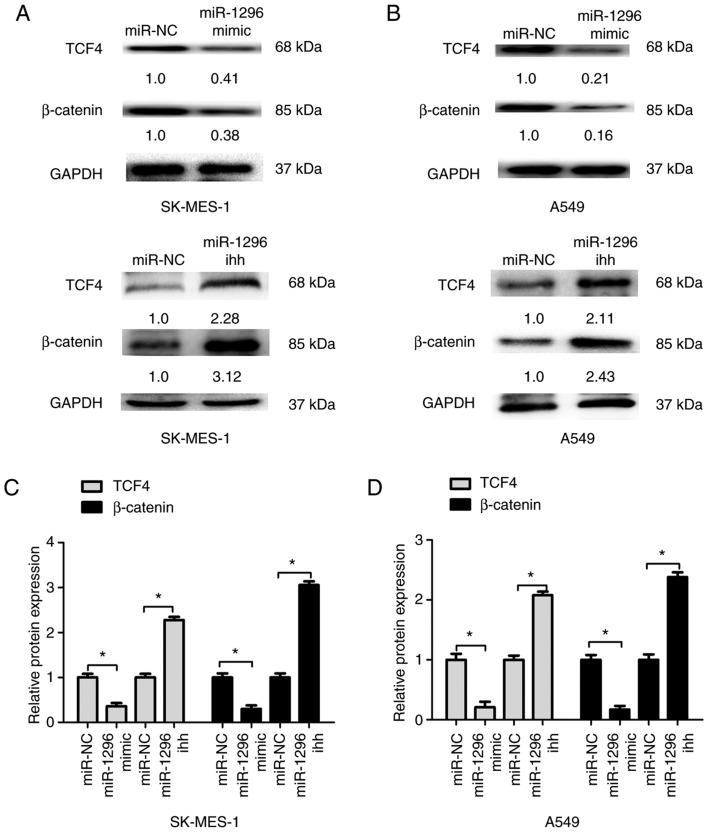
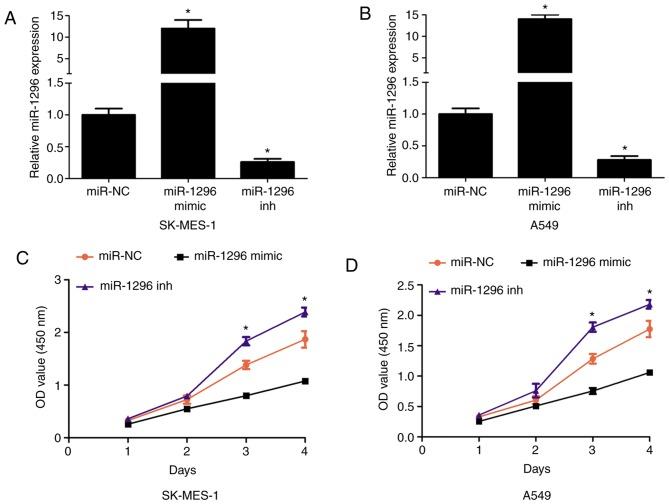
MicroRNAs (miRNAs) are vital regulators of non-small cell lung cancer (NSCLC) development and tumorigenesis. The aim of the present study was to explore the role of miRNA (miR)-1296 expression in NSCLC. The expression of miR-1296 was detected by reverse transcription-quantitative PCR in NSCLC tissues and matched normal tissues. The association of miR-1296 expression with clinicopathological factors of NSCLC patients was evaluated by the χ test. Prognostic value of miR-1296 expression levels in patients with NSCLC was assessed using the Kaplan-Meier method and a Cox proportional hazards model; Cell Counting Kit-8, Transwell migration and western blot assays were used to detect the association between miR-1296 and cell proliferation, invasion and Wnt signaling in NSCLC, respectively. The results of the present study demonstrated that miR-1296 expression was significantly downregulated in NSCLC tissues and cells compared to corresponding controls. Lower miR-1296 expression exhibited a significant association with lymph node metastasis and tumor-node-metastasis stage of patients with NSCLC. In addition, the survival analysis demonstrated that low miR-1296 expression predicted a poorer prognosis compared to high miR-1296 expression. Multivariate Cox analysis also demonstrated that reduced miR-1296 expression was an independent risk factor of NSCLC prognosis. Additionally, miR-1296 inhibited cell proliferation, invasion and Wnt signaling in NSCLC. Thus, the results of the present study indicated that miR-1296 expression may be a potential biomarker of NSCLC prognosis and potential target for NSCLC treatment.
微小RNA(miRNA)是非小细胞肺癌(NSCLC)发生发展和肿瘤形成的重要调节因子。本研究旨在探讨miRNA(miR)-1296表达在NSCLC中的作用。采用逆转录定量PCR检测NSCLC组织及配对正常组织中miR-1296的表达。通过χ检验评估miR-1296表达与NSCLC患者临床病理因素的相关性。采用Kaplan-Meier法和Cox比例风险模型评估miR-1296表达水平对NSCLC患者的预后价值;分别采用细胞计数试剂盒-8、Transwell迁移实验和蛋白质印迹法检测miR-1296与NSCLC细胞增殖、侵袭及Wnt信号通路之间的关系。本研究结果表明,与相应对照相比,NSCLC组织和细胞中miR-1296表达显著下调。较低的miR-1296表达与NSCLC患者的淋巴结转移及肿瘤-淋巴结-转移分期显著相关。此外,生存分析表明,与高miR-1296表达相比,低miR-1296表达预示预后较差。多因素Cox分析还表明,miR-1296表达降低是NSCLC预后的独立危险因素。此外,miR-1296抑制NSCLC细胞的增殖、侵袭及Wnt信号通路。因此,本研究结果表明,miR-1296表达可能是NSCLC预后的潜在生物标志物及NSCLC治疗的潜在靶点。



 Zotero 插件