
肌萎缩侧索硬化症和额颞叶痴呆中扩增导致免疫激活的机制
Mechanisms of Immune Activation by Expansions in Amyotrophic Lateral Sclerosis and Frontotemporal Dementia.
作者信息
Trageser Kyle J, Smith Chad, Herman Francis J, Ono Kenjiro, Pasinetti Giulio Maria
机构信息
Department of Neurology, Icahn School of Medicine at Mount Sinai, New York, NY, United States.
Division of Neurology, Department of Medicine, Showa University School of Medicine, Tokyo, Japan.
出版信息
Front Neurosci. 2019 Dec 10;13:1298. doi: 10.3389/fnins.2019.01298. eCollection 2019.
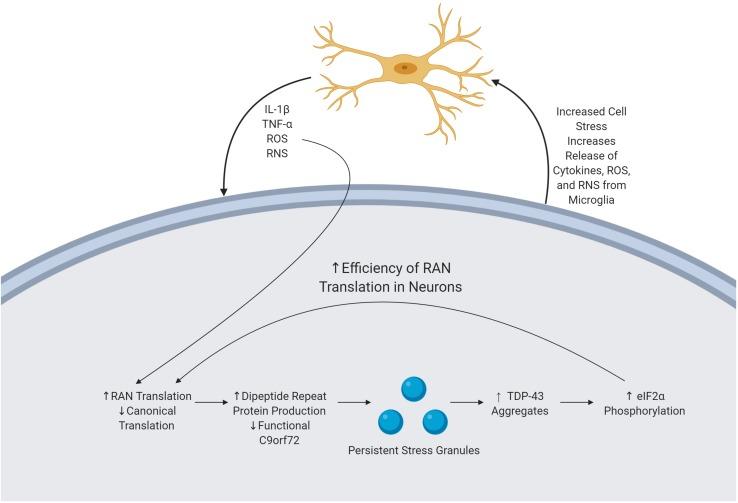
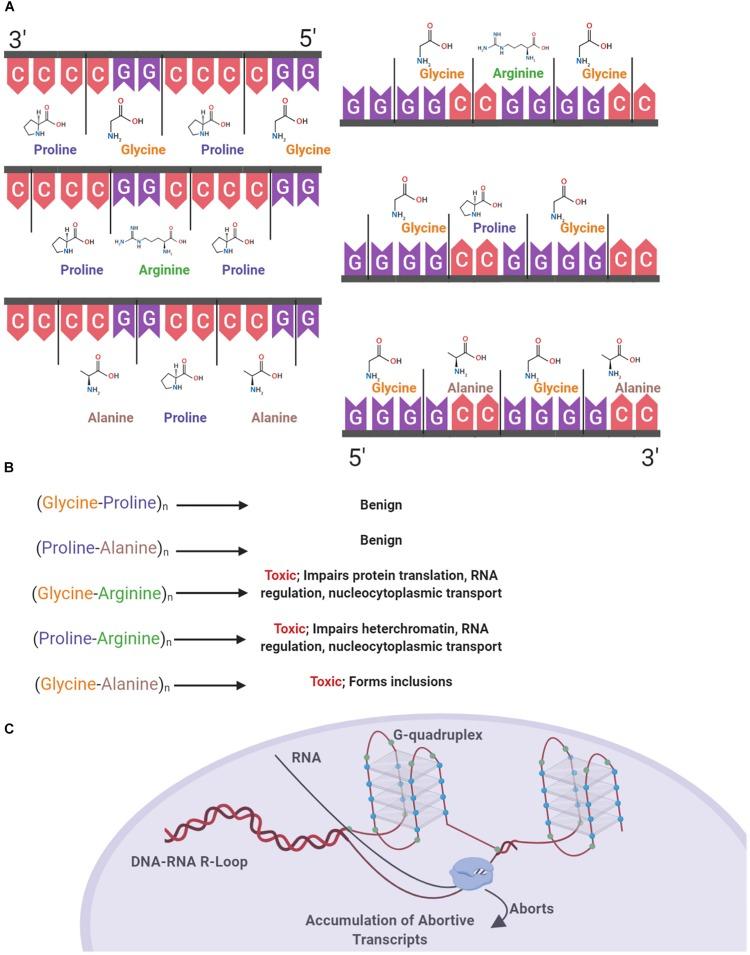
Amyotrophic lateral sclerosis (ALS) and frontotemporal dementia (FTD) are neurodegenerative disorders with overlapping pathomechanisms, neurobehavioral features, and genetic etiologies. Individuals diagnosed with either disorder exhibit symptoms within a clinical spectrum. Symptoms of ALS involve neuromusculature deficits, reflecting upper and lower motor neurodegeneration, while the primary clinical features of FTD are behavioral and cognitive impairments, reflecting frontotemporal lobar degeneration. An intronic GC hexanucleotide repeat expansion (HRE) within the promoter region of chromosome 9 open reading frame 72 (C9orf72) is the predominant monogenic cause of both ALS and FTD. While the heightened risk to develop ALS/FTD in response to C9orf72 expansions is well-established, studies continue to define the precise mechanisms by which this mutation elicits neurodegeneration. Studies show that GC expansions undergo repeat-associated non-ATG dependent (RAN) translation, producing dipeptide repeat proteins (DRPs) with varying toxicities. Accumulation of DRPs in neurons, in particular arginine containing DRPs, have neurotoxic effects by potently impairing nucleocytoplasmic transport, nucleotide metabolism, lysosomal processes, and cellular metabolic pathways. How these pathophysiological effects of C9orf72 expansions engage and elicit immune activity with additional neurobiological consequences is an important line of future investigations. Immunoreactive microglia and elevated levels of peripheral inflammatory cytokines noted in individuals with C9orf72 ALS/FTD provide evidence that persistent immune activation has a causative role in the progression of each disorder. This review highlights the current understanding of the cellular, proteomic and genetic substrates through which GC HREs may elicit detrimental immune activity, facilitating region-specific neurodegeneration in C9orf72 mediated ALS/FTD. We in particular emphasize interactions between intracellular pathways induced by C9orf72 expansions and innate immune inflammasome complexes, intracellular receptors responsible for eliciting inflammation in response to cellular stress. A further understanding of the intricate, reciprocal relationship between the cellular and molecular pathologies resulting from C9orf72 HREs and immune activation may yield novel therapeutics for ALS/FTD, which currently have limited treatment strategies.
肌萎缩侧索硬化症(ALS)和额颞叶痴呆(FTD)是神经退行性疾病,其病理机制、神经行为特征和遗传病因相互重叠。被诊断患有这两种疾病之一的个体在临床范围内表现出症状。ALS的症状涉及神经肌肉系统缺陷,反映上、下运动神经元的神经变性,而FTD的主要临床特征是行为和认知障碍,反映额颞叶变性。9号染色体开放阅读框72(C9orf72)启动子区域内的内含子GC六核苷酸重复扩增(HRE)是ALS和FTD的主要单基因病因。虽然C9orf72扩增导致患ALS/FTD风险增加已得到充分证实,但研究仍在继续确定这种突变引发神经变性的确切机制。研究表明,GC扩增经历重复相关的非ATG依赖性(RAN)翻译,产生具有不同毒性的二肽重复蛋白(DRP)。DRP在神经元中的积累,特别是含精氨酸的DRP,通过严重损害核质运输、核苷酸代谢、溶酶体过程和细胞代谢途径而具有神经毒性作用。C9orf72扩增的这些病理生理效应如何引发并引发免疫活动以及产生其他神经生物学后果,是未来重要的研究方向。在C9orf72 ALS/FTD患者中观察到的免疫反应性小胶质细胞和外周炎性细胞因子水平升高,证明持续的免疫激活在每种疾病的进展中起因果作用。本综述强调了目前对细胞、蛋白质组和遗传底物的理解,通过这些底物,GC HREs可能引发有害的免疫活动,促进C9orf72介导的ALS/FTD中的区域特异性神经变性。我们特别强调C9orf72扩增诱导的细胞内途径与先天免疫炎性小体复合物之间的相互作用;先天免疫炎性小体复合物是负责在细胞应激时引发炎症的细胞内受体。进一步了解由C9orf72 HREs和免疫激活导致的细胞和分子病理学之间复杂的相互关系,可能会为目前治疗策略有限的ALS/FTD带来新的治疗方法。
 Zotero 插件