
阿尔茨海默病和其他与年龄相关的神经退行性疾病中的自噬。
Mitophagy in Alzheimer's Disease and Other Age-Related Neurodegenerative Diseases.
机构信息
Department of Cell Biology and Neuroscience, Rutgers, The State University of New Jersey, Piscataway, NJ 08854, USA.
出版信息
Cells. 2020 Jan 8;9(1):150. doi: 10.3390/cells9010150.
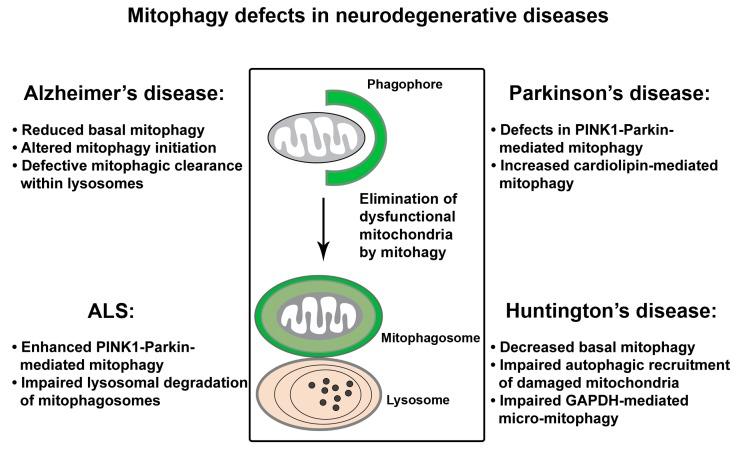
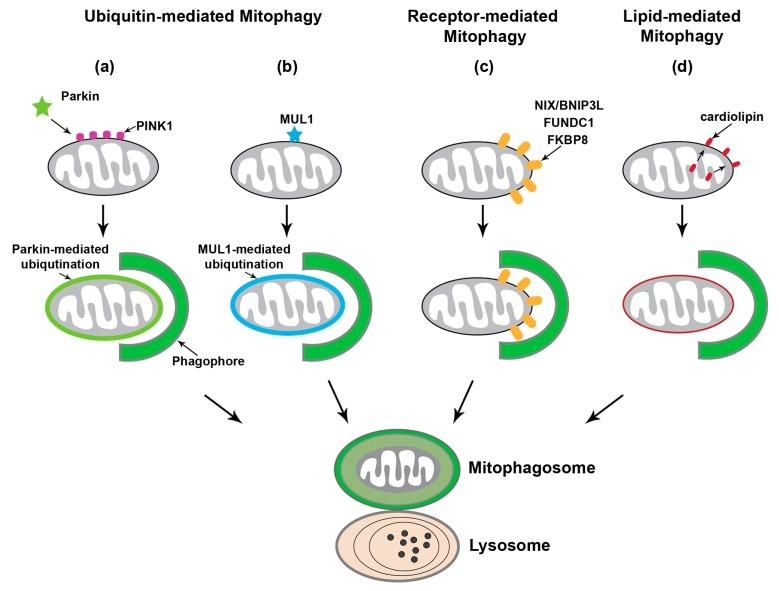
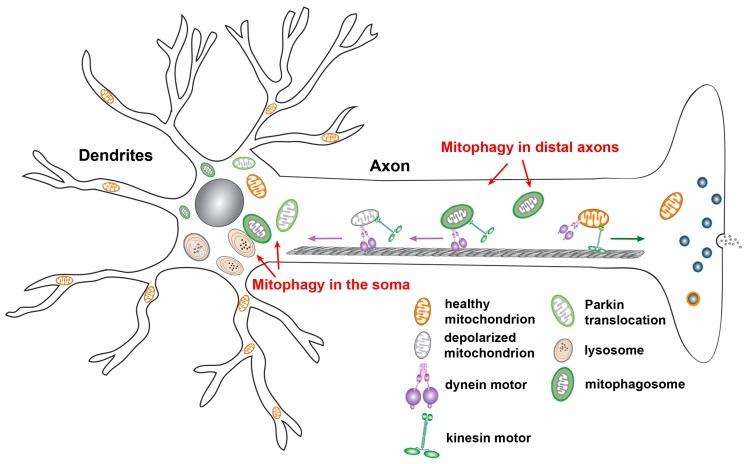
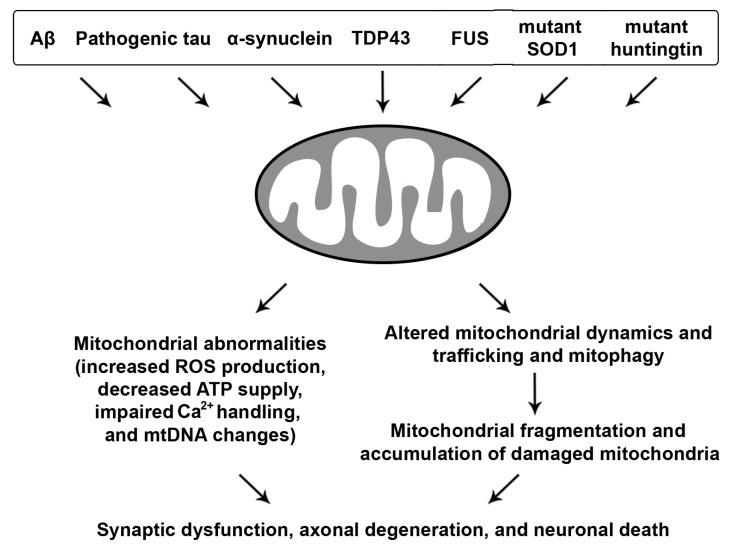
Mitochondrial dysfunction is a central aspect of aging and neurodegenerative diseases, including Alzheimer's disease, Parkinson's disease, amyotrophic lateral sclerosis, and Huntington's disease. Mitochondria are the main cellular energy powerhouses, supplying most of ATP by oxidative phosphorylation, which is required to fuel essential neuronal functions. Efficient removal of aged and dysfunctional mitochondria through mitophagy, a cargo-selective autophagy, is crucial for mitochondrial maintenance and neuronal health. Mechanistic studies into mitophagy have highlighted an integrated and elaborate cellular network that can regulate mitochondrial turnover. In this review, we provide an updated overview of the recent discoveries and advancements on the mitophagy pathways and discuss the molecular mechanisms underlying mitophagy defects in Alzheimer's disease and other age-related neurodegenerative diseases, as well as the therapeutic potential of mitophagy-enhancing strategies to combat these disorders.
线粒体功能障碍是衰老和神经退行性疾病的核心方面,包括阿尔茨海默病、帕金森病、肌萎缩侧索硬化症和亨廷顿病。线粒体是细胞的主要能量工厂,通过氧化磷酸化提供大部分 ATP,这是为维持基本神经元功能提供燃料所必需的。通过自噬(一种货物选择性自噬)有效清除衰老和功能失调的线粒体,对于线粒体的维持和神经元的健康至关重要。对自噬的机制研究强调了一个整合和精细的细胞网络,可以调节线粒体的周转。在这篇综述中,我们提供了一个关于自噬途径的最新发现和进展的概述,并讨论了阿尔茨海默病和其他与年龄相关的神经退行性疾病中自噬缺陷的分子机制,以及增强自噬的治疗潜力,以对抗这些疾病。
 Zotero 插件