
线粒体 DNA 拷贝数估计技术评估。
Evaluation of mitochondrial DNA copy number estimation techniques.
机构信息
Department of Genetic Medicine, McKusick-Nathans Institute, Johns Hopkins University School of Medicine, Baltimore, MD, United States of America.
Department of Laboratory Medicine and Pathology, University of Minnesota Medical School, Minneapolis, MN, United States of America.
出版信息
PLoS One. 2020 Jan 31;15(1):e0228166. doi: 10.1371/journal.pone.0228166. eCollection 2020.
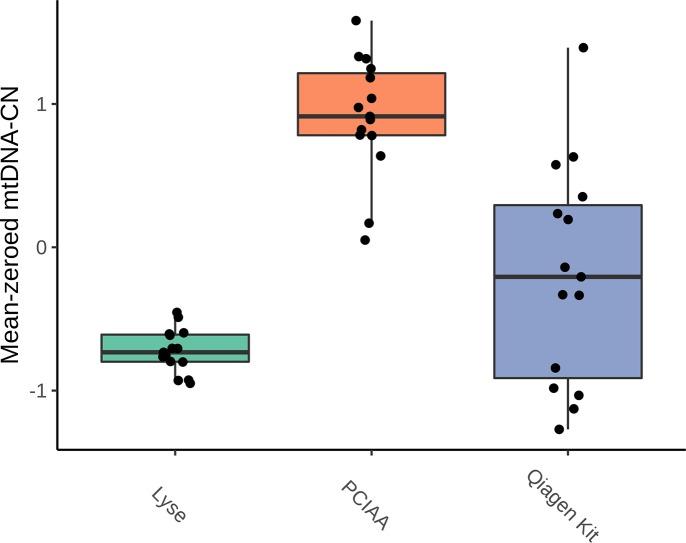
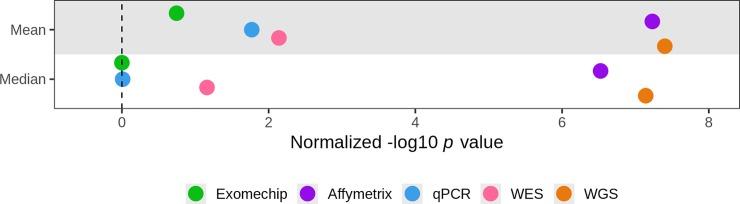
Mitochondrial DNA copy number (mtDNA-CN), a measure of the number of mitochondrial genomes per cell, is a minimally invasive proxy measure for mitochondrial function and has been associated with several aging-related diseases. Although quantitative real-time PCR (qPCR) is the current gold standard method for measuring mtDNA-CN, mtDNA-CN can also be measured from genotyping microarray probe intensities and DNA sequencing read counts. To conduct a comprehensive examination on the performance of these methods, we use known mtDNA-CN correlates (age, sex, white blood cell count, Duffy locus genotype, incident cardiovascular disease) to evaluate mtDNA-CN calculated from qPCR, two microarray platforms, as well as whole genome (WGS) and whole exome sequence (WES) data across 1,085 participants from the Atherosclerosis Risk in Communities (ARIC) study and 3,489 participants from the Multi-Ethnic Study of Atherosclerosis (MESA). We observe mtDNA-CN derived from WGS data is significantly more associated with known correlates compared to all other methods (p < 0.001). Additionally, mtDNA-CN measured from WGS is on average more significantly associated with traits by 5.6 orders of magnitude and has effect size estimates 5.8 times more extreme than the current gold standard of qPCR. We further investigated the role of DNA extraction method on mtDNA-CN estimate reproducibility and found mtDNA-CN estimated from cell lysate is significantly less variable than traditional phenol-chloroform-isoamyl alcohol (p = 5.44x10⁻⁴) and silica-based column selection (p = 2.82x10⁻⁷). In conclusion, we recommend the field moves towards more accurate methods for mtDNA-CN, as well as re-analyze trait associations as more WGS data becomes available from larger initiatives such as TOPMed.
线粒体 DNA 拷贝数(mtDNA-CN),即细胞中线粒体基因组的数量,是一种对线粒体功能的微创替代指标,与多种与衰老相关的疾病有关。虽然实时定量 PCR(qPCR)是目前测量 mtDNA-CN 的金标准方法,但 mtDNA-CN 也可以通过基因分型微阵列探针强度和 DNA 测序读取计数来测量。为了全面检查这些方法的性能,我们使用已知的 mtDNA-CN 相关因素(年龄、性别、白细胞计数、Duffy 基因座基因型、心血管疾病事件)来评估 qPCR、两种微阵列平台以及全基因组(WGS)和全外显子组序列(WES)数据中计算得出的 mtDNA-CN,这些数据来自动脉粥样硬化风险社区(ARIC)研究中的 1085 名参与者和多民族动脉粥样硬化研究(MESA)中的 3489 名参与者。我们观察到,与所有其他方法相比,来自 WGS 数据的 mtDNA-CN 与已知相关因素的相关性更为显著(p<0.001)。此外,与传统的 qPCR 相比,WGS 测量的 mtDNA-CN 与特征的相关性平均高出 5.6 个数量级,且效应大小估计值高出 5.8 倍。我们进一步研究了 DNA 提取方法对 mtDNA-CN 估计重现性的作用,发现细胞裂解物中估计的 mtDNA-CN 变化显著小于传统的酚-氯仿-异戊醇(p=5.44x10⁻⁴)和基于硅的柱选择(p=2.82x10⁻⁷)。总之,我们建议该领域转向更准确的 mtDNA-CN 方法,并在更多来自更大的倡议(如 TOPMed)的 WGS 数据可用时,重新分析特征相关性。

 Zotero 插件