
恶性疟原虫红前期疫苗的研制。
Plasmodium falciparum pre-erythrocytic stage vaccine development.
机构信息
Health Sciences Faculty, Universidad de Boyacá, Tunja, Colombia.
Molecular Biology and Immunology Department, Fundación Instituto de Inmunología de Colombia (FIDIC), Bogotá, Colombia.
出版信息
Malar J. 2020 Feb 3;19(1):56. doi: 10.1186/s12936-020-3141-z.
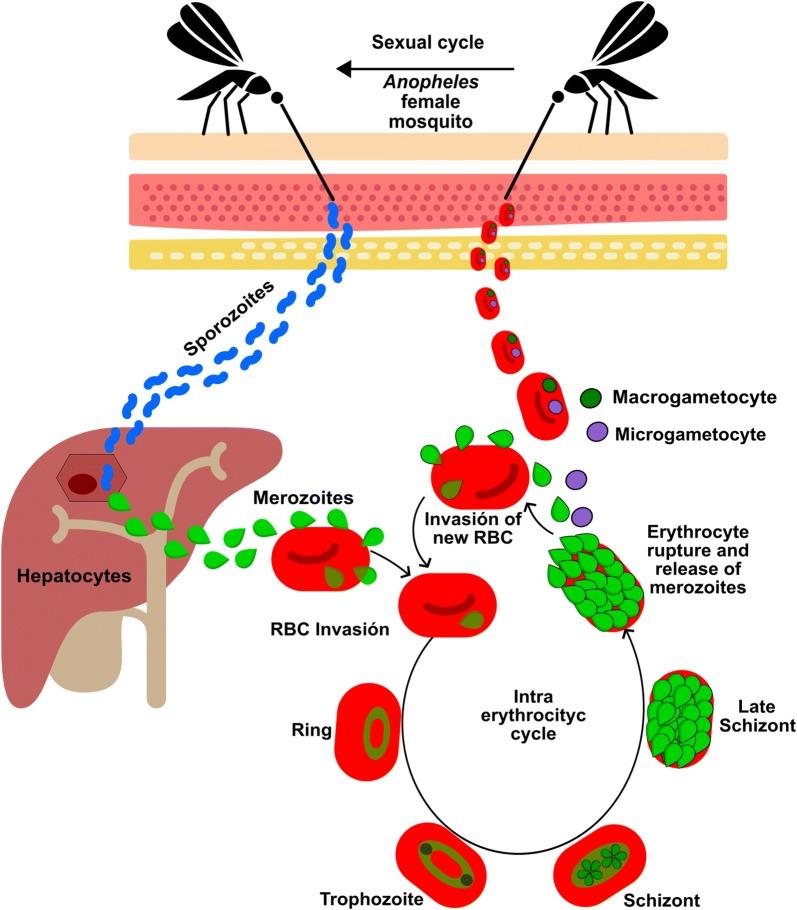
Worldwide strategies between 2010 and 2017 aimed at controlling malarial parasites (mainly Plasmodium falciparum) led to a reduction of just 18% regarding disease incidence rates. Many biologically-derived anti-malarial vaccine candidates have been developed to date; this has involved using many experimental animals, an immense amount of work and the investment of millions of dollars. This review provides an overview of the current state and the main results of clinical trials for sporozoite-targeting vaccines (i.e. the parasite stage infecting the liver) carried out by research groups in areas having variable malaria transmission rates. However, none has led to promising results regarding the effective control of the disease, thereby making it necessary to complement such efforts at finding/introducing new vaccine candidates by adopting a multi-epitope, multi-stage approach, based on minimal subunits of the main sporozoite proteins involved in the invasion of the liver.
2010 年至 2017 年期间,全球范围内旨在控制疟原虫(主要是恶性疟原虫)的策略导致疾病发病率仅降低了 18%。迄今为止,已经开发出许多基于生物的抗疟候选疫苗,这涉及到使用许多实验动物、大量的工作和数百万美元的投资。本综述概述了疟疾传播率不同地区的研究小组开展的针对疟原虫(即感染肝脏的寄生虫阶段)的裂殖子靶向疫苗的临床试验的现状和主要结果。然而,在有效控制疾病方面,没有一种疫苗产生了有希望的结果,因此,有必要通过采用多表位、多阶段的方法,基于主要裂殖子蛋白的最小亚单位来寻找/引入新的疫苗候选物,以补充这些努力。这些蛋白主要参与了对肝脏的入侵。

 Zotero 插件