
在逐渐且持续的金属干扰后,黄鲈微生物组中的群落恢复动态。
Community recovery dynamics in yellow perch microbiome after gradual and constant metallic perturbations.
机构信息
Institut de Biologie Intégrative et des Systèmes (IBIS), Pavillon Charles-Eugène Marchand, Université Laval, 1030, avenue de la Médecine, Québec, QC, G1V 0A6, Canada.
School of Engineering, University of Glasgow, Glasgow, G12 8QQ, Scotland.
出版信息
Microbiome. 2020 Feb 10;8(1):14. doi: 10.1186/s40168-020-0789-0.
BACKGROUND
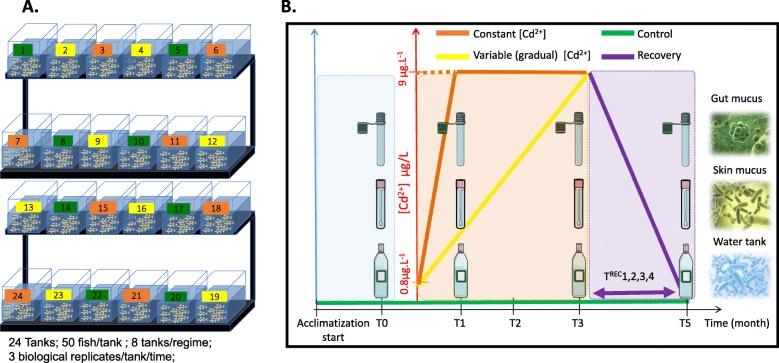
The eco-evolutionary processes ruling post-disturbance microbial assembly remain poorly studied, particularly in host-microbiome systems. The community recovery depends not only on the type, duration, intensity, and gradient of disturbance, but also on the initial community structure, phylogenetic composition, legacy, and habitat (soil, water, host). In this study, yellow perch (Perca flavescens) juveniles were exposed over 90 days to constant and gradual sublethal doses of cadmium chloride. Afterward, the exposure of aquaria tank system to cadmium was ceased for 60 days. The skin, gut and water tank microbiomes in control and treatment groups, were characterized before, during and after the cadmium exposure using 16s rDNA libraries and high throughput sequencing technology (Illumina, Miseq).
RESULTS
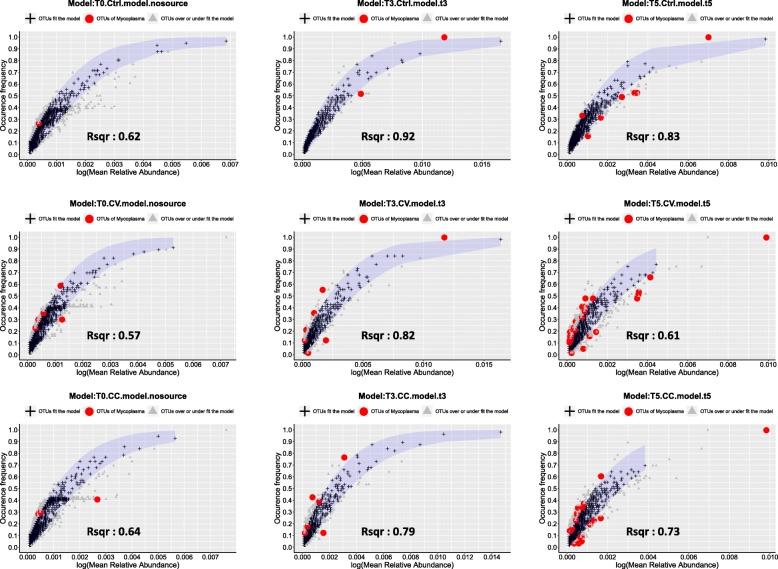
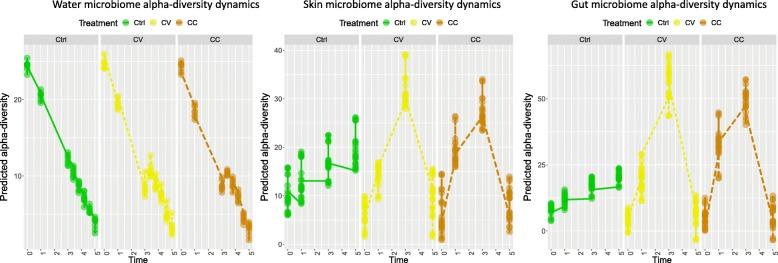
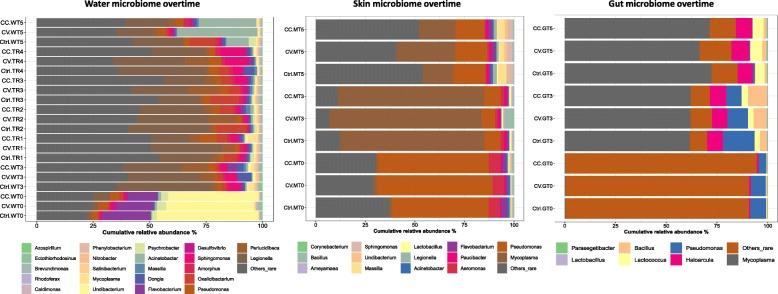
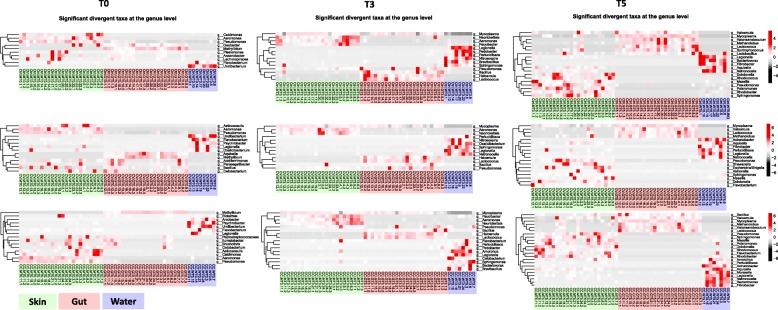
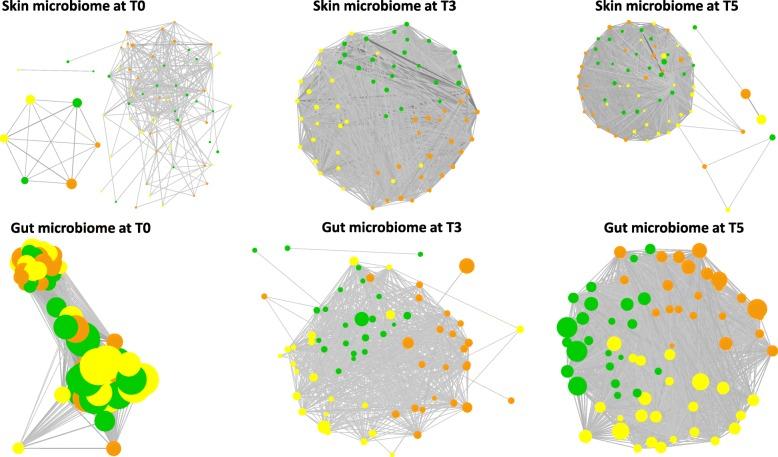
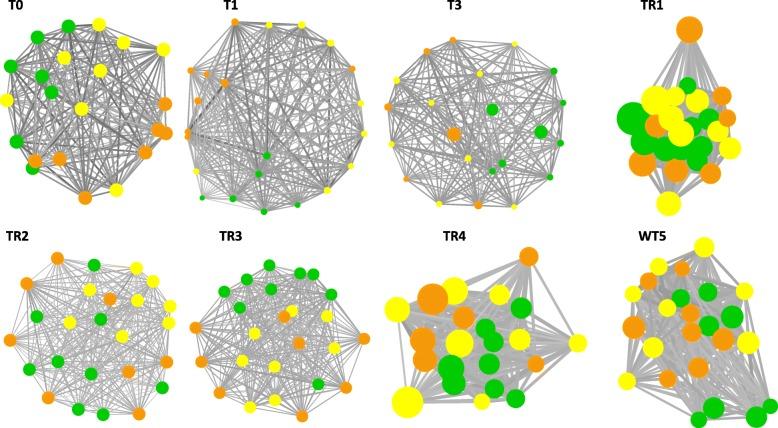
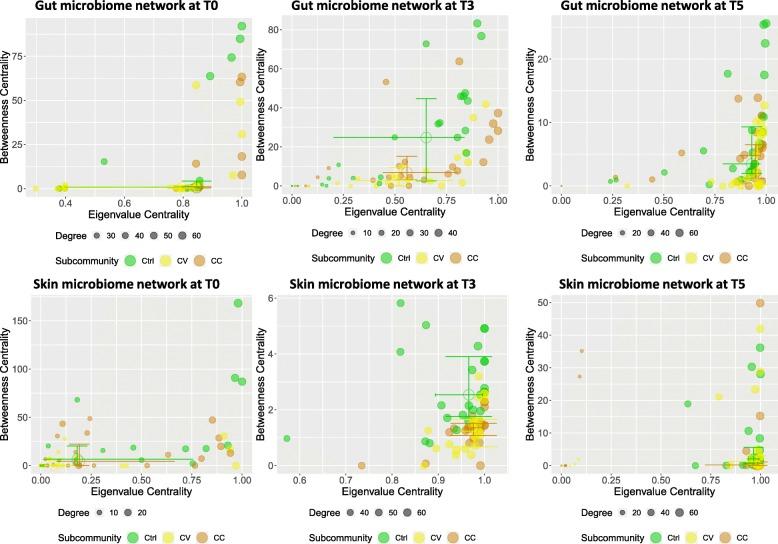
Our data exhibited long-term bioaccumulation of cadmium salts in the liver even after two months since ceasing the exposure. The gradient of cadmium disturbance had differential effects on the perch microbiota recovery, including increases in evenness, taxonomic composition shifts, as well as functional and phylogenetic divergence. The perch microbiome reached an alternative stable state in the skin and nearly complete recovery trajectories in the gut communities. The recovery of skin communities showed a significant proliferation of opportunistic fish pathogens (i.e., Flavobacterium). Our findings provide evidence that neutral processes were a much more significant contributor to microbial community turnover in control treatments than in those treated with cadmium, suggesting the role of selective processes in driving community recovery.
CONCLUSIONS
The short-term metallic disturbance of fish development has important long-term implications for host health. The recovery of microbial communities after metallic exposure depends on the magnitude of exposure (constant, gradual), and the nature of the ecological niche (water, skin, and gut). The skin and gut microbiota of fish exposed to constant concentrations of cadmium (CC) were closer to the control negative than those exposed to the gradual concentrations (CV). Overall, our results show that the microbial assembly during the community recovery were both orchestrated by neutral and deterministic processes. Video Abtract.
背景
主导受扰后微生物群落组装的生态进化过程仍未得到充分研究,特别是在宿主微生物组系统中。群落恢复不仅取决于干扰的类型、持续时间、强度和梯度,还取决于初始群落结构、系统发育组成、演替和生境(土壤、水、宿主)。在这项研究中,黄鲈(Perca flavescens)幼鱼在 90 天内持续暴露于亚致死剂量的氯化镉中。之后,停止了 60 天的水族箱系统暴露。在暴露前后,使用 16s rDNA 文库和高通量测序技术(Illumina,Miseq)对对照组和处理组的皮肤、肠道和水箱微生物组进行了特征描述。
结果
我们的数据显示,即使在停止暴露两个月后,肝脏中的镉盐仍有长期的生物积累。镉干扰的梯度对鲈鱼微生物群落的恢复有不同的影响,包括均匀度增加、分类组成变化,以及功能和系统发育分歧。鲈鱼微生物组在皮肤中达到了替代稳定状态,在肠道群落中几乎完全恢复了轨迹。皮肤群落的恢复显示出鱼类机会性病原体(即黄杆菌)的显著增殖。我们的研究结果表明,在对照处理中,中性过程对微生物群落周转的贡献比在镉处理中更为显著,这表明选择过程在驱动群落恢复方面的作用。
结论
鱼类发育过程中的短期金属干扰对宿主健康有重要的长期影响。暴露于金属后微生物群落的恢复取决于暴露的强度(持续、逐渐)和生态位的性质(水、皮肤和肠道)。暴露于恒定浓度镉(CC)的鱼类的皮肤和肠道微生物组与对照阴性组更接近,而暴露于逐渐浓度镉(CV)的鱼类则更接近对照阳性组。总的来说,我们的研究结果表明,群落恢复过程中的微生物组装是由中性和确定性过程共同控制的。


 Zotero 插件