
鱼类发育中的交织过程:微生物群落演替和免疫成熟。
Interwoven processes in fish development: microbial community succession and immune maturation.
机构信息
Département de Biologie, Institut de Biologie Intégrative et des Systèmes, Université Laval, Québec, Canada.
Department of Aquaculture, Faculty of Fisheries, Hajee Mohammad Danesh Science and Technology University, Basherhat, Bangladesh.
出版信息
PeerJ. 2024 Mar 27;12:e17051. doi: 10.7717/peerj.17051. eCollection 2024.
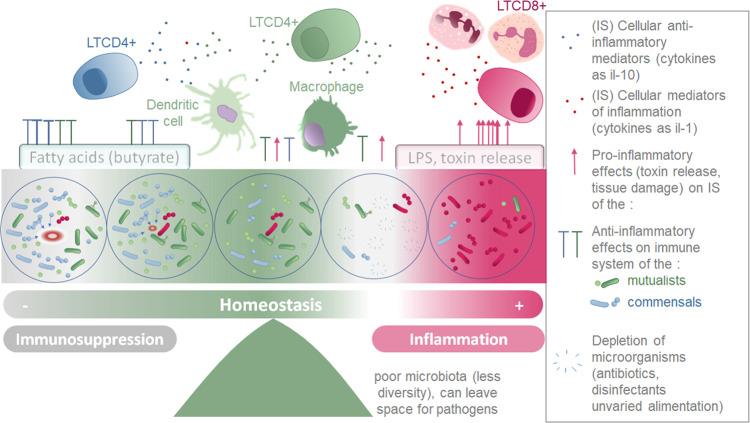
Fishes are hosts for many microorganisms that provide them with beneficial effects on growth, immune system development, nutrition and protection against pathogens. In order to avoid spreading of infectious diseases in aquaculture, prevention includes vaccinations and routine disinfection of eggs and equipment, while curative treatments consist in the administration of antibiotics. Vaccination processes can stress the fish and require substantial farmer's investment. Additionally, disinfection and antibiotics are not specific, and while they may be effective in the short term, they have major drawbacks in the long term. Indeed, they eliminate beneficial bacteria which are useful for the host and promote the raising of antibiotic resistance in beneficial, commensal but also in pathogenic bacterial strains. Numerous publications highlight the importance that plays the diversified microbial community colonizing fish (i.e., microbiota) in the development, health and ultimately survival of their host. This review targets the current knowledge on the bidirectional communication between the microbiota and the fish immune system during fish development. It explores the extent of this mutualistic relationship: on one hand, the effect that microbes exert on the immune system ontogeny of fishes, and on the other hand, the impact of critical steps in immune system development on the microbial recruitment and succession throughout their life. We will first describe the immune system and its ontogeny and gene expression steps in the immune system development of fishes. Secondly, the plurality of the microbiotas (depending on host organism, organ, and development stage) will be reviewed. Then, a description of the constant interactions between microbiota and immune system throughout the fish's life stages will be discussed. Healthy microbiotas allow immune system maturation and modulation of inflammation, both of which contribute to immune homeostasis. Thus, immune equilibrium is closely linked to microbiota stability and to the stages of microbial community succession during the host development. We will provide examples from several fish species and describe more extensively the mechanisms occurring in zebrafish model because immune system ontogeny is much more finely described for this species, thanks to the many existing zebrafish mutants which allow more precise investigations. We will conclude on how the conceptual framework associated to the research on the immune system will benefit from considering the relations between microbiota and immune system maturation. More precisely, the development of active tolerance of the microbiota from the earliest stages of life enables the sustainable establishment of a complex healthy microbial community in the adult host. Establishing a balanced host-microbiota interaction avoids triggering deleterious inflammation, and maintains immunological and microbiological homeostasis.
鱼类是许多微生物的宿主,这些微生物对鱼类的生长、免疫系统发育、营养和抵御病原体具有有益作用。为了避免水产养殖中传染病的传播,预防措施包括对鱼类进行疫苗接种和对鱼卵及设备进行常规消毒,而治疗方法则包括使用抗生素。疫苗接种过程可能会给鱼类带来压力,并且需要养殖户大量投资。此外,消毒和抗生素的作用不具有针对性,虽然在短期内可能有效,但从长期来看存在重大缺陷。事实上,它们会消灭对宿主有益的有益细菌,并促进有益的、共生的甚至是致病细菌菌株对抗生素耐药性的提高。大量出版物强调了定植在鱼类(即微生物组)中多样化微生物群落对宿主发育、健康乃至生存的重要性。本综述针对当前关于鱼类发育过程中微生物组与鱼类免疫系统之间双向交流的知识。它探讨了这种互利关系的程度:一方面,微生物对鱼类免疫系统个体发育的影响,另一方面,免疫系统发育的关键步骤对其一生中微生物的招募和演替的影响。我们将首先描述鱼类免疫系统及其个体发育和基因表达步骤。其次,将综述微生物组的多样性(取决于宿主生物体、器官和发育阶段)。然后,将讨论微生物组与免疫系统在鱼类整个生命阶段的持续相互作用。健康的微生物组允许免疫系统成熟并调节炎症,这两者都有助于免疫稳态。因此,免疫平衡与微生物组的稳定性密切相关,并且与宿主发育过程中微生物群落演替的阶段密切相关。我们将提供来自几种鱼类物种的示例,并更详细地描述在斑马鱼模型中发生的机制,因为该物种的免疫系统个体发育描述得更加详细,这要归功于许多现有的斑马鱼突变体,它们可以进行更精确的研究。我们将总结出与免疫系统研究相关的概念框架如何受益于考虑微生物组和免疫系统成熟之间的关系。更具体地说,从生命的最早阶段开始对微生物组进行主动耐受,可以使成年宿主中复杂的健康微生物群落得以可持续建立。建立平衡的宿主-微生物组相互作用可以避免引发有害炎症,并维持免疫和微生物学的稳态。


 Zotero 插件