
基于网络药理学的策略探究小檗碱治疗慢性胃炎的药理机制
Network Pharmacology-Based Strategy to Investigate the Pharmacologic Mechanisms of Koidz. for the Treatment of Chronic Gastritis.
作者信息
Yang Songhong, Zhang Jinlian, Yan Yiqi, Yang Ming, Li Chao, Li Junmao, Zhong Lingyun, Gong Qianfeng, Yu Huan
机构信息
School of Pharmacy, Jiangxi University of Traditional Chinese Medicine, Nanchang, China.
Chinese Medicine Research Institute, Tianjin University of Traditional Chinese Medicine, Tianjin, China.
出版信息
Front Pharmacol. 2020 Jan 29;10:1629. doi: 10.3389/fphar.2019.01629. eCollection 2019.
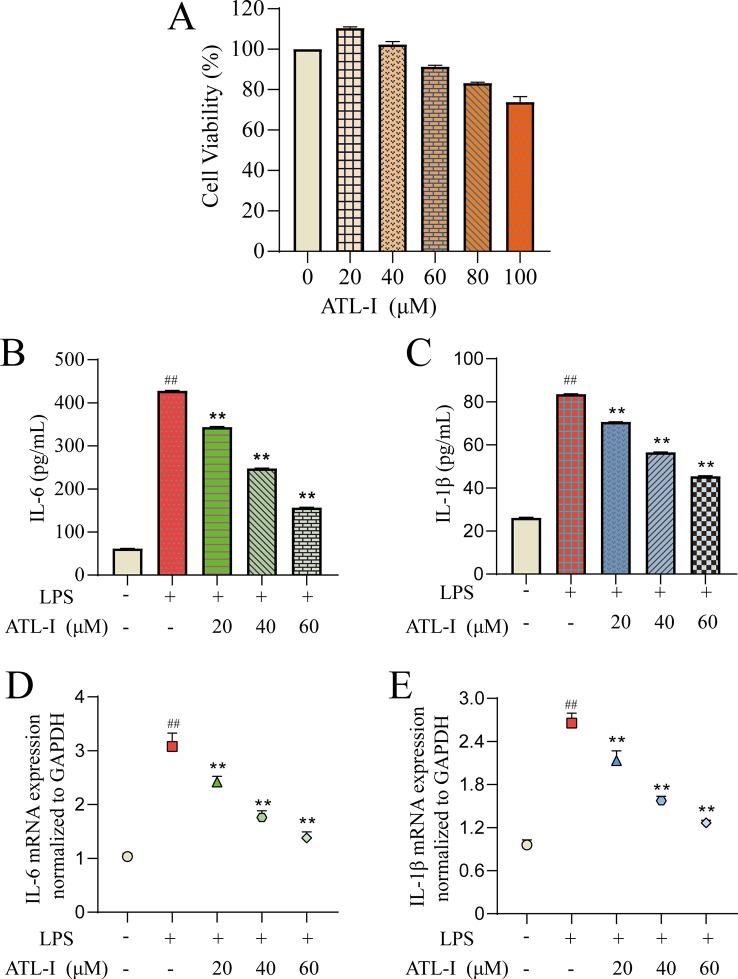
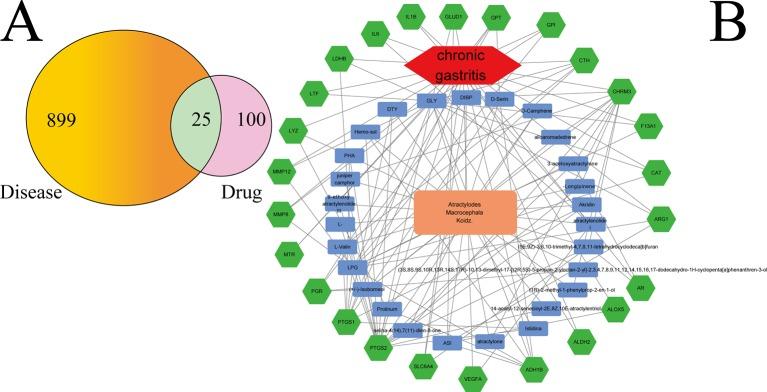
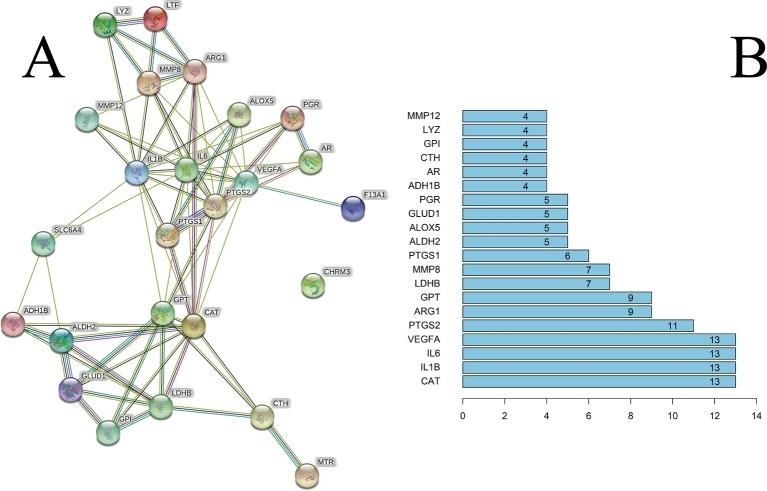
Chronic gastritis (CG) is an inflammatory disease. Koidz (AMK) is employed in traditional Chinese medicine (TCM) to treat various disorders. AMK can be efficacious against CG, but the active ingredients, drug targets, and its exact molecular mechanism are not known. We employed network pharmacology to analyze the active ingredients, drug targets, and key pathways of AMK in CG treatment. Seventy-seven AMK candidate ingredients were selected from four databases, and 27 active ingredients were selected for CG treatment. Twenty-five overlapping gene symbols related to CG and drugs were obtained from GeneCards and OMIM databases. A protein-protein interaction (PPI) network and TCM comprehensive network (Drug-Ingredients-Gene symbols-Disease network) were constructed, and 528 Gene Ontology (GO) terms and 26 pathways were obtained by analyses of enrichment of GO pathways and Kyoto Encyclopedia of Genes and Genomes (KEGG) pathways. We suggest that the interleukin-17 signaling pathway, C-type lectin receptor signaling pathway, tumor necrosis factor signaling pathway, and AGE-RAGE signaling pathway in diabetic complications might serve as the key points and principal pathways for CG treatment. We also evaluated the reliability of some important active ingredients and targets by experiments. We showed that AMK probably influences the inflammatory response, amino acid synthesis, and energy metabolism when treating CG. This study provides novel insights for researchers to explore the mechanism of action of TCM systematically.
慢性胃炎(CG)是一种炎症性疾病。苦地丁(AMK)被用于传统中医(TCM)治疗多种病症。AMK对CG可能有效,但其活性成分、药物靶点及其确切分子机制尚不清楚。我们运用网络药理学分析AMK治疗CG的活性成分、药物靶点及关键通路。从四个数据库中筛选出77种AMK候选成分,选取27种活性成分用于CG治疗。从GeneCards和OMIM数据库中获得25个与CG和药物相关的重叠基因符号。构建了蛋白质-蛋白质相互作用(PPI)网络和中医综合网络(药物-成分-基因符号-疾病网络),通过基因本体论(GO)通路和京都基因与基因组百科全书(KEGG)通路的富集分析获得了528个GO术语和26条通路。我们认为糖尿病并发症中的白细胞介素-17信号通路、C型凝集素受体信号通路、肿瘤坏死因子信号通路和晚期糖基化终末产物-受体(AGE-RAGE)信号通路可能是CG治疗的关键点和主要通路。我们还通过实验评估了一些重要活性成分和靶点的可靠性。我们发现AMK在治疗CG时可能影响炎症反应、氨基酸合成和能量代谢。本研究为研究人员系统探索中医作用机制提供了新的见解。



 Zotero 插件