
苓桂术甘汤激活SIRT1-AMPK-PGC1α信号通路,改善心肌梗死所致慢性心力衰竭大鼠的线粒体损伤和氧化损伤。
Linggui Zhugan Decoction activates the SIRT1-AMPK-PGC1α signaling pathway to improve mitochondrial and oxidative damage in rats with chronic heart failure caused by myocardial infarction.
作者信息
Yu Siyi, Qian Hang, Tian Dawei, Yang Mingming, Li Dongfeng, Xu Hao, Chen Jishun, Yang Jingning, Hao Xincai, Liu Zhixin, Zhong Jixin, Yang Handong, Chen Xinlong, Min Xinwen, Chen Jun
机构信息
Sinopharm Dongfeng General Hospital (Hubei Clinical Research Center of Hypertension), Hubei University of Medicine, Shiyan, Hubei, China.
Jiujiang No. 1 People's Hospital, Affiliated Jiujiang Hospital of Nanchang University, Jiujiang, Jiangxi, China.
出版信息
Front Pharmacol. 2023 Apr 5;14:1074837. doi: 10.3389/fphar.2023.1074837. eCollection 2023.
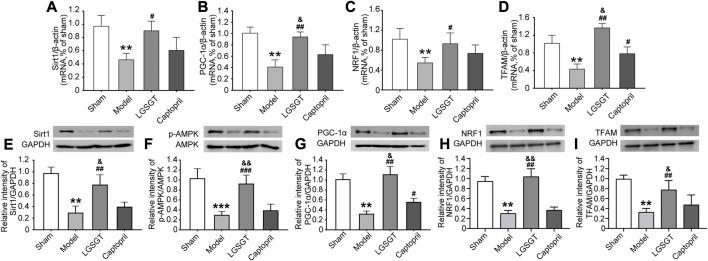
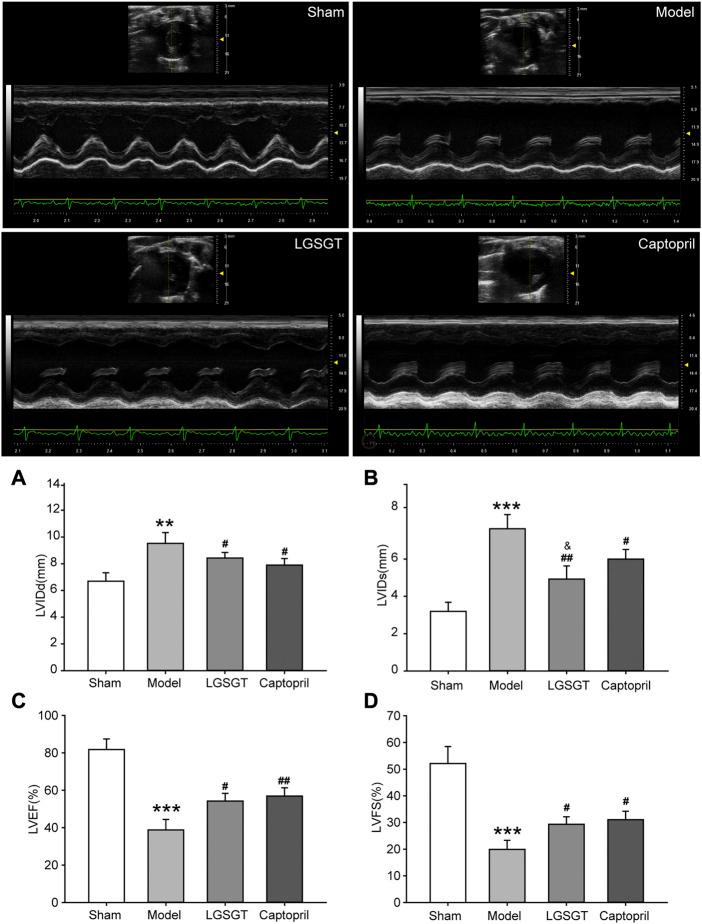
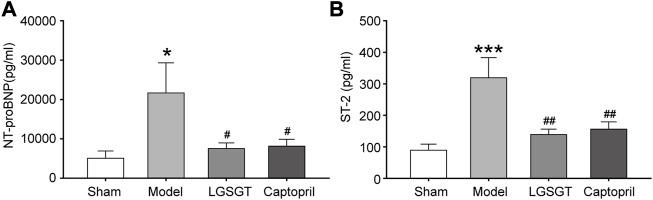
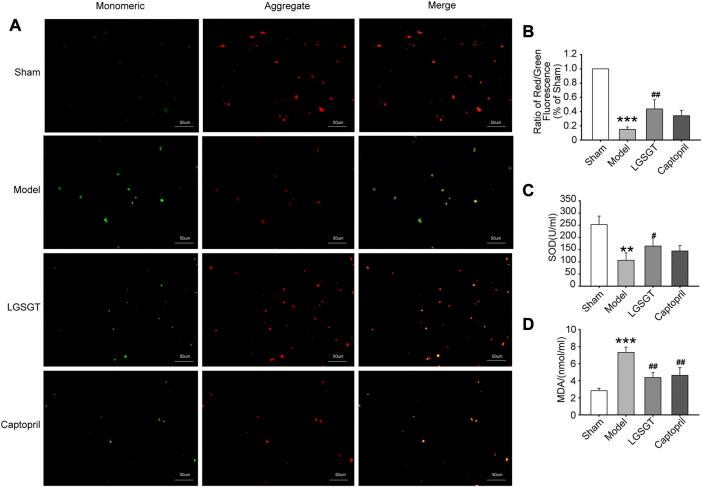
To investigate the effects of Linggui Zhugan Decoction on mitochondrial and oxidative damage in rats with chronic heart failure after myocardial infarction and the related mechanisms. Chronic heart failure after myocardial infarction was established by coronary artery ligation. Heart failure rats were randomly divided into three groups: Model group ( = 11), Linggui Zhugan Decoction group ( = 12), and captopril group ( = 11). Rats whose coronary arteries were only threaded and not ligated were sham group ( = 11). Cardiac function, superoxide dismutase (SOD), malondialdehyde (MDA) contents, soluble growth-stimulating expression factor (ST2), and N-terminal B-type brain natriuretic peptide precursor (NTproBNP) levels were analyzed after treatment. Moreover, the level of mitochondrial membrane potential was detected by JC-1 staining, the ultrastructural of myocardial mitochondria were observed by transmission electron microscopy. The related signal pathway of silent information regulator factor 2-related enzyme 1 (SIRT1), adenylate activated protein kinase (AMPK), phosphorylated adenylate activated protein kinase (p-AMPK), and peroxisome proliferator-activated receptor coactivator 1α (PGC-1α) is an important pathway to regulate mitochondrial energy metabolism, and to initiate mitochondrial biogenesis. The expression level was detected by Western blot and reverse transcription to explore the mechanism of the decoction. Compared with the model rats, Linggui Zhugan Decoction significantly improved cardiac function ( < 0.05), reduced MDA production ( < 0.01), increased SOD activity ( < 0.05), reduced ST-2( < 0.01), and NT-proBNP( < 0.05) levels, increased mitochondrial membrane potential, and improved mitochondria function. In addition, Linggui Zhugan Decoction upregulated the expression of SIRT1, p-AMPK, PGC-1α protein, and mRNA in cardiac myocytes. Linggui Zhugan Decoction can improve the cardiac function of heart failure rats by enhancing myocardial antioxidant capacity and protecting the mitochondrial function, the mechanism is related to activating SIRT1/AMPK/PGC-1α signaling pathway.
探讨苓桂术甘汤对心肌梗死后慢性心力衰竭大鼠线粒体及氧化损伤的影响及其相关机制。采用冠状动脉结扎法制备心肌梗死后慢性心力衰竭大鼠模型。将心力衰竭大鼠随机分为三组:模型组(n = 11)、苓桂术甘汤组(n = 12)和卡托普利组(n = 11)。仅穿线未结扎冠状动脉的大鼠为假手术组(n = 11)。治疗后分析心功能、超氧化物歧化酶(SOD)、丙二醛(MDA)含量、可溶性生长刺激表达因子(ST2)和N末端B型脑钠肽前体(NTproBNP)水平。此外,采用JC-1染色检测线粒体膜电位水平,通过透射电子显微镜观察心肌线粒体超微结构。沉默信息调节因子2相关酶1(SIRT1)、腺苷酸活化蛋白激酶(AMPK)、磷酸化腺苷酸活化蛋白激酶(p-AMPK)和过氧化物酶体增殖物激活受体γ共激活因子1α(PGC-1α)的相关信号通路是调节线粒体能量代谢和启动线粒体生物发生的重要途径。通过蛋白质印迹法和逆转录检测其表达水平,以探讨该方的作用机制。与模型大鼠相比,苓桂术甘汤可显著改善心功能(P < 0.05),降低MDA生成(P < 0.01),提高SOD活性(P < 0.05),降低ST-2(P < 0.01)和NT-proBNP(P < 0.05)水平,增加线粒体膜电位,改善线粒体功能。此外,苓桂术甘汤上调心肌细胞中SIRT1、p-AMPK、PGC-1α蛋白及mRNA的表达。苓桂术甘汤可通过增强心肌抗氧化能力和保护线粒体功能来改善心力衰竭大鼠的心功能,其机制与激活SIRT1/AMPK/PGC-1α信号通路有关。


 Zotero 插件