
建立两阶段肢体缺血模型以更好地模拟人类外周动脉疾病。
Development of a two-stage limb ischemia model to better simulate human peripheral artery disease.
机构信息
The Vascular Biology Unit, Queensland Research Centre for Peripheral Vascular Disease, School of Medicine and Dentistry, James Cook University, Townsville, Queensland, 4811, Australia.
Department of Vascular and Endovascular Surgery, The Townsville Hospital, Townsville, Queensland, 4811, Australia.
出版信息
Sci Rep. 2020 Feb 26;10(1):3449. doi: 10.1038/s41598-020-60352-4.
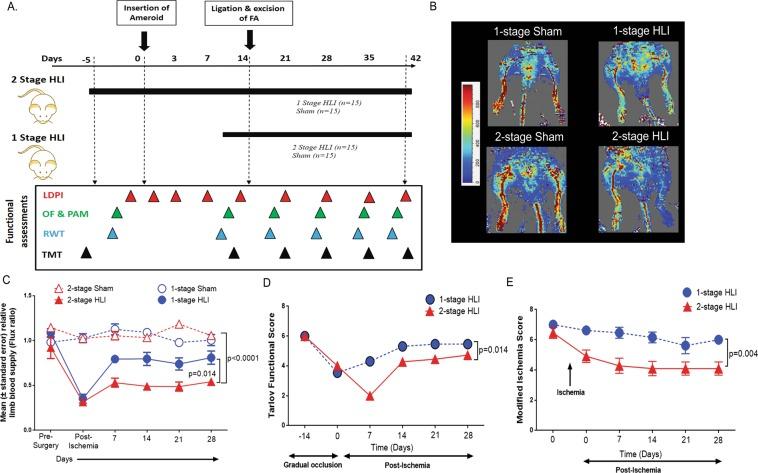
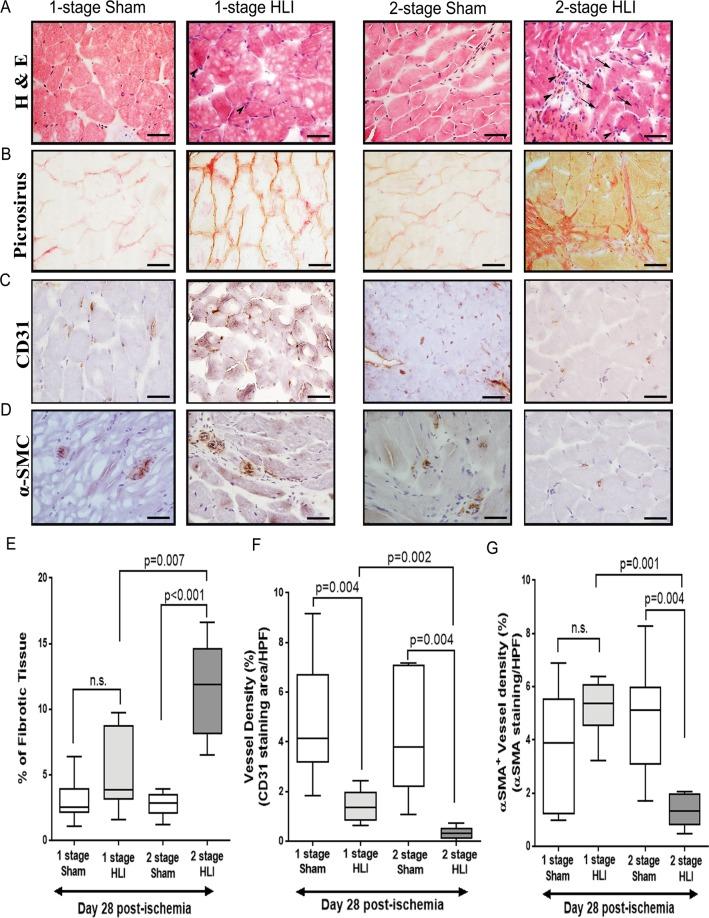
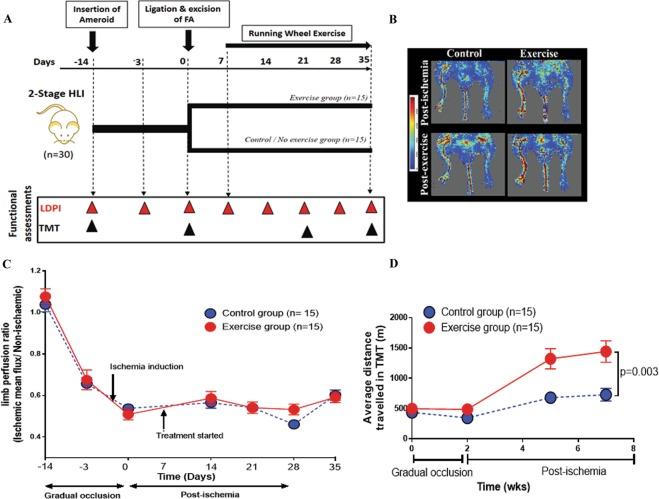
Peripheral arterial disease (PAD) develops due to the narrowing or blockage of arteries supplying blood to the lower limbs. Surgical and endovascular interventions are the main treatments for advanced PAD but alternative and adjunctive medical therapies are needed. Currently the main preclinical experimental model employed in PAD research is based on induction of acute hind limb ischemia (HLI) by a 1-stage procedure. Since there are concerns regarding the ability to translate findings from this animal model to patients, we aimed to develop a novel clinically relevant animal model of PAD. HLI was induced in male Apolipoprotein E (ApoE) deficient mice by a 2-stage procedure of initial gradual femoral artery occlusion by ameroid constrictors for 14 days and subsequent excision of the femoral artery. This 2-stage HLI model was compared to the classical 1-stage HLI model and sham controls. Ischemia severity was assessed using Laser Doppler Perfusion Imaging (LDPI). Ambulatory ability was assessed using an open field test, a treadmill test and using established scoring scales. Molecular markers of angiogenesis and shear stress were assessed within gastrocnemius muscle tissue samples using quantitative polymerase chain reaction. HLI was more severe in mice receiving the 2-stage compared to the 1-stage ischemia induction procedure as assessed by LDPI (p = 0.014), and reflected in a higher ischemic score (p = 0.004) and lower average distance travelled on a treadmill test (p = 0.045). Mice undergoing the 2-stage HLI also had lower expression of angiogenesis markers (vascular endothelial growth factor, p = 0.004; vascular endothelial growth factor- receptor 2, p = 0.008) and shear stress response mechano-transducer transient receptor potential vanilloid 4 (p = 0.041) within gastrocnemius muscle samples, compared to animals having the 1-stage HLI procedure. Mice subjected to the 2-stage HLI receiving an exercise program showed significantly greater improvement in their ambulatory ability on a treadmill test than a sedentary control group. This study describes a novel model of HLI which leads to more severe and sustained ischemia than the conventionally used model. Exercise therapy, which has established efficacy in PAD patients, was also effective in this new model. This new model maybe useful in the evaluation of potential novel PAD therapies.
外周动脉疾病 (PAD) 是由于供应下肢血液的动脉变窄或阻塞而发展的。手术和血管内介入是治疗晚期 PAD 的主要方法,但需要替代和辅助的医学治疗。目前,PAD 研究中使用的主要临床前实验模型是基于通过 1 期手术诱导急性下肢缺血 (HLI)。由于人们担心从这种动物模型中获得的研究结果能否转化为患者,因此我们旨在开发一种新的、与临床相关的 PAD 动物模型。通过对雄性载脂蛋白 E (ApoE) 缺陷小鼠进行 2 期手术,逐渐用 ameroid 缩窄器阻塞股动脉 14 天,然后切除股动脉,诱导 HLI。将这种 2 期 HLI 模型与经典的 1 期 HLI 模型和假手术对照组进行比较。使用激光多普勒灌注成像 (LDPI) 评估缺血严重程度。使用旷场测试、跑步机测试和既定评分量表评估活动能力。使用定量聚合酶链反应评估腓肠肌组织样本中血管生成和切应力的分子标志物。通过 LDPI 评估,接受 2 期缺血诱导程序的小鼠的 HLI 比接受 1 期缺血诱导程序的小鼠更严重 (p=0.014),并且表现为更高的缺血评分 (p=0.004) 和跑步机测试中平均行驶距离更低 (p=0.045)。接受 2 期 HLI 的小鼠腓肠肌样本中的血管生成标志物 (血管内皮生长因子,p=0.004;血管内皮生长因子受体 2,p=0.008) 和切应力反应机械转导瞬时受体电位香草酸 4 的表达也较低 (p=0.041),与接受 1 期 HLI 手术的动物相比。接受 2 期 HLI 并接受运动方案的小鼠在跑步机测试中的活动能力改善明显大于久坐对照组。本研究描述了一种新的 HLI 模型,与传统使用的模型相比,该模型导致更严重和持续的缺血。在 PAD 患者中已证实有效的运动疗法在这种新模型中也同样有效。这种新模型可能有助于评估潜在的新型 PAD 治疗方法。



 Zotero 插件