
交叉呈递 XCR1 树突状细胞作为癌症免疫治疗的靶点。
Cross-Presenting XCR1 Dendritic Cells as Targets for Cancer Immunotherapy.
机构信息
Telethon Kids Institute, University of Western Australia, Perth Children's Hospital, Nedlands, WA 6009, Australia.
School of Biomedical Sciences, The University of Western Australia, Crawley, WA 6009, Australia.
出版信息
Cells. 2020 Feb 28;9(3):565. doi: 10.3390/cells9030565.
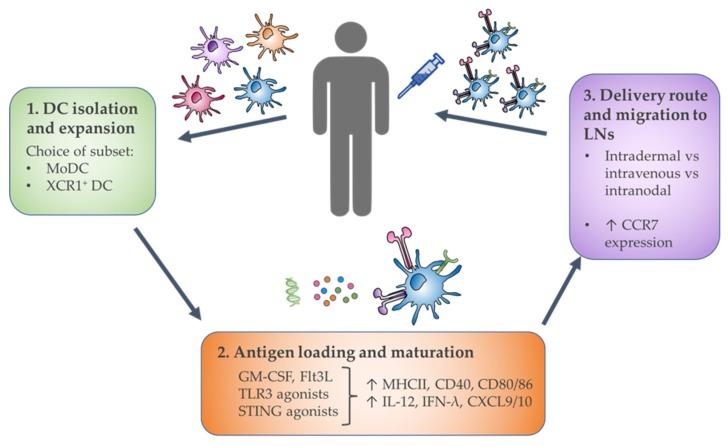
The use of dendritic cells (DCs) to generate effective anti-tumor T cell immunity has garnered much attention over the last thirty-plus years. Despite this, limited clinical benefit has been demonstrated thus far. There has been a revival of interest in DC-based treatment strategies following the remarkable patient responses observed with novel checkpoint blockade therapies, due to the potential for synergistic treatment. Cross-presenting DCs are recognized for their ability to prime CD8 T cell responses to directly induce tumor death. Consequently, they are an attractive target for next-generation DC-based strategies. In this review, we define the universal classification system for cross-presenting DCs, and the vital role of this subset in mediating anti-tumor immunity. Furthermore, we will detail methods of targeting these DCs both ex vivo and in vivo to boost their function and drive effective anti-tumor responses.
在过去三十多年里,利用树突状细胞(DC)产生有效的抗肿瘤 T 细胞免疫已引起广泛关注。尽管如此,迄今为止,临床获益有限。新型检查点阻断疗法观察到显著的患者反应后,基于 DC 的治疗策略重新受到关注,因为这可能具有协同治疗作用。由于交叉呈递 DC 能够刺激 CD8 T 细胞反应,直接诱导肿瘤死亡,因此它们成为下一代基于 DC 的策略的有吸引力的靶点。在这篇综述中,我们定义了交叉呈递 DC 的通用分类系统,以及该亚群在介导抗肿瘤免疫中的重要作用。此外,我们将详细介绍体外和体内靶向这些 DC 的方法,以增强其功能并驱动有效的抗肿瘤反应。

 Zotero 插件