
浊流对深海沉积物中微塑料的搬运与埋藏
Transport and Burial of Microplastics in Deep-Marine Sediments by Turbidity Currents.
作者信息
Pohl Florian, Eggenhuisen Joris T, Kane Ian A, Clare Michael A
机构信息
Faculty of Geosciences, Utrecht University, PO Box 80021, 3508TA Utrecht, The Netherlands.
Department of Earth Sciences, Durham University, Durham 1DH 3LE, United Kingdom.
出版信息
Environ Sci Technol. 2020 Apr 7;54(7):4180-4189. doi: 10.1021/acs.est.9b07527. Epub 2020 Mar 13.
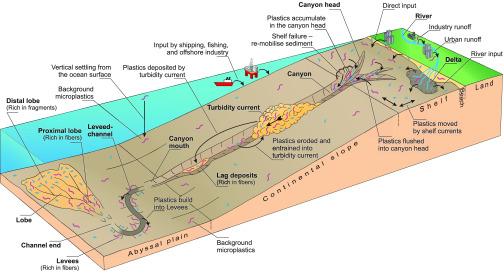
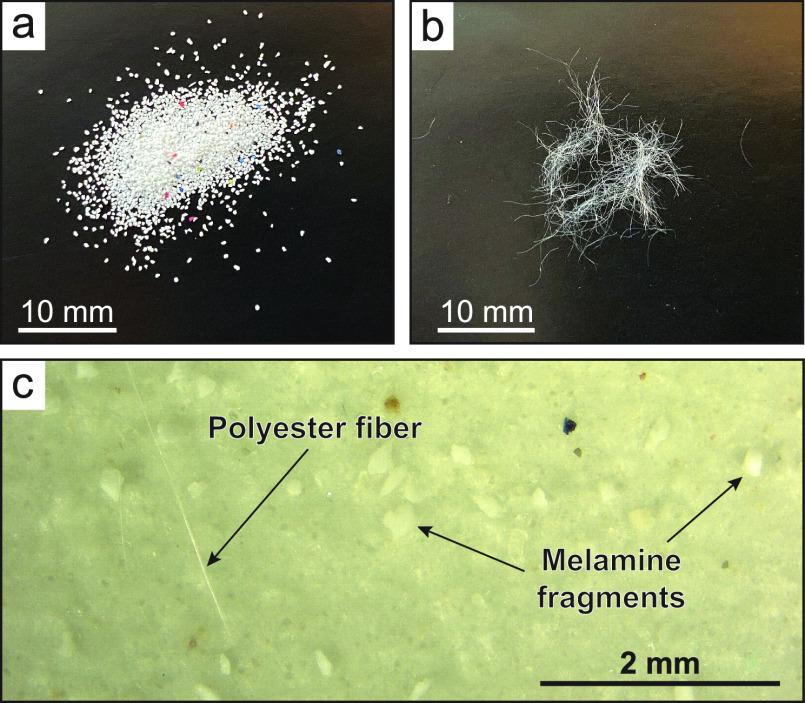
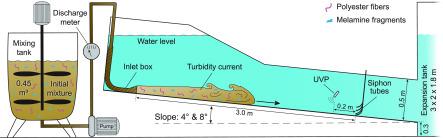
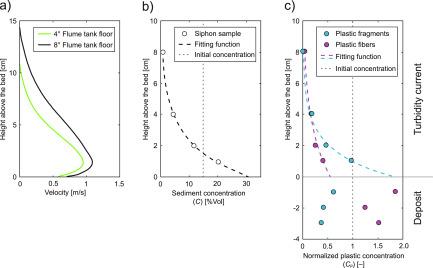
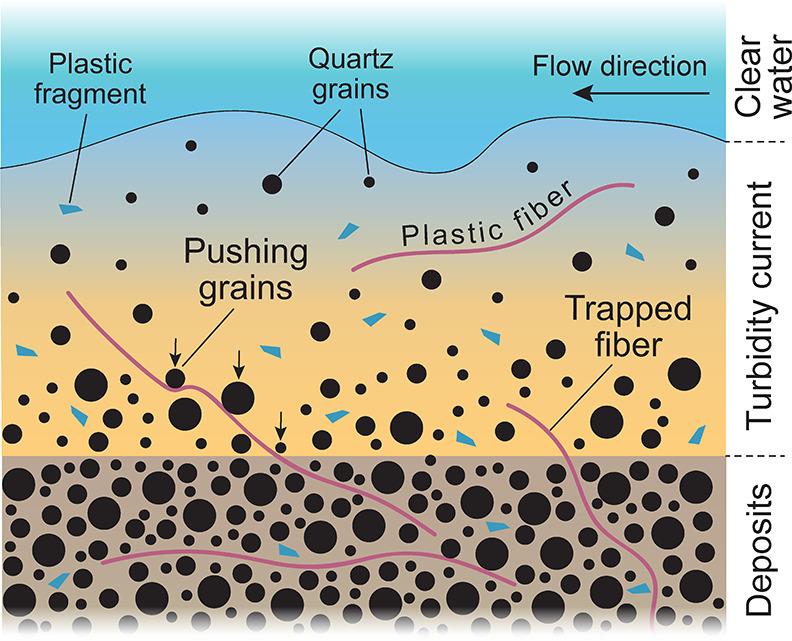
The threat posed by plastic pollution to marine ecosystems and human health is under increasing scrutiny. Much of the macro- and microplastic in the ocean ends up on the seafloor, with some of the highest concentrations reported in submarine canyons that intersect the continental shelf and directly connect to terrestrial plastic sources. Gravity-driven avalanches, known as turbidity currents, are the primary process for delivering terrestrial sediment and organic carbon to the deep sea through submarine canyons. However, the ability of turbidity currents to transport and bury plastics is essentially unstudied. Using flume experiments, we investigate how turbidity currents transport microplastics, and their role in differential burial of microplastic fragments and fibers. We show that microplastic fragments become relatively concentrated within the base of turbidity currents, whereas fibers are more homogeneously distributed throughout the flow. Surprisingly, the resultant deposits show an opposing trend, as they are enriched with fibers, rather than fragments. We explain this apparent contradiction by a depositional mechanism whereby fibers are preferentially removed from suspension and buried in the deposits as they are trapped between settling sand-grains. Our results suggest that turbidity currents potentially distribute and bury large quantities of microplastics in seafloor sediments.
塑料污染对海洋生态系统和人类健康构成的威胁正受到越来越多的审视。海洋中的大部分宏观和微观塑料最终都沉积在海底,据报道,在与大陆架相交并直接连接到陆地塑料源的海底峡谷中,塑料浓度最高。重力驱动的雪崩,即浊流,是通过海底峡谷将陆地沉积物和有机碳输送到深海的主要过程。然而,浊流运输和掩埋塑料的能力基本上尚未得到研究。通过水槽实验,我们研究了浊流如何运输微塑料,以及它们在微塑料碎片和纤维的差异掩埋中的作用。我们发现,微塑料碎片在浊流底部相对集中,而纤维在整个水流中分布更为均匀。令人惊讶的是,最终的沉积物呈现出相反的趋势,因为它们富含纤维而非碎片。我们通过一种沉积机制来解释这一明显的矛盾,即纤维在沉降的沙粒之间被困住时,会优先从悬浮液中去除并掩埋在沉积物中。我们的结果表明,浊流可能在海底沉积物中分布和掩埋大量微塑料。
 Zotero 插件