
北大西洋上层海域中大于 500 微米的塑料碎片和海洋生物的远洋分布。
Pelagic distribution of plastic debris (> 500 µm) and marine organisms in the upper layer of the North Atlantic Ocean.
机构信息
The Ocean Cleanup, Rotterdam, The Netherlands.
Egger Research and Consulting, St. Gallen, Switzerland.
出版信息
Sci Rep. 2022 Aug 11;12(1):13465. doi: 10.1038/s41598-022-17742-7.
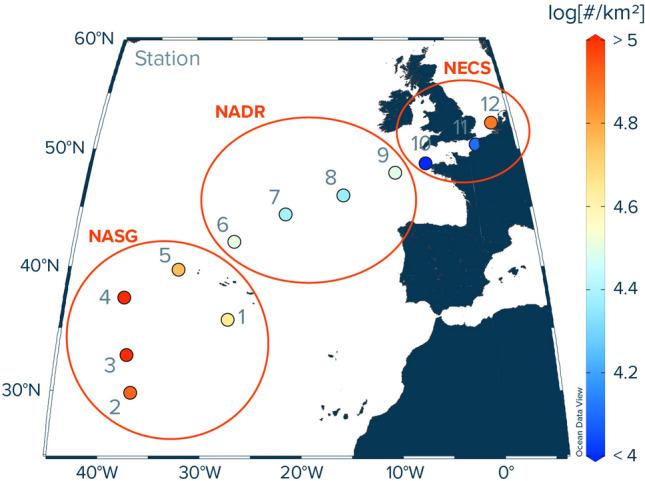
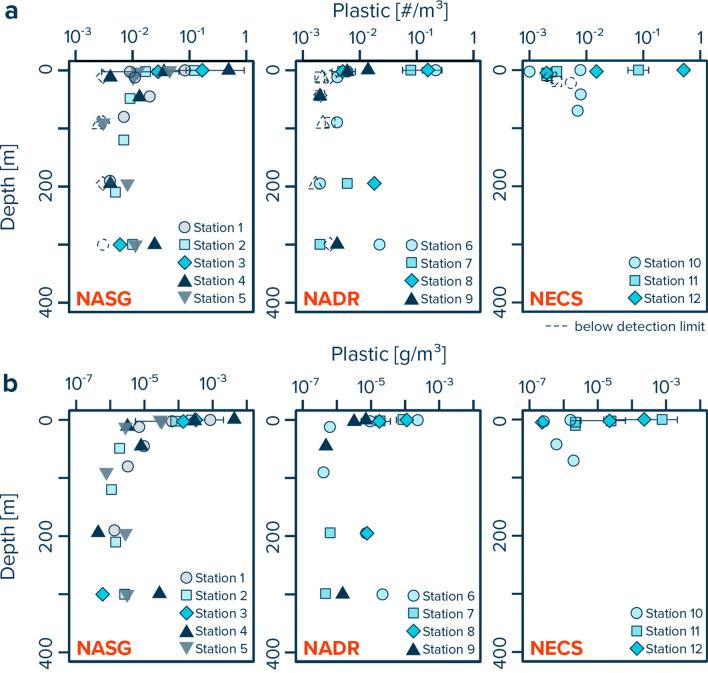
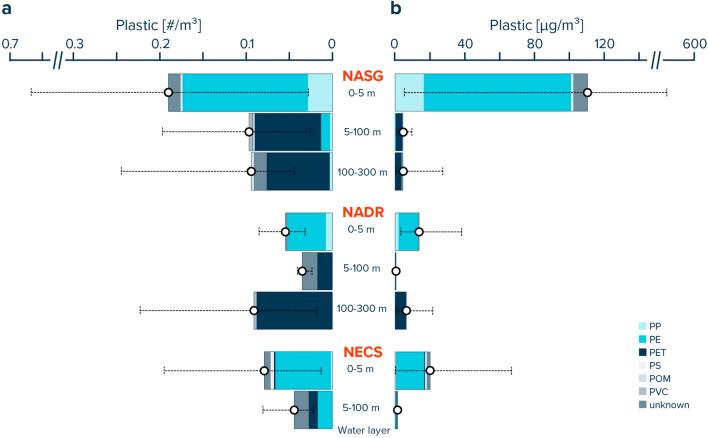
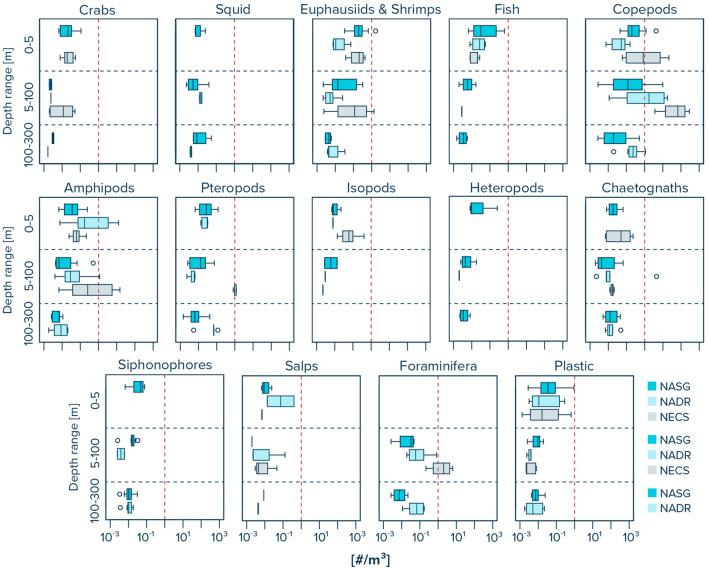
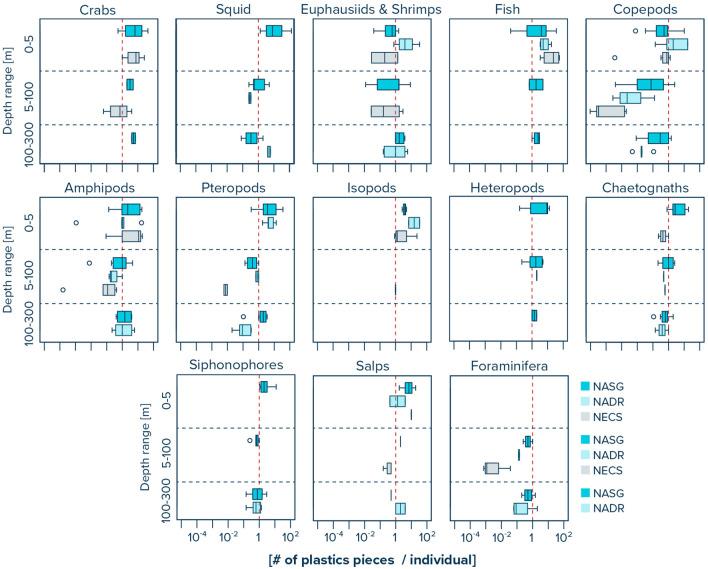
At present, the distribution of plastic debris in the ocean water column remains largely unknown. Such information, however, is required to assess the exposure of marine organisms to plastic pollution as well as to calculate the ocean plastic mass balance. Here, we provide water column profiles (0-300 m water depth) of plastic (0.05-5 cm in size) concentration and key planktonic species from the eastern North Atlantic Ocean. The amount of plastic decreases rapidly in the upper few meters, from ~ 1 item/m (~ 1000 µg/m) at the sea surface to values of ~ 0.001-0.01 items/m (~ 0.1-10 µg/m) at 300 m depth. Ratios of plastic to plankton varied between ~ 10 and 1 plastic particles per individual with highest ratios typically found in the surface waters. We further observed that pelagic ratios were generally higher in the water column below the subtropical gyre compared to those in more coastal ecosystems. Lastly, we show plastic to (non-gelatinous) plankton ratios could be as high as ~ 10-10 plastic particles per individual when considering reported concentrations of small microplastics < 100 μm. Plastic pollution in our oceans may therefore soon exceed estimated safe concentrations for many pelagic species.
目前,海洋水柱中塑料碎片的分布在很大程度上仍然未知。然而,这些信息是评估海洋生物暴露于塑料污染程度以及计算海洋塑料质量平衡所必需的。在这里,我们提供了来自东北大西洋的水柱剖面(0-300 米水深)的塑料(0.05-5 厘米大小)浓度和关键浮游生物物种的数据。在表层几米线内,塑料的数量迅速减少,从海面的约 1 个/项(1000µg/m)到 300 米深处的约 0.001-0.01 个/项(0.1-10µg/m)。塑料与浮游生物的比例在 10 到 1 个塑料颗粒/个体之间变化,最高比例通常出现在表层水中。我们还观察到,与更接近海岸的生态系统相比,在亚热带环流下方的水柱中,远洋比率通常更高。最后,当考虑到报告的小微塑料 <100µm 的浓度时,我们发现塑料与(非凝胶状)浮游生物的比例可以高达每个个体 10-10 个塑料颗粒。因此,海洋中的塑料污染可能很快就会超过许多远洋物种的估计安全浓度。

 Zotero 插件