
北太平洋亚热带环流中的海洋微塑料:颗粒有机碳库中普遍存在的人为成分。
Pelagic microplastics in the North Pacific Subtropical Gyre: A prevalent anthropogenic component of the particulate organic carbon pool.
作者信息
Zhao Shiye, Mincer Tracy J, Lebreton Laurent, Egger Matthias
机构信息
Research Institute for Global Change, Japan Agency for Marine-Earth Science and Technology, Yokosuka 237-0061, Japan.
Harbor Branch Oceanographic Institute, Florida Atlantic University, Fort Pierce, FL 34946, USA.
出版信息
PNAS Nexus. 2023 Mar 9;2(3):pgad070. doi: 10.1093/pnasnexus/pgad070. eCollection 2023 Mar.
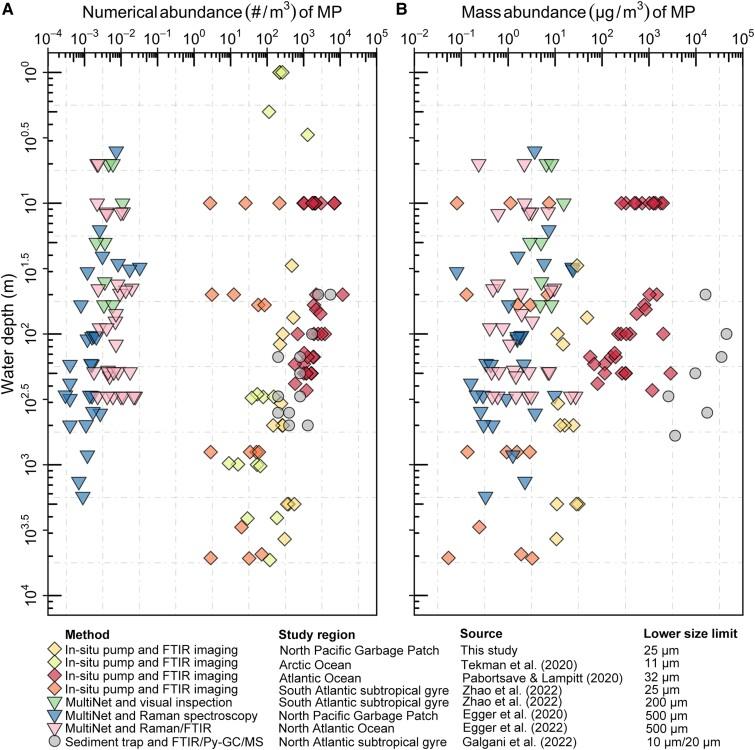
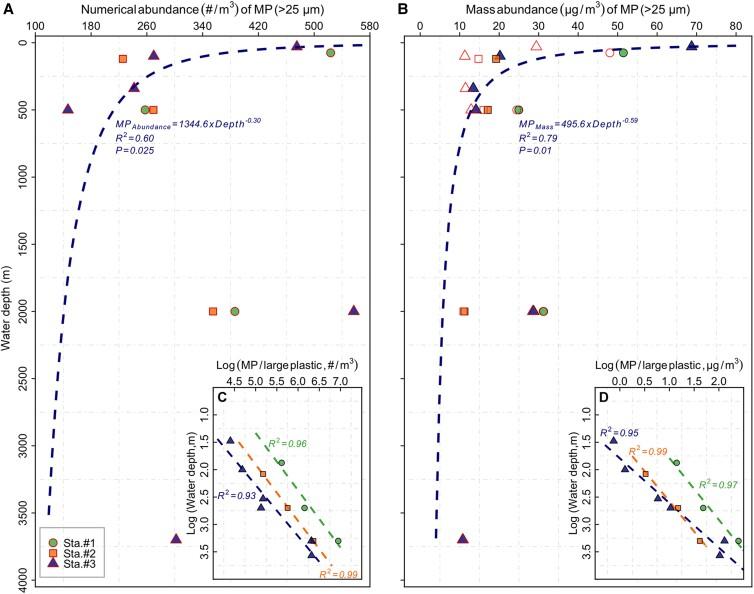
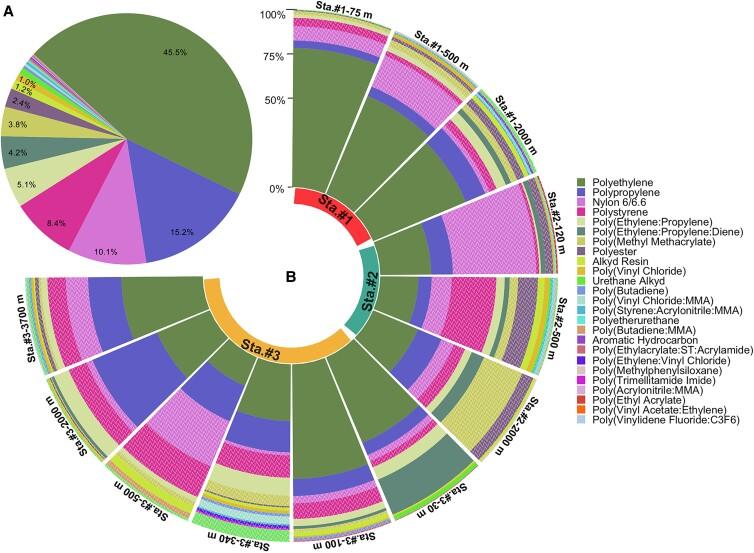
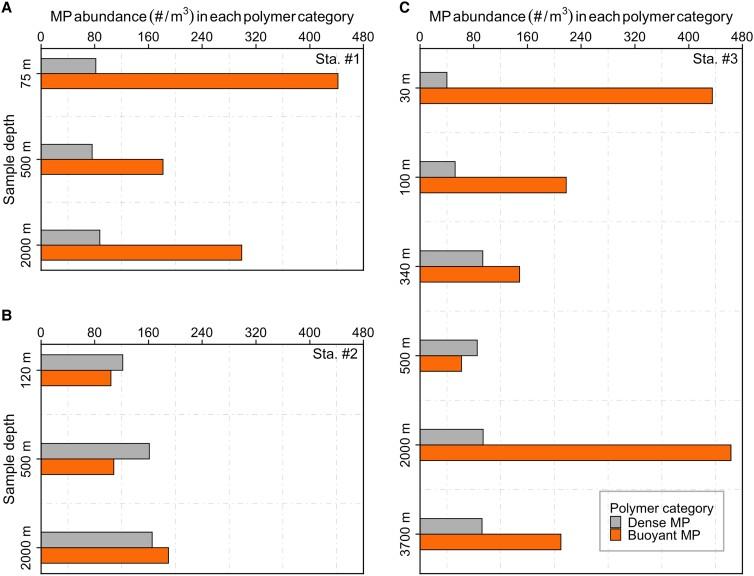
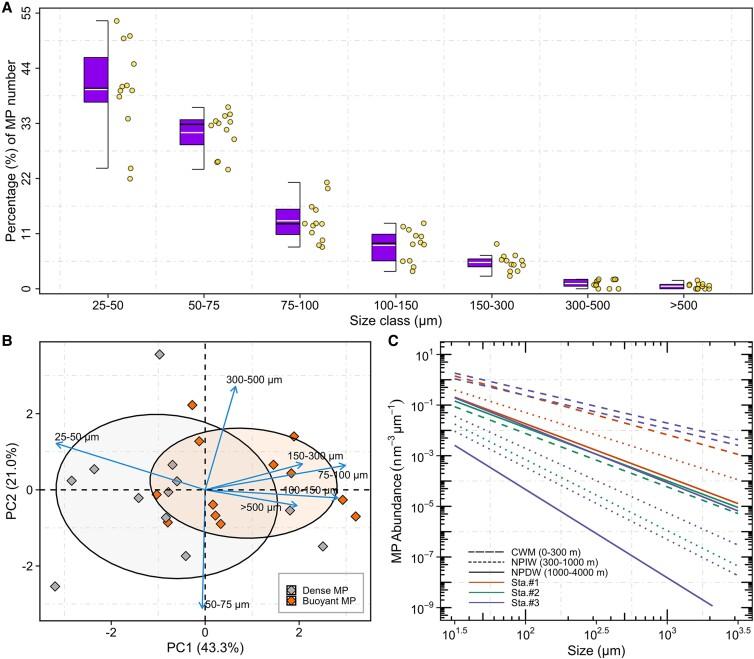
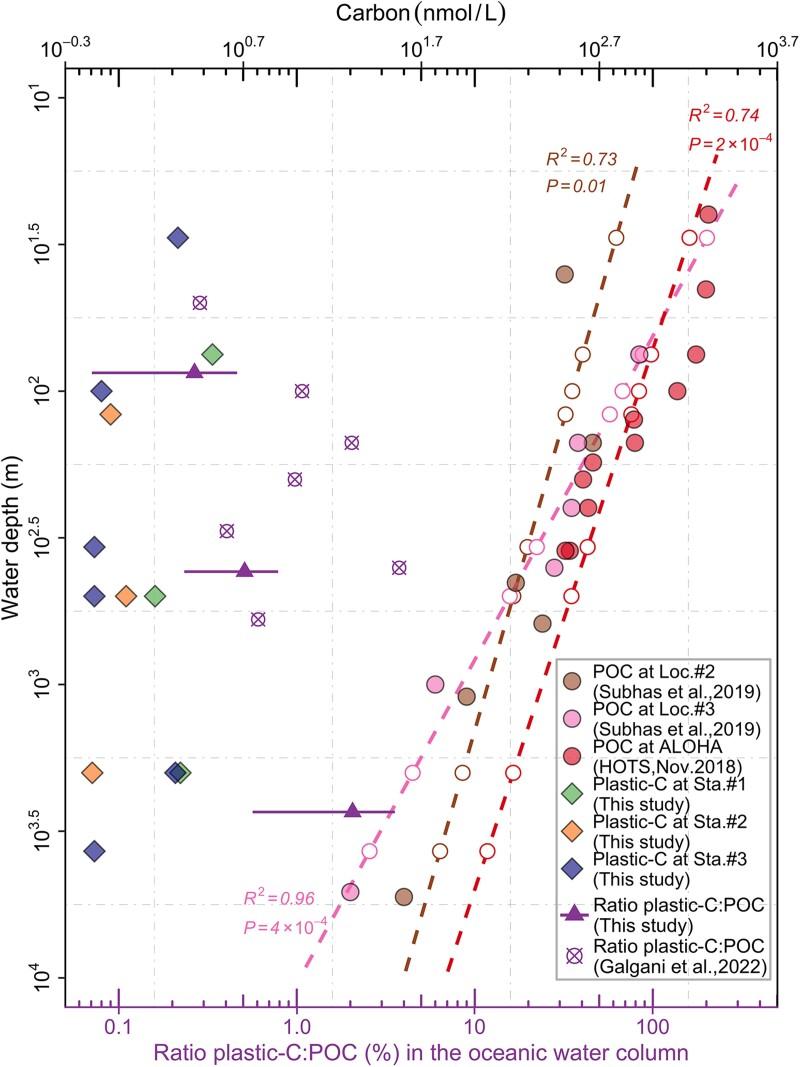
Due to its ever-increasing ocean inputs, fossil-based microplastics (MP) comprise a considerable constituent in the particulate organic carbon (POC) pool, which is instrumental in ocean biogeochemical cycling. Their distribution within the oceanic water column and the underpinning processes, however, remain unclear. Here we show that MP prevail throughout the water column of the eastern North Pacific Subtropical Gyre, comprising 334 #/m (84.5% of plastic particles <100 µm), with exponential relationships between concentrations and water depth in the upper 500-m layer and marked accumulation below this layer. Our results suggest that the biological carbon pump (BCP) strongly contributes to the water column MP redistribution in terms of polymer type, material density and particle size, which in turn could influence the efficiency of organic matter export to the deep sea. We further show that C-depleted plastic particles predictably are an emerging nonneglectable perturbation to radiocarbon signatures in the deep ocean through depletion of the C/C ratio in the POC pool. Our data provide insight into vertical MP flux and highlight the potential role of MP in alternating the marine particulate pool and interactions with the BCP.
由于其海洋输入量不断增加,基于化石的微塑料(MP)在颗粒有机碳(POC)库中占相当大的成分,这对海洋生物地球化学循环至关重要。然而,它们在海洋水柱中的分布以及相关过程仍不清楚。在这里,我们表明微塑料在北太平洋亚热带环流东部的整个水柱中普遍存在,浓度为334个/立方米(84.5%的塑料颗粒<100微米),在500米上层浓度与水深呈指数关系,且在该层以下有明显积累。我们的结果表明,生物碳泵(BCP)在聚合物类型、材料密度和颗粒大小方面对水柱中微塑料的重新分布有很大贡献,这反过来可能会影响有机物质向深海输出的效率。我们进一步表明,碳耗尽的塑料颗粒通过消耗POC库中的C/C比,可预见地对深海中的放射性碳特征产生一种不可忽视的新扰动。我们的数据为微塑料的垂直通量提供了见解,并突出了微塑料在改变海洋颗粒库以及与生物碳泵相互作用中的潜在作用。
 Zotero 插件