
脓毒症相关性脑病:从谵妄到痴呆?
Sepsis-Associated Encephalopathy: From Delirium to Dementia?
作者信息
Chung Ha-Yeun, Wickel Jonathan, Brunkhorst Frank M, Geis Christian
机构信息
Section Translational Neuroimmunology, Department of Neurology, Jena University Hospital, 07747 Jena, Germany.
Center for Sepsis Control and Care, Jena University Hospital, Jena 07747, Germany.
出版信息
J Clin Med. 2020 Mar 5;9(3):703. doi: 10.3390/jcm9030703.
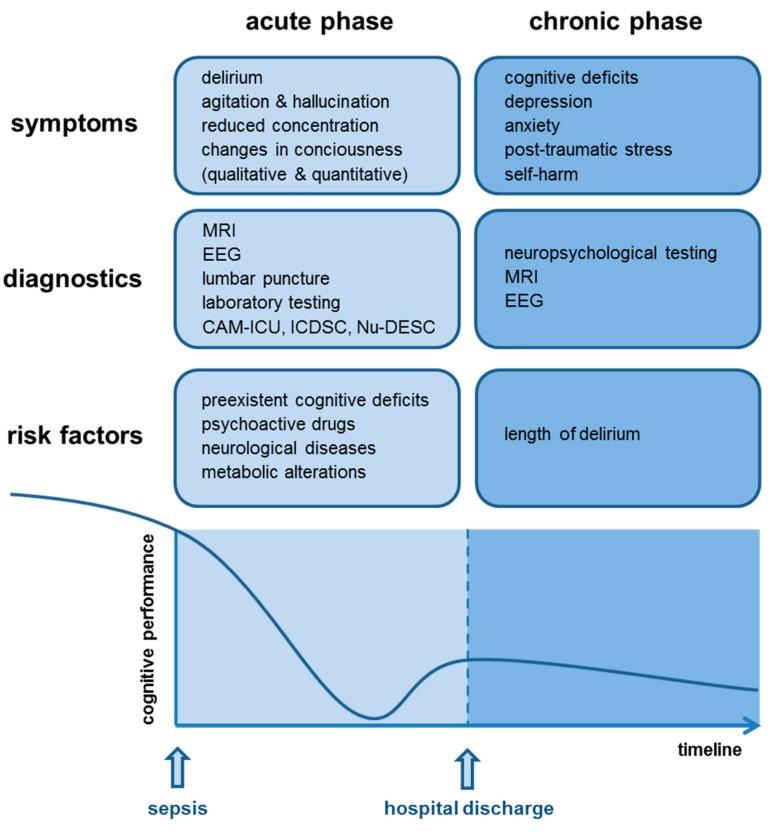
Sepsis is a major cause of death in intensive care units worldwide. The acute phase of sepsis is often accompanied by sepsis-associated encephalopathy, which is highly associated with increased mortality. Moreover, in the chronic phase, more than 50% of surviving patients suffer from severe and long-term cognitive deficits compromising their daily quality of life and placing an immense burden on primary caregivers. Due to a growing number of sepsis survivors, these long-lasting deficits are increasingly relevant. Despite the high incidence and clinical relevance, the pathomechanisms of acute and chronic stages in sepsis-associated encephalopathy are only incompletely understood, and no specific therapeutic options are yet available. Here, we review the emergence of sepsis-associated encephalopathy from initial clinical presentation to long-term cognitive impairment in sepsis survivors and summarize pathomechanisms potentially contributing to the development of sepsis-associated encephalopathy.
脓毒症是全球重症监护病房患者死亡的主要原因。脓毒症急性期常伴有脓毒症相关性脑病,这与死亡率增加高度相关。此外,在慢性期,超过50%的存活患者患有严重且长期的认知缺陷,这损害了他们的日常生活质量,并给主要照顾者带来了巨大负担。由于脓毒症幸存者数量不断增加,这些长期缺陷变得越来越重要。尽管发病率高且具有临床相关性,但脓毒症相关性脑病急性和慢性阶段的发病机制仍未完全明确,且尚无具体的治疗方案。在此,我们回顾了脓毒症相关性脑病从最初临床表现到脓毒症幸存者长期认知障碍的发生过程,并总结了可能导致脓毒症相关性脑病发生的发病机制。

 Zotero 插件