
使用标记点过程对钙成像数据进行反卷积。
Deconvolution of calcium imaging data using marked point processes.
机构信息
NTT Communication Science Laboratories, Atsugi-shi, Japan.
Department of Mathematical Informatics, The University of Tokyo, Tokyo, Japan.
出版信息
PLoS Comput Biol. 2020 Mar 12;16(3):e1007650. doi: 10.1371/journal.pcbi.1007650. eCollection 2020 Mar.
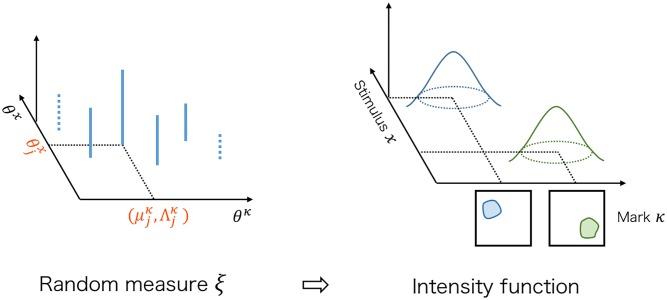
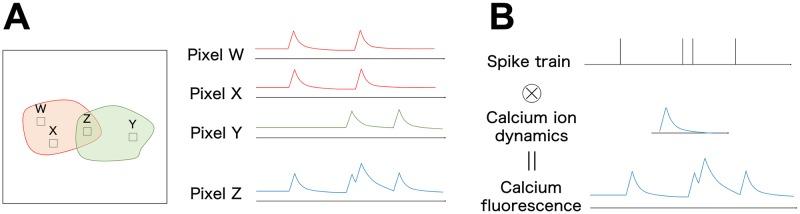
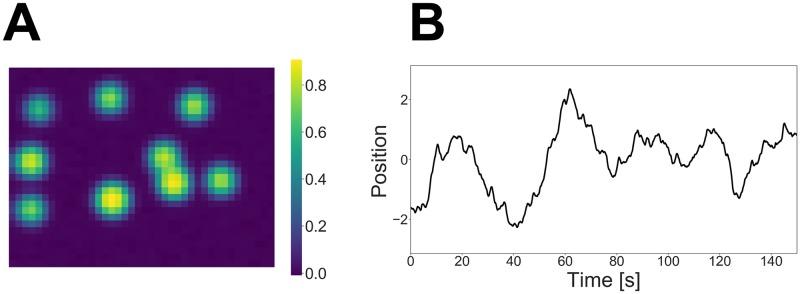
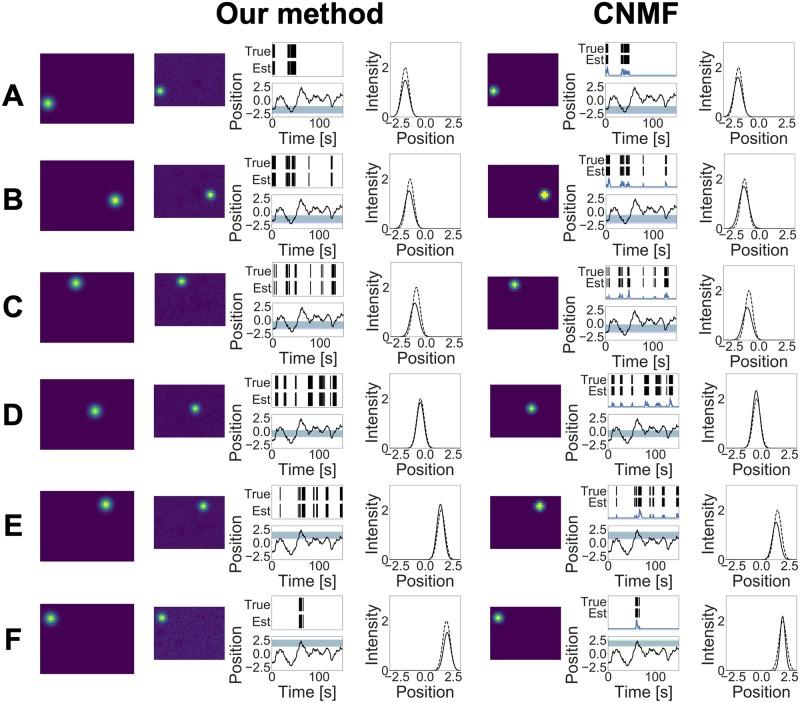
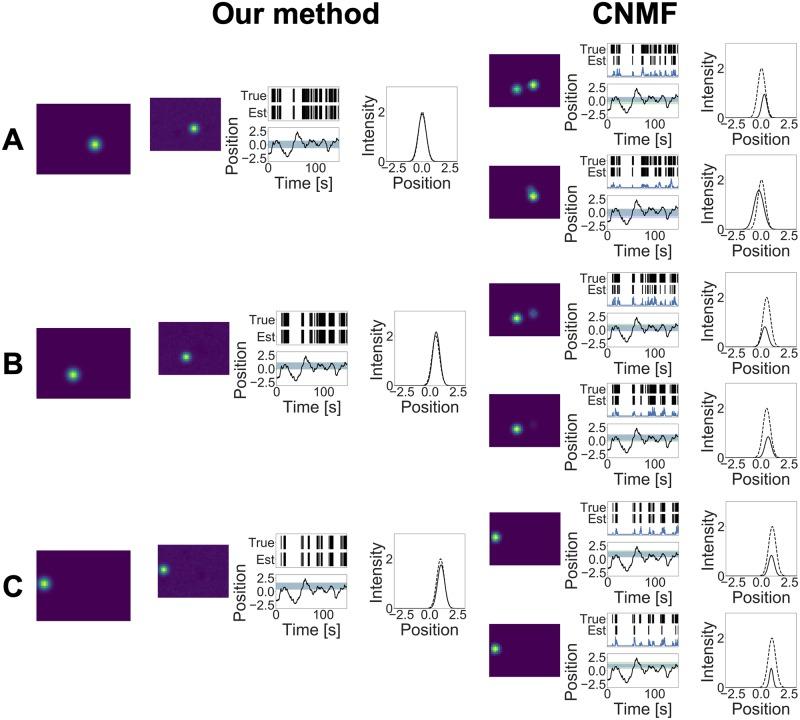
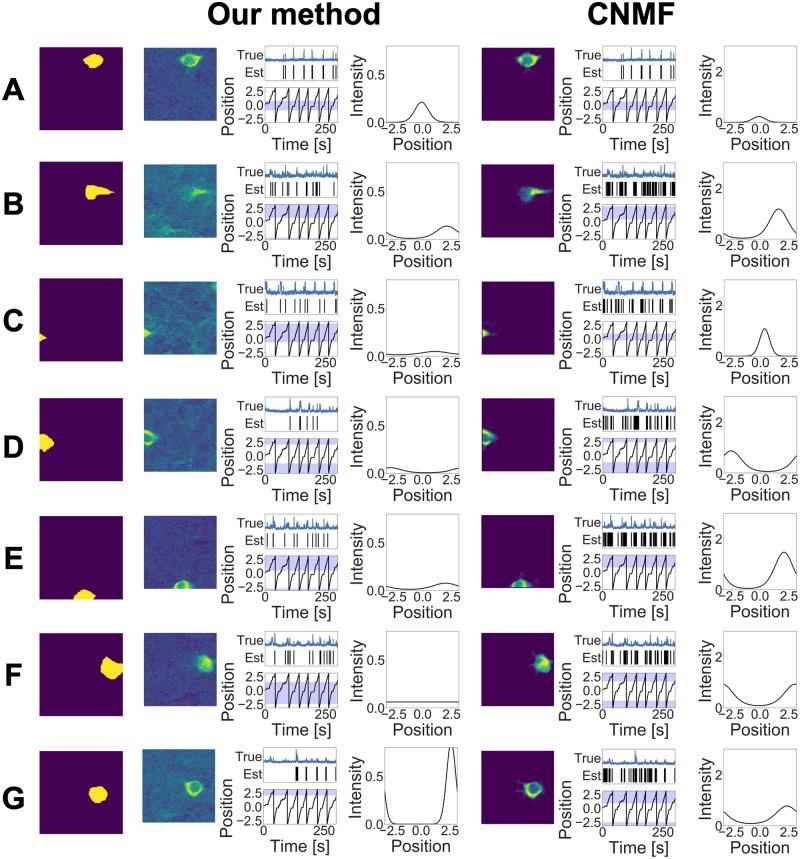
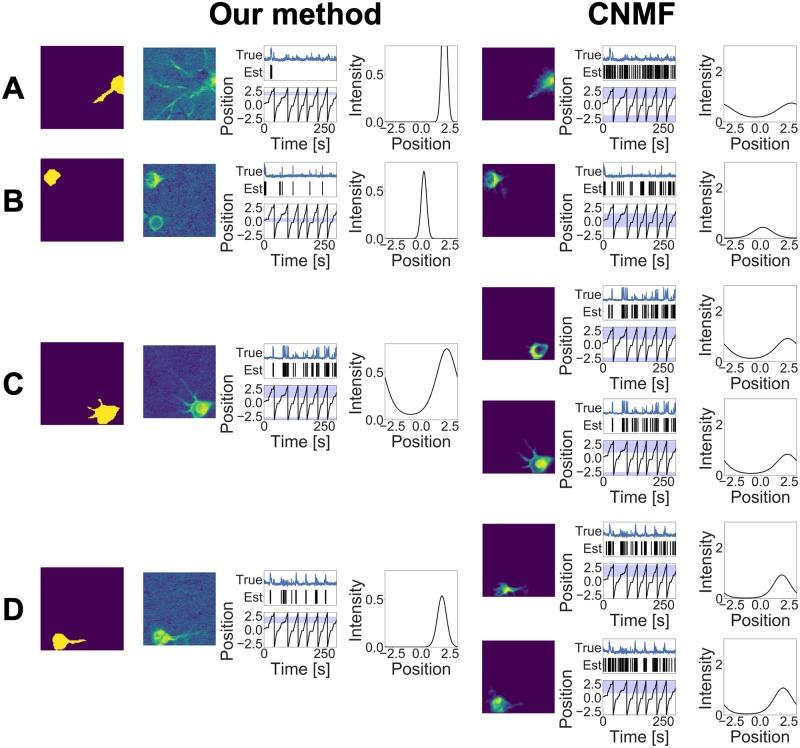
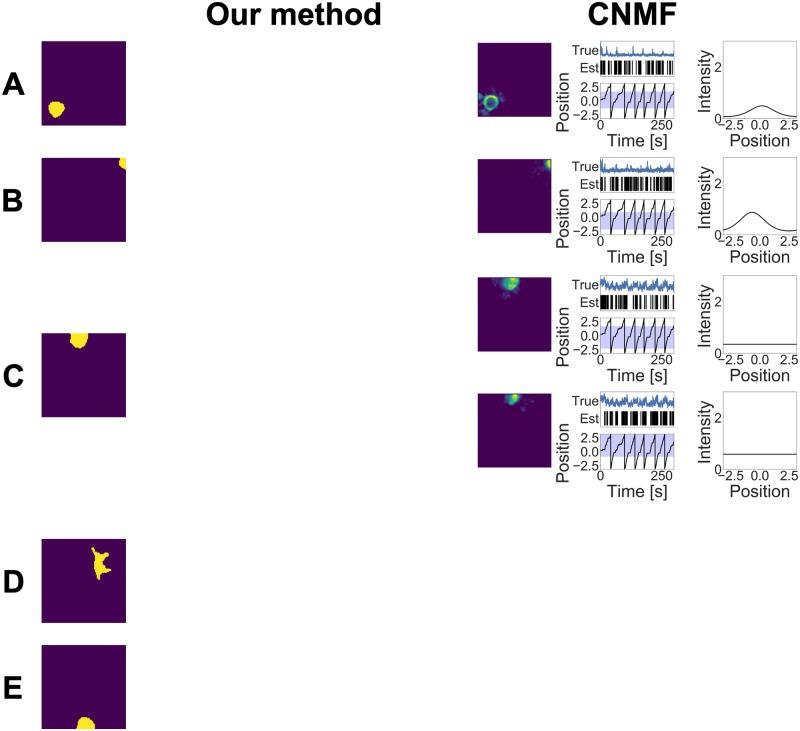
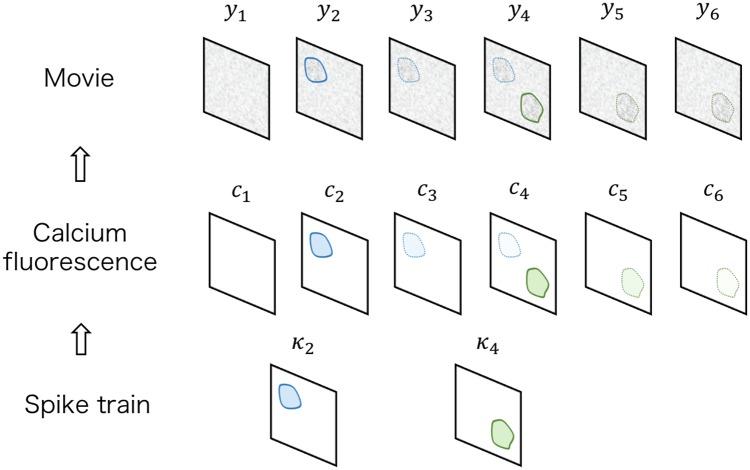
Calcium imaging has been widely used for measuring spiking activities of neurons. When using calcium imaging, we need to extract summarized information from the raw movie beforehand. Recent studies have used matrix deconvolution for this preprocessing. However, such an approach can neither directly estimate the generative mechanism of spike trains nor use stimulus information that has a strong influence on neural activities. Here, we propose a new deconvolution method for calcium imaging using marked point processes. We consider that the observed movie is generated from a probabilistic model with marked point processes as hidden variables, and we calculate the posterior of these variables using a variational inference approach. Our method can simultaneously estimate various kinds of information, such as cell shape, spike occurrence time, and tuning curve. We apply our method to simulated and experimental data to verify its performance.
钙成像技术被广泛应用于测量神经元的尖峰活动。在使用钙成像时,我们需要预先从原始电影中提取总结信息。最近的研究使用矩阵反卷积进行此预处理。然而,这种方法既不能直接估计尖峰序列的生成机制,也不能使用对神经活动有强烈影响的刺激信息。在这里,我们提出了一种使用标记点过程的钙成像新的反卷积方法。我们认为,所观察到的电影是由具有标记点过程作为隐藏变量的概率模型生成的,我们使用变分推理方法计算这些变量的后验。我们的方法可以同时估计各种信息,如细胞形状、尖峰发生时间和调谐曲线。我们将我们的方法应用于模拟和实验数据,以验证其性能。

 Zotero 插件