
膳食脂肪酸在阿尔茨海默病中对小胶质细胞极化的作用。
Role of dietary fatty acids in microglial polarization in Alzheimer's disease.
机构信息
Neurobiology Group, Division of Biochemical Sciences, CSIR-National Chemical Laboratory, Dr. Homi Bhabha Road, Pune, 411008, India.
Academy of Scientific and Innovative Research (AcSIR), Pune, 411008, India.
出版信息
J Neuroinflammation. 2020 Mar 24;17(1):93. doi: 10.1186/s12974-020-01742-3.
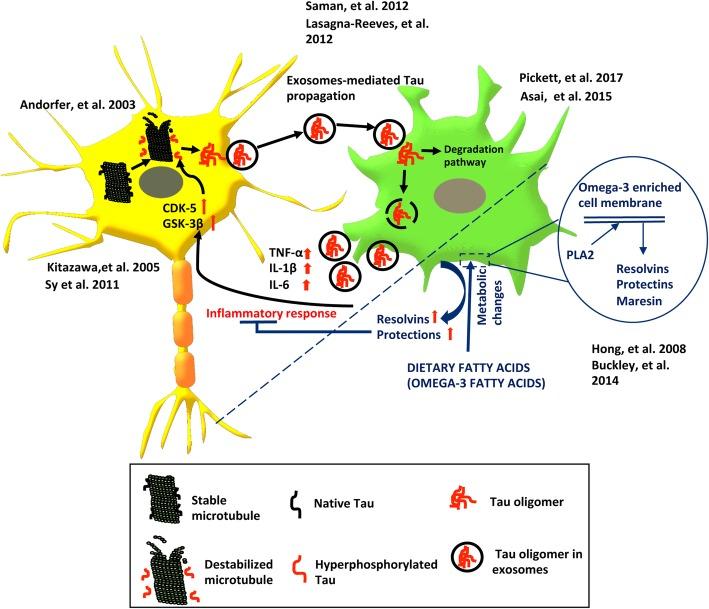
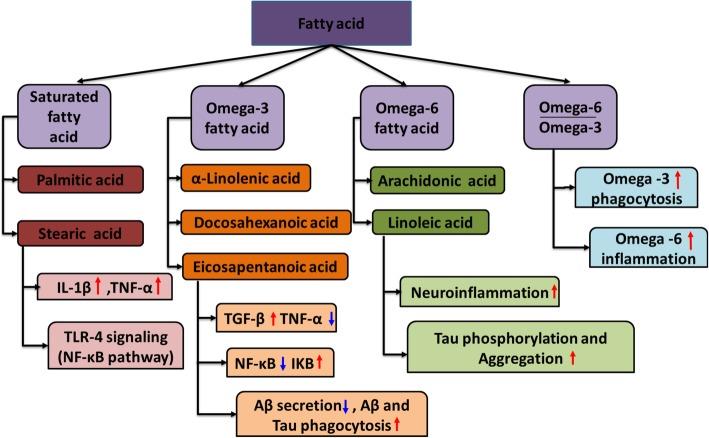
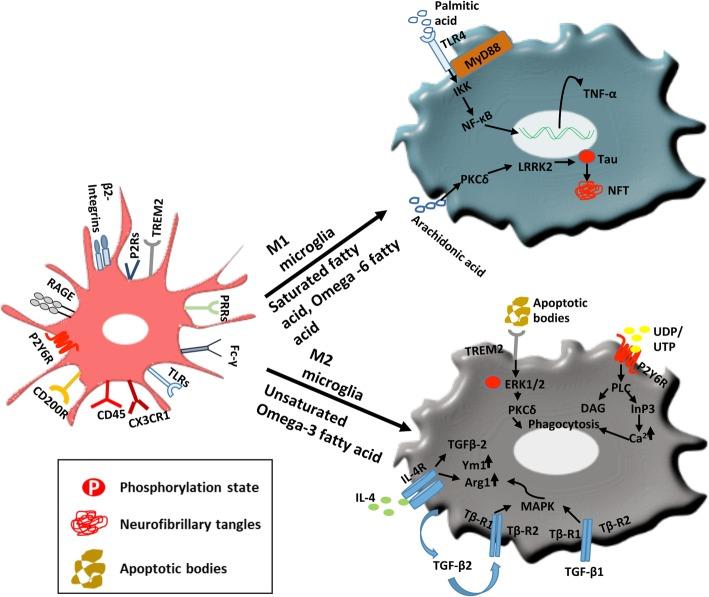
Microglial polarization is an utmost important phenomenon in Alzheimer's disease that influences the brain environment. Polarization depends upon the types of responses that cells undergo, and it is characterized by receptors present on the cell surface and the secreted cytokines to the most. The expression of receptors on the surface is majorly influenced by internal and external factors such as dietary lipids. Types of fatty acids consumed through diet influence the brain environment and glial cell phenotype and types of receptors on microglia. Reports suggest that dietary habits influence microglial polarization and the switching of microglial phenotype is very important in neurodegenerative diseases. Omega-3 fatty acids have more influence on the brain, and they are found to regulate the inflammatory stage of microglia by fine-tuning the number of receptors expressed on microglia cells. In Alzheimer's disease, one of the pathological proteins involved is Tau protein, and microtubule-associated protein upon abnormal phosphorylation detaches from the microtubule and forms insoluble aggregates. Aggregated proteins have a tendency to propagate within the neurons and also become one of the causes of neuroinflammation. We hypothesize that tuning microglia towards anti-inflammatory phenotype would reduce the propagation of Tau in Alzheimer's disease.
小胶质细胞极化是阿尔茨海默病中一种极其重要的现象,它会影响大脑环境。极化取决于细胞经历的反应类型,其特征是细胞表面存在的受体和分泌的细胞因子。表面受体的表达主要受内部和外部因素的影响,如膳食脂质。通过饮食摄入的脂肪酸类型会影响大脑环境和神经胶质细胞表型以及小胶质细胞上的受体类型。有报道称,饮食习惯会影响小胶质细胞极化,小胶质细胞表型的转换在神经退行性疾病中非常重要。ω-3 脂肪酸对大脑的影响更大,它们通过微调小胶质细胞上表达的受体数量来调节小胶质细胞的炎症阶段。在阿尔茨海默病中,涉及的一种病理蛋白是 Tau 蛋白,微管相关蛋白在异常磷酸化后从小管上脱离并形成不溶性聚集体。聚集的蛋白质有在神经元内传播的趋势,也是神经炎症的原因之一。我们假设将小胶质细胞向抗炎表型调节将减少 Tau 在阿尔茨海默病中的传播。

 Zotero 插件