
氧化应激和线粒体机制与空气污染相关神经生物学损伤的关联
Involvement of oxidative stress and mitochondrial mechanisms in air pollution-related neurobiological impairments.
作者信息
Salvi Ankita, Liu Hesong, Salim Samina
机构信息
Department of Pharmacological and Pharmaceutical Sciences, College of Pharmacy, University of Houston, Houston, TX, 77204, USA.
出版信息
Neurobiol Stress. 2019 Dec 19;12:100205. doi: 10.1016/j.ynstr.2019.100205. eCollection 2020 May.
BACKGROUND
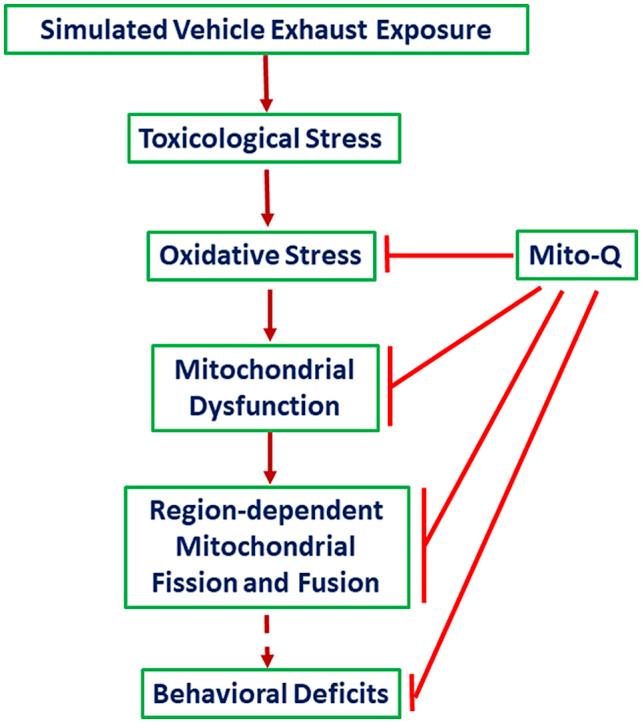
Vehicle exhaust emissions are known to be significant contributors to physical and psychological stress. Vehicle exhaust-induced stress and associated respiratory and cardiovascular complications are well-known, but the impact of this stress on the brain is unclear. Simulated vehicle exhaust exposure (SVEE) in rats causes behavioral and cognitive deficits. In the present study, the underlying mechanisms were examined. Our postulation is that SVEE, a simulation of physiologically relevant concentrations of pro-oxidants (0.04% carbon dioxide, 0.9 ppm nitrogen dioxide, 3 ppm carbon monoxide) creates a toxic stress environment in the brain that results in an imbalance between production of reactive oxygen species and the counteracting antioxidant mechanisms. This impairs mitochondrial function in the high bioenergetic demand areas of the brain including the hippocampus (HIP), amygdala (AMY) and the prefrontal cortex (PFC), disrupting neuronal network, and causing behavioral deficits. Mitochondria-targeted antioxidant Mito-Q protects against these impairments.
METHODS
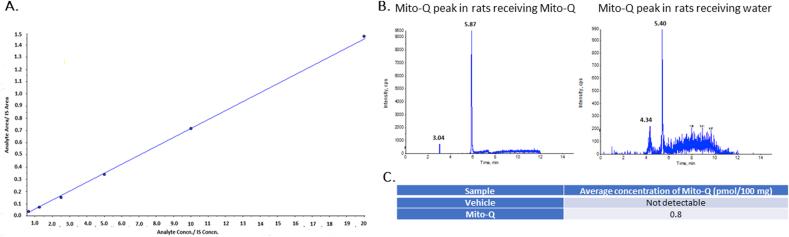
Sprague Dawley rats were provided with Mito-Q (250 μM) in drinking water for 4 weeks followed by SVEE 5 h/day for 2 weeks, followed by behavioral and biochemical assessments.
RESULTS
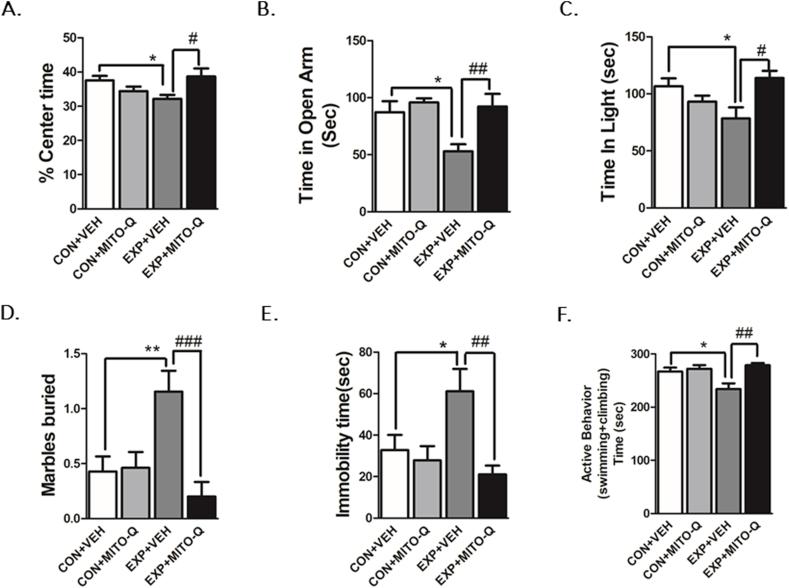
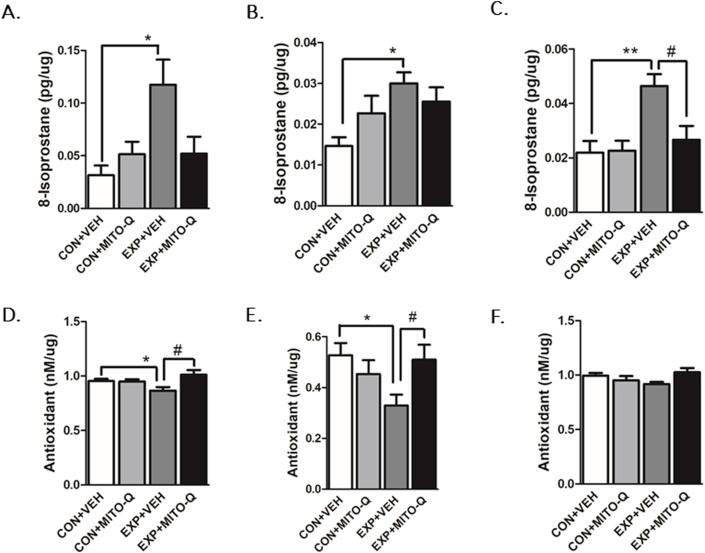
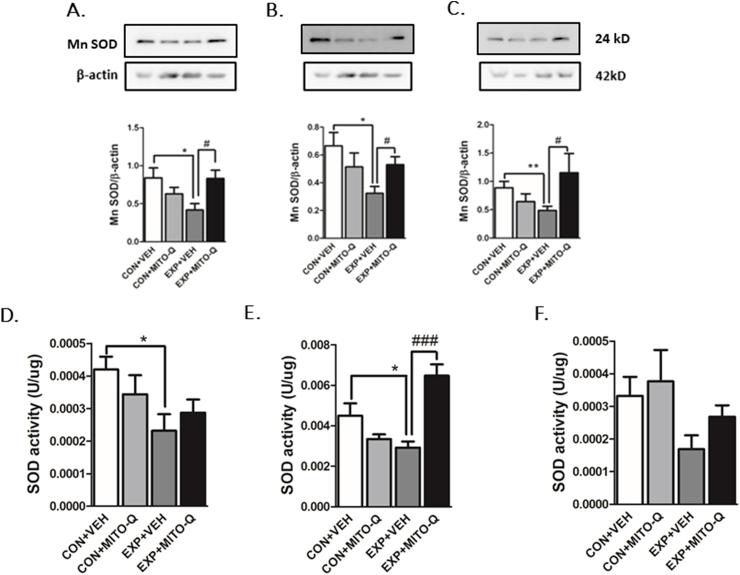
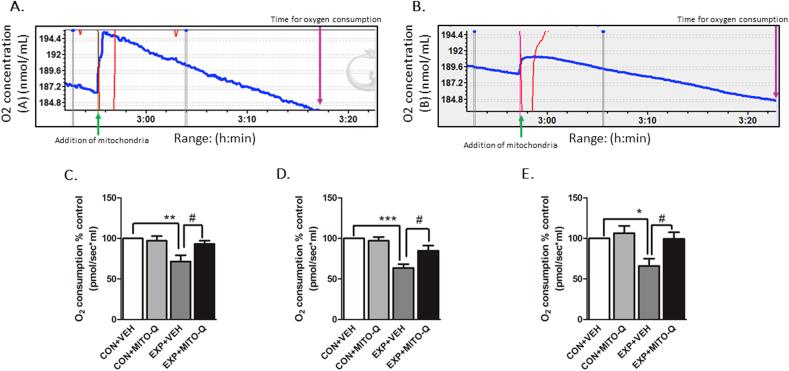
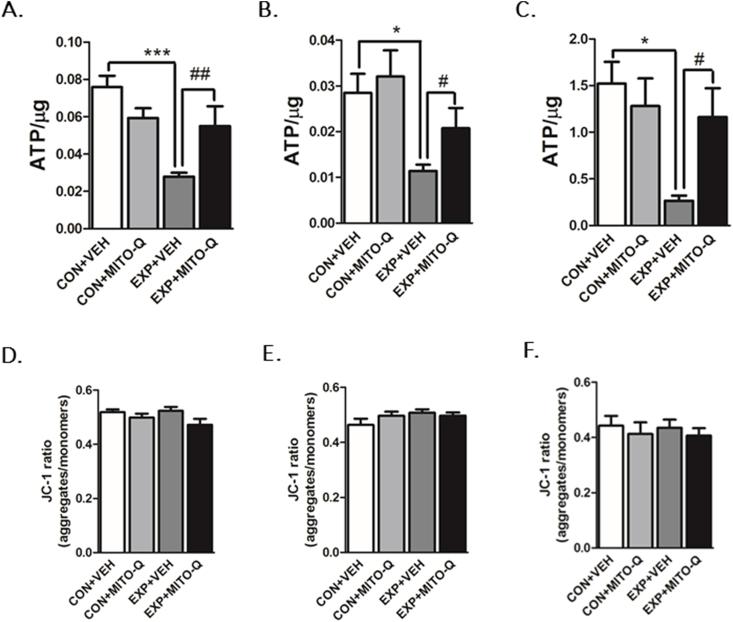
SVEE resulted in anxiety- and depression-like behavior, accompanied with increased oxidative stress, diminished antioxidant response and mitochondrial impairment reflected from electron transport chain (ETC) disruption, reduced oxygen consumption, low adenosine tri-phosphate (ATP) synthesis and an alteration in the mitochondrial biochemical dynamics assessed via protein expression profiles of mitochondrial fission marker, dynamin-related protein-1 and fusion markers, mitofusin-1/2 in the HIP, AMY and the PFC. Mito-Q treatment prevented SVEE-induced behavioral deficits, attenuated rise in oxidative stress and also prevented SVEE-induced mitochondrial impairment.
CONCLUSION
This study demonstrates a causal mechanism mediating SVEE-induced behavioral deficits in rats. We further established that SVEE is a toxicological stressor that induces oxidative stress and results in mitochondrial impairment, which by disrupting neural circuitry impairs cognitive and behavioral functions.
背景
众所周知,汽车尾气排放是造成身体和心理压力的重要因素。汽车尾气引起的压力以及相关的呼吸和心血管并发症是广为人知的,但这种压力对大脑的影响尚不清楚。在大鼠中进行的模拟汽车尾气暴露(SVEE)会导致行为和认知缺陷。在本研究中,对其潜在机制进行了研究。我们的假设是,SVEE模拟了生理相关浓度的促氧化剂(0.04%二氧化碳、0.9 ppm二氧化氮、3 ppm一氧化碳),在大脑中创造了一个有毒的应激环境,导致活性氧生成与对抗性抗氧化机制之间失衡。这会损害大脑中包括海马体(HIP)、杏仁核(AMY)和前额叶皮质(PFC)等高能量需求区域的线粒体功能,破坏神经网络,并导致行为缺陷。靶向线粒体的抗氧化剂Mito-Q可预防这些损伤。
方法
给斯普拉格-道利大鼠在饮用水中添加Mito-Q(250 μM),持续4周,随后每天进行5小时的SVEE,持续2周,之后进行行为和生化评估。
结果
SVEE导致出现焦虑和抑郁样行为,同时氧化应激增加、抗氧化反应减弱以及线粒体损伤,表现为电子传递链(ETC)破坏、氧消耗减少、三磷酸腺苷(ATP)合成降低,以及通过HIP、AMY和PFC中线粒体裂变标记物动力相关蛋白-1和融合标记物线粒体融合蛋白-1/2的蛋白质表达谱评估的线粒体生化动力学改变。Mito-Q治疗可预防SVEE诱导的行为缺陷,减轻氧化应激的升高,并预防SVEE诱导的线粒体损伤。
结论
本研究证明了介导SVEE诱导大鼠行为缺陷的因果机制。我们进一步确定,SVEE是一种毒理学应激源,可诱导氧化应激并导致线粒体损伤,进而通过破坏神经回路损害认知和行为功能。

 Zotero 插件