
一项系统评价:[具体物种]是虫媒病毒人畜共患病的高效桥梁媒介吗? (注:原文中“A Systematic Review: Is an Efficient Bridge Vector for Zoonotic Arboviruses?”里有一处缺失具体物种,这里翻译时保留了原文格式并做了相应说明,若实际有具体物种,需将其补充完整后再准确翻译)
A Systematic Review: Is an Efficient Bridge Vector for Zoonotic Arboviruses?
作者信息
Pereira-Dos-Santos Taissa, Roiz David, Lourenço-de-Oliveira Ricardo, Paupy Christophe
机构信息
MIVEGEC, Univ. Montpellier, IRD, CNRS, 34090 Montpellier, France.
LATHEMA, Instituto Oswaldo Cruz, FIOCRUZ, Rio de Janeiro-RJ 4364, Brazil.
出版信息
Pathogens. 2020 Apr 7;9(4):266. doi: 10.3390/pathogens9040266.
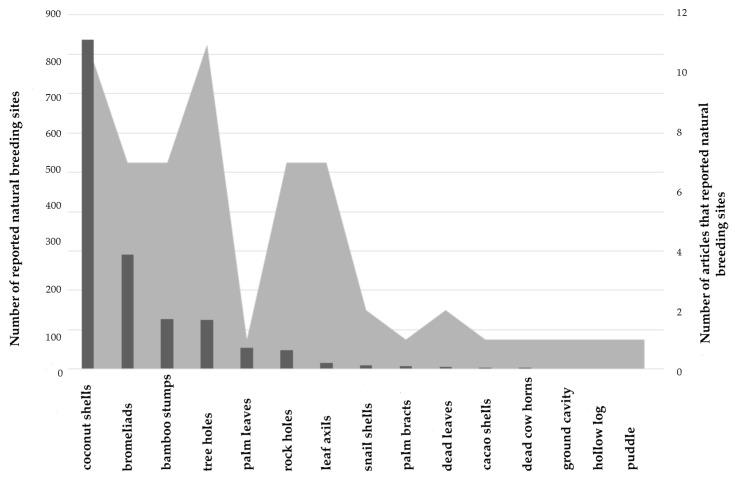
Mosquito-borne arboviruses are increasing due to human disturbances of natural ecosystems and globalization of trade and travel. These anthropic changes may affect mosquito communities by modulating ecological traits that influence the "spill-over" dynamics of zoonotic pathogens, especially at the interface between natural and human environments. Particularly, the global invasion of is observed not only across urban and peri-urban settings, but also in newly invaded areas in natural settings. This could foster the interaction of with wildlife, including local reservoirs of enzootic arboviruses, with implications for the potential zoonotic transfer of pathogens. To evaluate the potential of as a bridge vector of arboviruses between wildlife and humans, we performed a bibliographic search and analysis focusing on three components: (1) The capacity of to exploit natural larval breeding sites, (2) the blood-feeding behaviour of , and (3) vector competence for arboviruses. Our analysis confirms the potential of as a bridge vector based on its colonization of natural breeding sites in newly invaded areas, its opportunistic feeding behaviour together with the preference for human blood, and the competence to transmit 14 arboviruses.
由于人类对自然生态系统的干扰以及贸易和旅行的全球化,蚊媒虫媒病毒正在增加。这些人为变化可能通过调节影响人畜共患病原体“溢出”动态的生态特征来影响蚊虫群落,特别是在自然环境与人类环境的交界处。特别是,不仅在城市和城郊环境中观察到[具体蚊虫种类]的全球入侵,而且在自然环境中的新入侵地区也有发现。这可能促进[具体蚊虫种类]与野生动物的相互作用,包括地方性虫媒病毒的本地宿主,对病原体的潜在人畜共患病传播产生影响。为了评估[具体蚊虫种类]作为野生动物和人类之间虫媒病毒桥梁媒介的潜力,我们进行了一项文献检索和分析,重点关注三个方面:(1)[具体蚊虫种类]利用天然幼虫繁殖地的能力,(2)[具体蚊虫种类]的吸血行为,以及(3)[具体蚊虫种类]对虫媒病毒的传播能力。我们的分析证实了[具体蚊虫种类]作为桥梁媒介的潜力,这基于其在新入侵地区对天然繁殖地的定殖、机会性取食行为以及对人类血液的偏好,以及传播14种虫媒病毒的能力。


 Zotero 插件