
转录组分析揭示了肝细胞癌中的关键预后基因和微小RNA。
Transcriptome analysis revealed key prognostic genes and microRNAs in hepatocellular carcinoma.
作者信息
Ma Xi, Zhou Lin, Zheng Shusen
机构信息
Division of Hepatobiliary and Pancreatic Surgery, Department of Surgery, First Affiliated Hospital, School of Medicine, Zhejiang University, Hangzhou, Zhejiang, China.
NHC Key Laboratory of Combined Multi-organ Transplantation, Hangzhou, Zhejiang, China.
出版信息
PeerJ. 2020 Apr 8;8:e8930. doi: 10.7717/peerj.8930. eCollection 2020.
BACKGROUND
Hepatocellular carcinoma (HCC) is one of the most common cancers worldwide. However, the molecular mechanisms involved in HCC remain unclear and are in urgent need of elucidation. Therefore, we sought to identify biomarkers in the prognosis of HCC through an integrated bioinformatics analysis.
METHODS
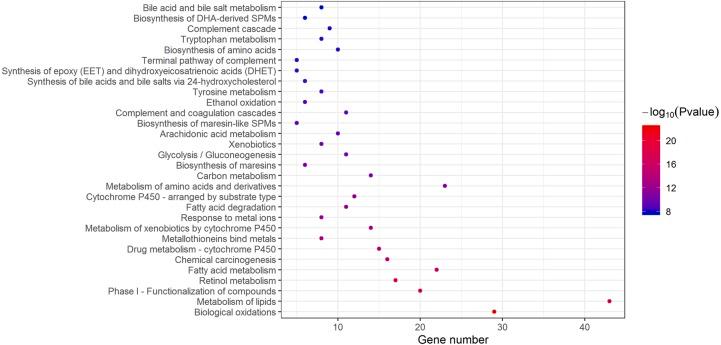
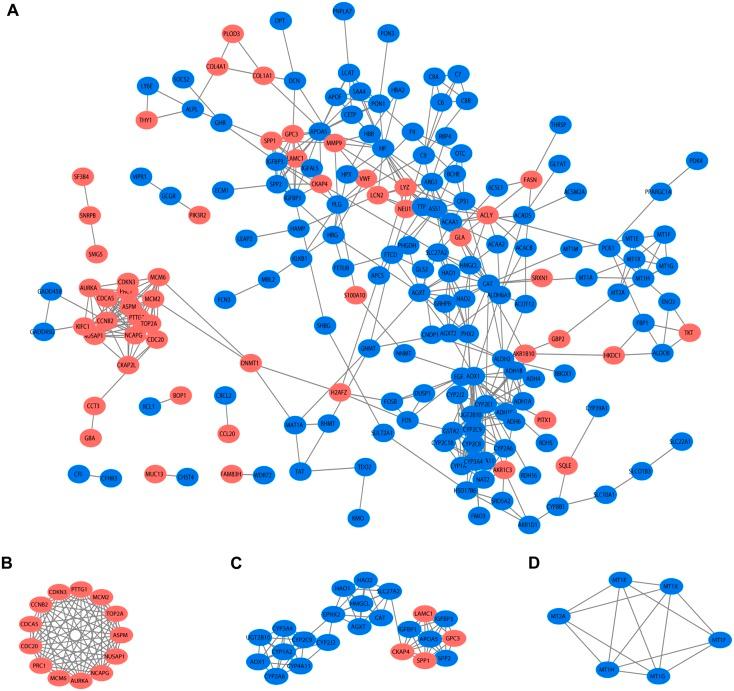
Messenger RNA (mRNA) expression profiles were obtained from the Gene Expression Omnibus database and The Cancer Genome Atlas-Liver Hepatocellular Carcinoma (TCGA-LIHC) for the screening of common differentially expressed genes (DEGs). Function and pathway enrichment analysis, protein-protein interaction network construction and key gene identification were performed. The significance of key genes in HCC was validated by overall survival analysis and immunohistochemistry. Meanwhile, based on TCGA data, prognostic microRNAs (miRNAs) were decoded using univariable and multivariable Cox regression analysis, and their target genes were predicted by miRWalk.
RESULTS
Eleven hub genes (upregulated ASPM, AURKA, CCNB2, CDC20, PRC1 and TOP2A and downregulated AOX1, CAT, CYP2E1, CYP3A4 and HP) with the most interactions were considered as potential biomarkers in HCC and confirmed by overall survival analysis. Moreover, AURKA, PRC1, TOP2A, AOX1, CYP2E1, and CYP3A4 were considered candidate liver-biopsy markers for high risk of developing HCC and poor prognosis in HCC. Upregulation of hsa-mir-1269b, hsa-mir-518d, hsa-mir-548aq, hsa-mir-548f-1, and hsa-mir-6728, and downregulation of hsa-mir-139 and hsa-mir-4800 were determined to be risk factors of poor prognosis, and most of these miRNAs have strong potential to help regulate the expression of key genes.
CONCLUSIONS
This study undertook the first large-scale integrated bioinformatics analysis of the data from Illumina BeadArray platforms and the TCGA database. With a comprehensive analysis of transcriptional alterations, including mRNAs and miRNAs, in HCC, our study presented candidate biomarkers for the surveillance and prognosis of the disease, and also identified novel therapeutic targets at the molecular and pathway levels.
背景
肝细胞癌(HCC)是全球最常见的癌症之一。然而,HCC所涉及的分子机制仍不清楚,迫切需要阐明。因此,我们试图通过综合生物信息学分析来识别HCC预后的生物标志物。
方法
从基因表达综合数据库和癌症基因组图谱-肝细胞癌(TCGA-LIHC)获得信使核糖核酸(mRNA)表达谱,以筛选常见的差异表达基因(DEG)。进行功能和通路富集分析、蛋白质-蛋白质相互作用网络构建及关键基因鉴定。通过总生存分析和免疫组化验证关键基因在HCC中的意义。同时,基于TCGA数据,使用单变量和多变量Cox回归分析解码预后微小核糖核酸(miRNA),并通过miRWalk预测其靶基因。
结果
具有最多相互作用的11个中心基因(上调的ASPM、AURKA、CCNB2、CDC20、PRC1和TOP2A以及下调的AOX1、CAT、CYP2E1、CYP3A4和HP)被视为HCC的潜在生物标志物,并通过总生存分析得到证实。此外,AURKA、PRC1、TOP2A、AOX1、CYP2E1和CYP3A4被认为是HCC发生高风险和预后不良的候选肝活检标志物。已确定hsa-mir-1269b、hsa-mir-518d、hsa-mir-548aq、hsa-mir-548f-1和hsa-mir-6728的上调以及hsa-mir-139和hsa-mir-4800的下调是预后不良的危险因素,并且这些miRNA中的大多数具有强大的潜力来帮助调节关键基因的表达。
结论
本研究对来自Illumina BeadArray平台和TCGA数据库的数据进行了首次大规模综合生物信息学分析。通过对HCC中转录变化(包括mRNA和miRNA)的全面分析,我们的研究提出了该疾病监测和预后的候选生物标志物,并在分子和通路水平上确定了新的治疗靶点。




 Zotero 插件