
COVID-19 的三位一体:免疫、炎症和干预。
The trinity of COVID-19: immunity, inflammation and intervention.
机构信息
Singapore Immunology Network (SIgN), Agency for Science, Technology and Research (A*STAR), Biopolis, Singapore, Singapore.
Department of Microbiology and Immunology, Yong Loo Lin School of Medicine, National University of Singapore, Singapore, Singapore.
出版信息
Nat Rev Immunol. 2020 Jun;20(6):363-374. doi: 10.1038/s41577-020-0311-8. Epub 2020 Apr 28.
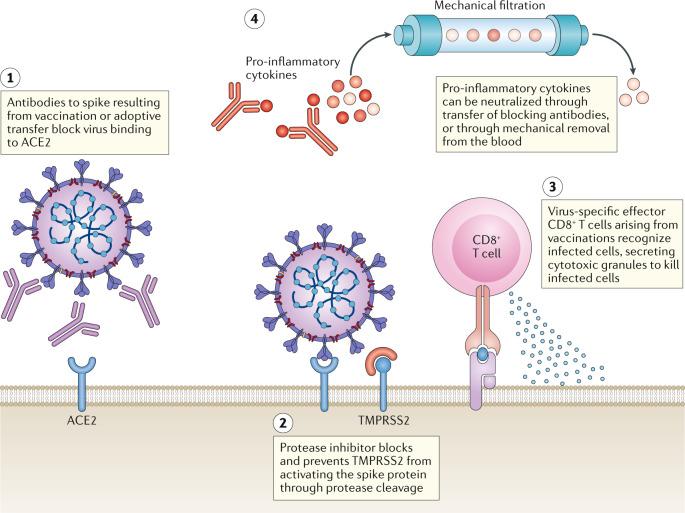
Severe acute respiratory syndrome coronavirus 2 (SARS-CoV-2) is the causative agent of the ongoing coronavirus disease 2019 (COVID-19) pandemic. Alongside investigations into the virology of SARS-CoV-2, understanding the fundamental physiological and immunological processes underlying the clinical manifestations of COVID-19 is vital for the identification and rational design of effective therapies. Here, we provide an overview of the pathophysiology of SARS-CoV-2 infection. We describe the interaction of SARS-CoV-2 with the immune system and the subsequent contribution of dysfunctional immune responses to disease progression. From nascent reports describing SARS-CoV-2, we make inferences on the basis of the parallel pathophysiological and immunological features of the other human coronaviruses targeting the lower respiratory tract - severe acute respiratory syndrome coronavirus (SARS-CoV) and Middle East respiratory syndrome coronavirus (MERS-CoV). Finally, we highlight the implications of these approaches for potential therapeutic interventions that target viral infection and/or immunoregulation.
严重急性呼吸综合征冠状病毒 2(SARS-CoV-2)是导致当前 2019 年冠状病毒病(COVID-19)大流行的病原体。除了对 SARS-CoV-2 的病毒学进行研究外,了解 COVID-19 临床表现背后的基本生理和免疫学过程对于确定和合理设计有效的治疗方法至关重要。在这里,我们提供了 SARS-CoV-2 感染病理生理学的概述。我们描述了 SARS-CoV-2 与免疫系统的相互作用,以及随后功能失调的免疫反应对疾病进展的贡献。根据描述 SARS-CoV-2 的初步报告,我们基于针对下呼吸道的其他人类冠状病毒 - 严重急性呼吸综合征冠状病毒(SARS-CoV)和中东呼吸综合征冠状病毒(MERS-CoV)的平行病理生理学和免疫学特征进行推断。最后,我们强调了这些方法对针对病毒感染和/或免疫调节的潜在治疗干预的意义。


 Zotero 插件