
法匹拉韦治疗新型冠状病毒肺炎的实验性治疗:一项开放标签对照研究。
Experimental Treatment with Favipiravir for COVID-19: An Open-Label Control Study.
作者信息
Cai Qingxian, Yang Minghui, Liu Dongjing, Chen Jun, Shu Dan, Xia Junxia, Liao Xuejiao, Gu Yuanbo, Cai Qiue, Yang Yang, Shen Chenguang, Li Xiaohe, Peng Ling, Huang Deliang, Zhang Jing, Zhang Shurong, Wang Fuxiang, Liu Jiaye, Chen Li, Chen Shuyan, Wang Zhaoqin, Zhang Zheng, Cao Ruiyuan, Zhong Wu, Liu Yingxia, Liu Lei
机构信息
National Clinical Research Center for Infectious Diseases, The Third People's Hospital of Shenzhen, The Second Affiliated Hospital of Southern University of Science and Technology, Shenzhen 518100, China.
National Engineering Research Center for the Emergence Drugs, Beijing Institute of Pharmacology and Toxicology, Beijing 100850, China.
出版信息
Engineering (Beijing). 2020 Oct;6(10):1192-1198. doi: 10.1016/j.eng.2020.03.007. Epub 2020 Mar 18.
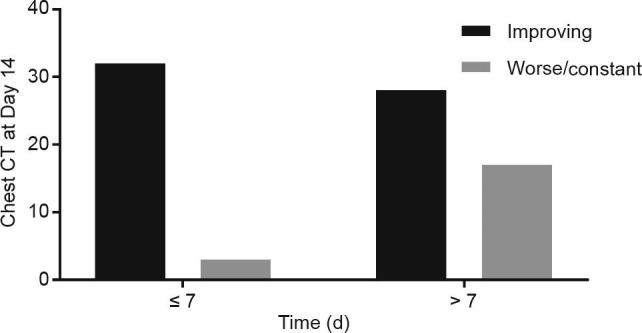
There is currently an outbreak of respiratory disease caused by a novel coronavirus. The virus has been named severe acute respiratory syndrome coronavirus 2 (SARS-CoV-2) and the disease it causes has been named coronavirus disease 2019 (COVID-19). More than 16% of patients developed acute respiratory distress syndrome, and the fatality ratio was 1%-2%. No specific treatment has been reported. Herein, we examined the effects of favipiravir (FPV) versus lopinavir (LPV)/ritonavir (RTV) for the treatment of COVID-19. Patients with laboratory-confirmed COVID-19 who received oral FPV (Day 1: 1600 mg twice daily; Days 2-14: 600 mg twice daily) plus interferon (IFN)-α by aerosol inhalation (5 million international unit (IU) twice daily) were included in the FPV arm of this study, whereas patients who were treated with LPV/RTV (Days 1-14: 400 mg/100 mg twice daily) plus IFN-α by aerosol inhalation (5 million IU twice daily) were included in the control arm. Changes in chest computed tomography (CT), viral clearance, and drug safety were compared between the two groups. For the 35 patients enrolled in the FPV arm and the 45 patients in the control arm, all baseline characteristics were comparable between the two arms. A shorter viral clearance median time was found for the FPV arm versus the control arm (4 d (interquartile range (IQR): 2.5-9) versus 11 d (IQR: 8-13), < 0.001). The FPV arm also showed significant improvement in chest CT compared with the control arm, with an improvement rate of 91.43% versus 62.22% ( = 0.004). After adjustment for potential confounders, the FPV arm also showed a significantly higher improvement rate in chest CT. Multivariable Cox regression showed that FPV was independently associated with faster viral clearance. In addition, fewer adverse events were found in the FPV arm than in the control arm. In this open-label before-after controlled study, FPV showed better therapeutic responses on COVID-19 in terms of disease progression and viral clearance. These preliminary clinical results provide useful information of treatments for SARS-CoV-2 infection.
目前有一种由新型冠状病毒引起的呼吸道疾病正在爆发。该病毒已被命名为严重急性呼吸综合征冠状病毒2(SARS-CoV-2),其所引起的疾病被命名为2019冠状病毒病(COVID-19)。超过16%的患者出现了急性呼吸窘迫综合征,病死率为1%-2%。目前尚无特效治疗方法的报道。在此,我们研究了法匹拉韦(FPV)与洛匹那韦(LPV)/利托那韦(RTV)治疗COVID-19的效果。本研究的FPV组纳入了实验室确诊的COVID-19患者,这些患者口服FPV(第1天:每日2次,每次1600mg;第2-14天:每日2次,每次600mg)并通过雾化吸入干扰素(IFN)-α(每日2次,每次500万国际单位(IU)),而对照组纳入了接受LPV/RTV治疗(第1-14天:每日2次,每次400mg/100mg)并通过雾化吸入IFN-α(每日2次,每次500万IU)的患者。比较了两组患者胸部计算机断层扫描(CT)的变化、病毒清除情况及药物安全性。对于FPV组的35例患者和对照组的45例患者,两组的所有基线特征均具有可比性。与对照组相比,FPV组的病毒清除中位时间更短(4天(四分位间距(IQR):2.5-9)对11天(IQR:8-13),<0.001)。与对照组相比,FPV组胸部CT也有显著改善,改善率分别为91.43%和62.22%(=0.004)。在对潜在混杂因素进行校正后,FPV组胸部CT的改善率也显著更高。多变量Cox回归显示,FPV与更快的病毒清除独立相关。此外,FPV组的不良事件少于对照组。在这项开放标签的前后对照研究中,就疾病进展和病毒清除而言,FPV对COVID-19显示出更好的治疗反应。这些初步临床结果为SARS-CoV-2感染的治疗提供了有用信息。


 Zotero 插件