
高血压性心脏病和衰老相关的心血管变化。
Cardiovascular Changes Associated with Hypertensive Heart Disease and Aging.
机构信息
Department of Cardiovascular Medicine, University of Massachusetts Medical School, Worcester, USA.
Department of Biomedical Engineering, School of Medicine and School of Engineering, The University of Alabama at Birmingham, USA.
出版信息
Cell Transplant. 2020 Jan-Dec;29:963689720920830. doi: 10.1177/0963689720920830.
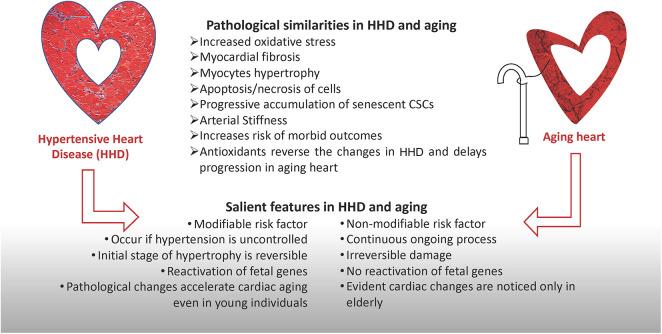
Cardiovascular diseases are the leading cause of mortality and morbidity worldwide and account for more than 17.9 million deaths (World Health Organization report). Hypertension and aging are two major risk factors for the development of cardiac structural and functional abnormalities. Hypertension, or elevated blood pressure, if left untreated can result in myocardial hypertrophy leading to heart failure (HF). Left ventricular hypertrophy consequent to pressure overload is recognized as the most important predictor of congestive HF and sudden death. The pathological changes occurring during hypertensive heart disease are very complex and involve many cellular and molecular alterations. In contrast, the cardiac changes that occur with aging are a slow but life-long process and involve all of the structural components in the heart and vasculature. However, these structural changes in the cardiovascular system lead to alterations in overall cardiac physiology and function. The pace at which these pathophysiological changes occur varies between individuals owing to many genetic and environmental risk factors. This review highlights the molecular mechanisms of cardiac structural and functional alterations associated with hypertension and aging.
心血管疾病是全球范围内导致死亡和发病的主要原因,占全球 1790 万死亡人数的(世界卫生组织报告)。高血压和老龄化是心脏结构和功能异常发展的两个主要危险因素。高血压或血压升高,如果不加以治疗,可能导致心肌肥大,导致心力衰竭(HF)。压力超负荷引起的左心室肥厚被认为是充血性 HF 和猝死的最重要预测因素。高血压性心脏病发生的病理变化非常复杂,涉及许多细胞和分子改变。相比之下,随着年龄的增长而发生的心脏变化是一个缓慢但终生的过程,涉及心脏和脉管系统的所有结构成分。然而,心血管系统的这些结构变化导致整体心脏生理学和功能的改变。由于许多遗传和环境风险因素,这些病理生理变化发生的速度在个体之间有所不同。这篇综述强调了与高血压和衰老相关的心脏结构和功能改变的分子机制。
 Zotero 插件