
蛋白水解靶向嵌合体(PROTAC)用于靶向蛋白降解和癌症治疗。
Proteolysis-targeting chimera (PROTAC) for targeted protein degradation and cancer therapy.
机构信息
Department of Pharmacology and Chemical Biology, Baylor College of Medicine, 1 Baylor Plaza, Houston, TX, 77030, USA.
Dan L. Duncan Comprehensive Cancer Center, Baylor College of Medicine, 1 Baylor Plaza, Houston, TX, 77030, USA.
出版信息
J Hematol Oncol. 2020 May 13;13(1):50. doi: 10.1186/s13045-020-00885-3.
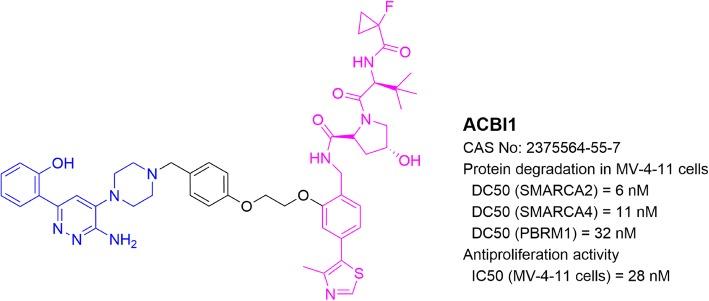
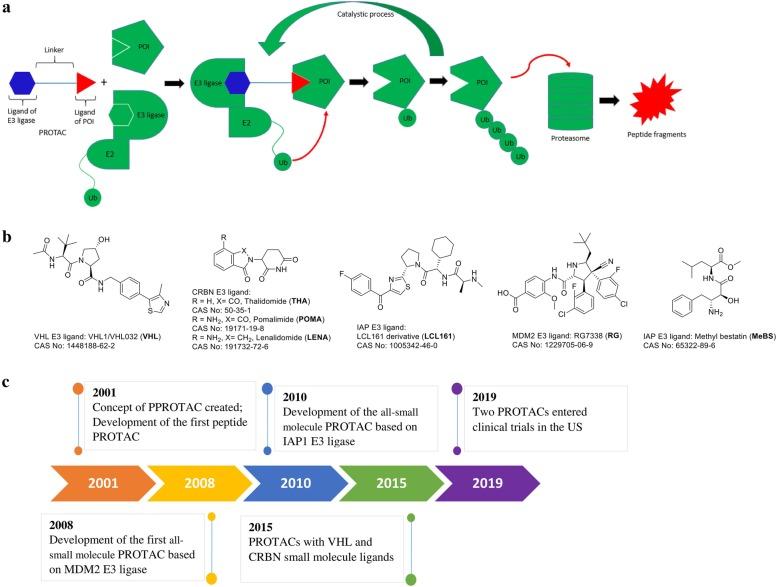
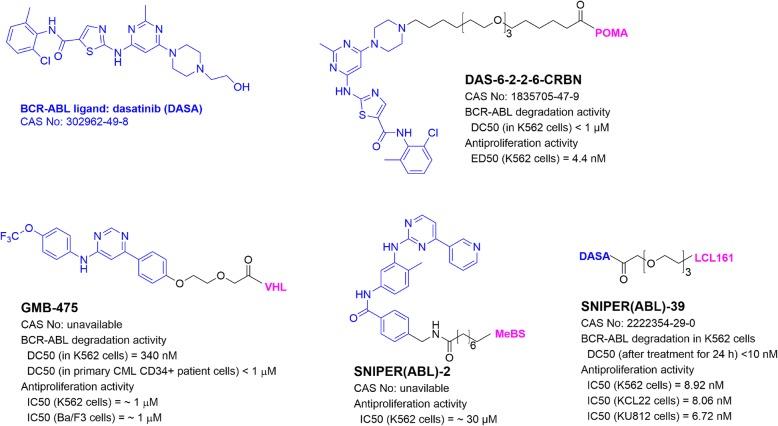
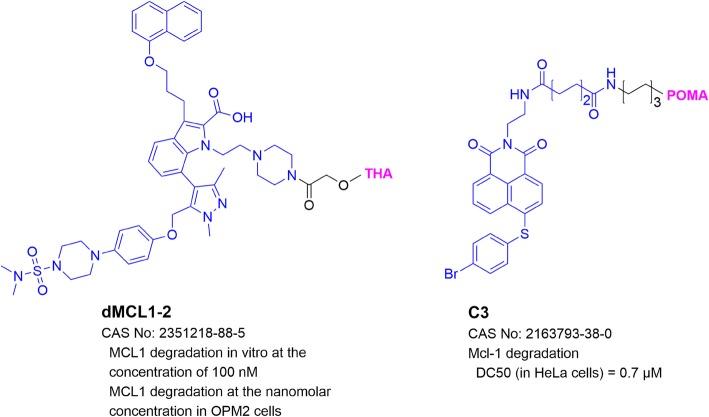
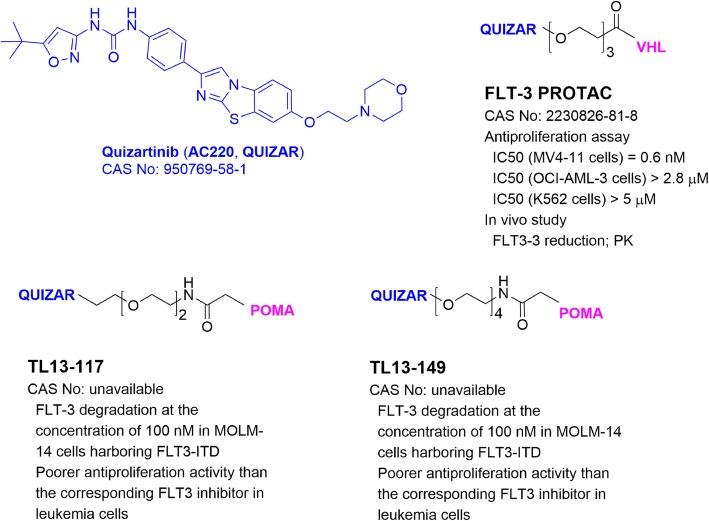
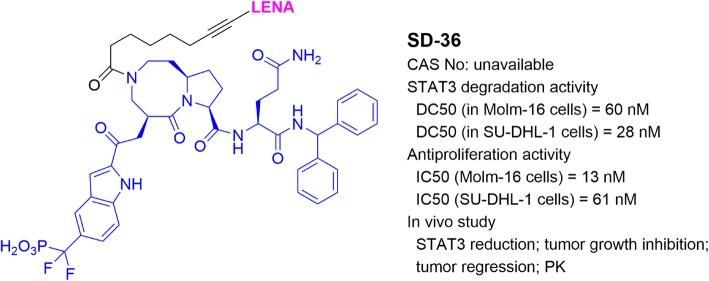
Proteolysis-targeting chimera (PROTAC) has been developed to be a useful technology for targeted protein degradation. A bifunctional PROTAC molecule consists of a ligand (mostly small-molecule inhibitor) of the protein of interest (POI) and a covalently linked ligand of an E3 ubiquitin ligase (E3). Upon binding to the POI, the PROTAC can recruit E3 for POI ubiquitination, which is subjected to proteasome-mediated degradation. PROTAC complements nucleic acid-based gene knockdown/out technologies for targeted protein reduction and could mimic pharmacological protein inhibition. To date, PROTACs targeting ~ 50 proteins, many of which are clinically validated drug targets, have been successfully developed with several in clinical trials for cancer therapy. This article reviews PROTAC-mediated degradation of critical oncoproteins in cancer, particularly those in hematological malignancies. Chemical structures, cellular and in vivo activities, pharmacokinetics, and pharmacodynamics of these PROTACs are summarized. In addition, potential advantages, challenges, and perspectives of PROTAC technology in cancer therapy are discussed.
蛋白水解靶向嵌合体(PROTAC)技术已被开发为一种用于靶向蛋白降解的有用技术。双功能 PROTAC 分子由目标蛋白(POI)的配体(大多为小分子抑制剂)和 E3 泛素连接酶(E3)的共价连接配体组成。结合到 POI 后,PROTAC 可以招募 E3 对 POI 进行泛素化,随后被蛋白酶体介导降解。PROTAC 可补充基于核酸的基因敲低/敲除技术,用于靶向蛋白减少,并可模拟药理学蛋白抑制。迄今为止,已经成功开发了针对约 50 种蛋白质的 PROTAC,其中许多是经过临床验证的药物靶点,并且有几种用于癌症治疗的临床试验。本文综述了 PROTAC 介导的癌症中关键癌蛋白的降解,特别是血液系统恶性肿瘤中的降解。总结了这些 PROTAC 的化学结构、细胞和体内活性、药代动力学和药效学。此外,还讨论了 PROTAC 技术在癌症治疗中的潜在优势、挑战和前景。


 Zotero 插件