
通过计算机模拟方法揭示抗 SARS-CoV-2 M 酶的具有抗病毒作用的植物化学成分
Unravelling lead antiviral phytochemicals for the inhibition of SARS-CoV-2 M enzyme through in silico approach.
机构信息
Department of Basic Sciences and Social Sciences, North-Eastern Hill University, Shillong 793022, Meghalaya, India.
Department of Botany and Microbiology, College of Science, King Saud University, Riyadh 11451, Saudi Arabia.
出版信息
Life Sci. 2020 Aug 15;255:117831. doi: 10.1016/j.lfs.2020.117831. Epub 2020 May 22.
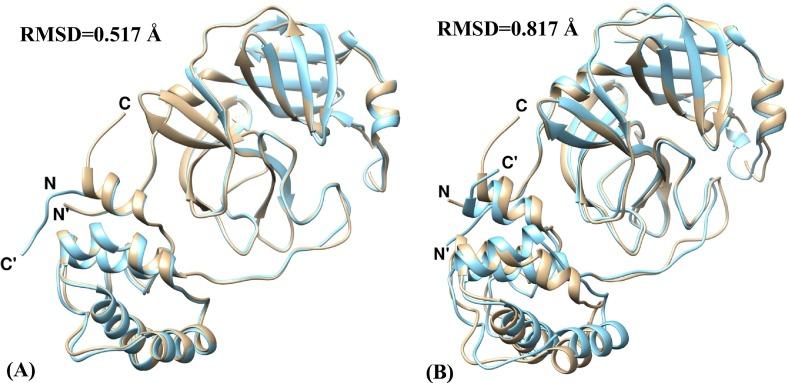
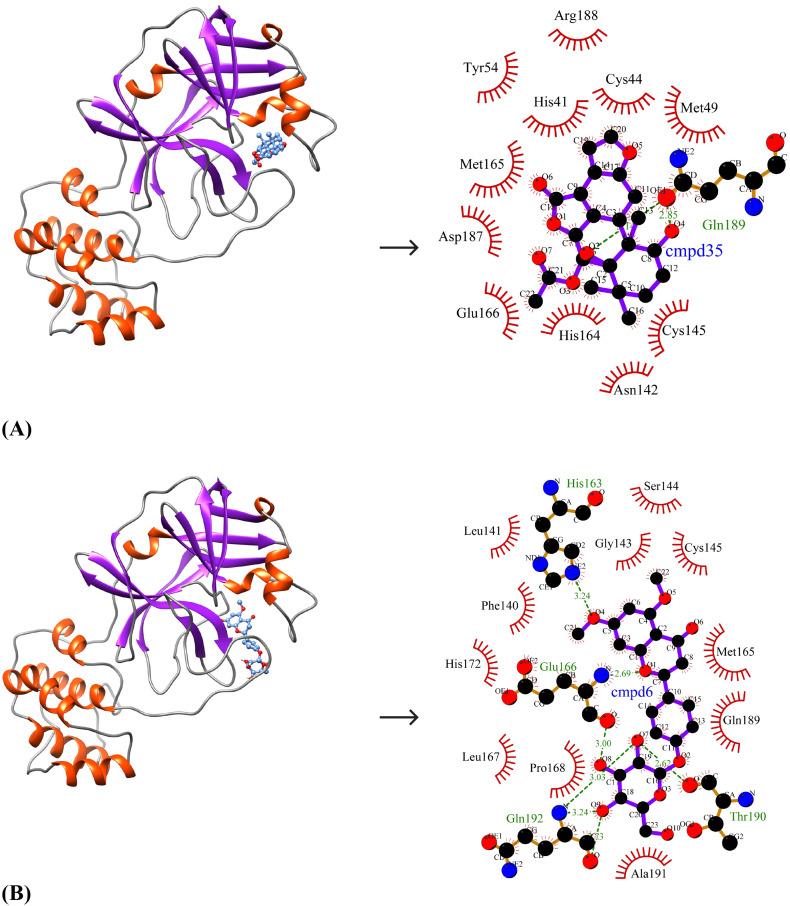
A new SARS coronavirus (SARS-CoV-2) belonging to the genus Betacoronavirus has caused a pandemic known as COVID-19. Among coronaviruses, the main protease (M) is an essential drug target which, along with papain-like proteases catalyzes the processing of polyproteins translated from viral RNA and recognizes specific cleavage sites. There are no human proteases with similar cleavage specificity and therefore, inhibitors are highly likely to be nontoxic. Therefore, targeting the SARS-CoV-2 M enzyme with small molecules can block viral replication. The present study is aimed at the identification of promising lead molecules for SARS-CoV-2 M enzyme through virtual screening of antiviral compounds from plants. The binding affinity of selected small drug-like molecules to SARS-CoV-2 M, SARS-CoV M and MERS-CoV M were studied using molecular docking. Bonducellpin D was identified as the best lead molecule which shows higher binding affinity (-9.28 kcal/mol) as compared to the control (-8.24 kcal/mol). The molecular binding was stabilized through four hydrogen bonds with Glu166 and Thr190 as well as hydrophobic interactions via eight residues. The SARS-CoV-2 M shows identities of 96.08% and 50.65% to that of SARS-CoV M and MERS-CoV M respectively at the sequence level. At the structural level, the root mean square deviation (RMSD) between SARS-CoV-2 M and SARS-CoV M was found to be 0.517 Å and 0.817 Å between SARS-CoV-2 M and MERS-CoV M. Bonducellpin D exhibited broad-spectrum inhibition potential against SARS-CoV M and MERS-CoV M and therefore is a promising drug candidate, which needs further validations through in vitro and in vivo studies.
一种新的 SARS 冠状病毒(SARS-CoV-2)属于β冠状病毒属,引起了一种称为 COVID-19 的大流行。在冠状病毒中,主要蛋白酶(M)是一个重要的药物靶点,它与木瓜蛋白酶样蛋白酶一起催化从病毒 RNA 翻译的多蛋白的加工,并识别特定的切割位点。没有具有相似切割特异性的人蛋白酶,因此抑制剂极有可能是无毒的。因此,用小分子靶向 SARS-CoV-2 M 酶可以阻断病毒复制。本研究旨在通过从植物中筛选抗病毒化合物,对 SARS-CoV-2 M 酶进行虚拟筛选,以鉴定有前途的先导分子。使用分子对接研究了选定的小分子药物样分子与 SARS-CoV-2 M、SARS-CoV M 和 MERS-CoV M 的结合亲和力。结果表明,与对照(-8.24kcal/mol)相比,Bonducellpin D 显示出更高的结合亲和力(-9.28kcal/mol),是最佳的先导分子。分子结合通过与 Glu166 和 Thr190 形成四个氢键以及通过八个残基进行疏水相互作用而得到稳定。SARS-CoV-2 M 在序列水平上与 SARS-CoV M 和 MERS-CoV M 的同源性分别为 96.08%和 50.65%。在结构水平上,SARS-CoV-2 M 与 SARS-CoV M 之间的均方根偏差(RMSD)为 0.517Å,SARS-CoV-2 M 与 MERS-CoV M 之间的 RMSD 为 0.817Å。Bonducellpin D 对 SARS-CoV M 和 MERS-CoV M 表现出广谱抑制潜力,因此是一种有前途的候选药物,需要通过体外和体内研究进一步验证。



 Zotero 插件