
基于人群数据对导管原位癌自然史进行建模。
Modeling the natural history of ductal carcinoma in situ based on population data.
机构信息
Department of Public Health, Erasmus MC, University Medical Center Rotterdam, P.O. Box 2040, 3000 CA, Rotterdam, Netherlands.
Department of Data Sciences, Dana-Farber Cancer Institute, Boston, MA, USA.
出版信息
Breast Cancer Res. 2020 May 27;22(1):53. doi: 10.1186/s13058-020-01287-6.
BACKGROUND
The incidence of ductal carcinoma in situ (DCIS) has increased substantially since the introduction of mammography screening. Nevertheless, little is known about the natural history of preclinical DCIS in the absence of biopsy or complete excision.
METHODS
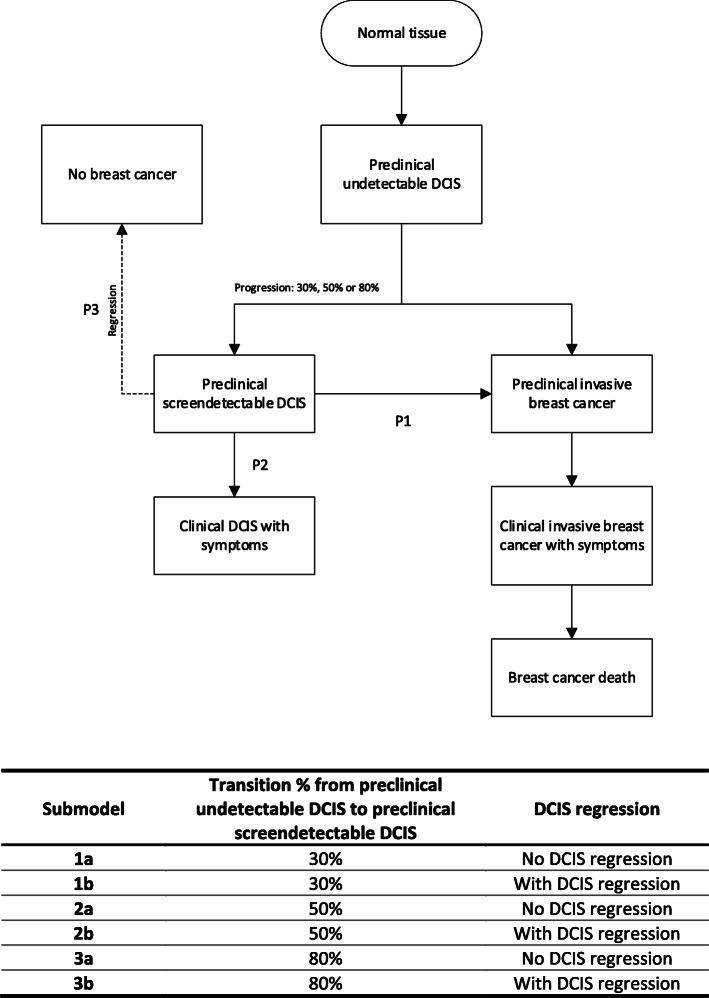
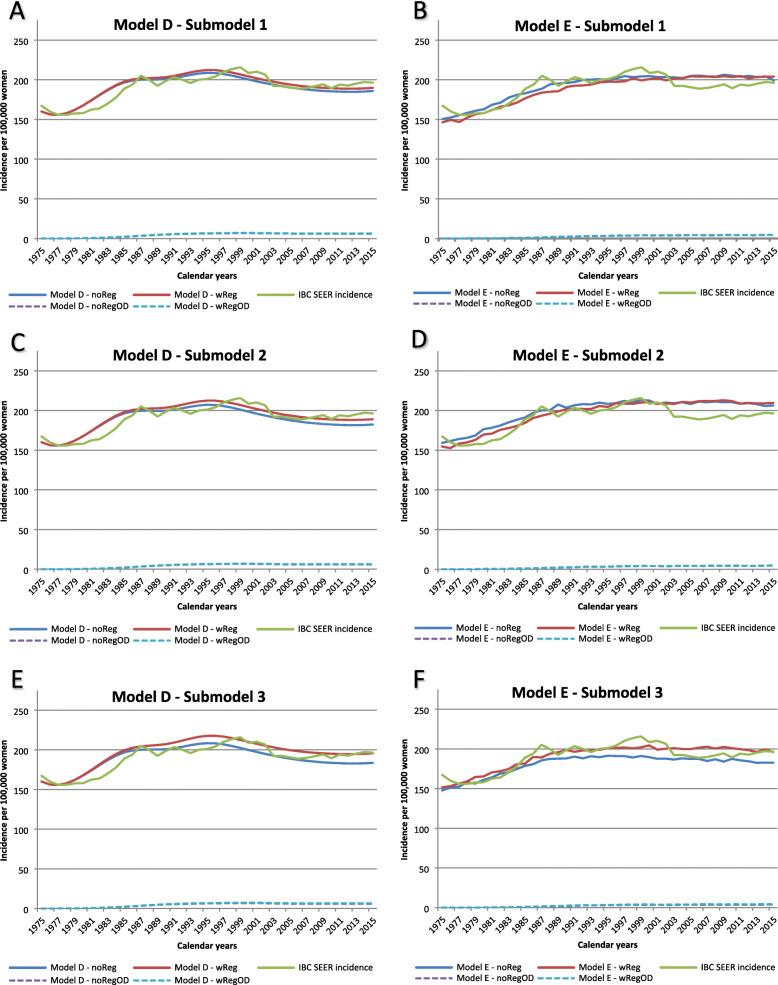
Two well-established population models evaluated six possible DCIS natural history submodels. The submodels assumed 30%, 50%, or 80% of breast lesions progress from undetectable DCIS to preclinical screen-detectable DCIS; each model additionally allowed or prohibited DCIS regression. Preclinical screen-detectable DCIS could also progress to clinical DCIS or invasive breast cancer (IBC). Applying US population screening dissemination patterns, the models projected age-specific DCIS and IBC incidence that were compared to Surveillance, Epidemiology, and End Results data. Models estimated mean sojourn time (MST) in the preclinical screen-detectable DCIS state, overdiagnosis, and the risk of progression from preclinical screen-detectable DCIS.
RESULTS
Without biopsy and surgical excision, the majority of DCIS (64-100%) in the preclinical screen-detectable state progressed to IBC in submodels assuming no DCIS regression (36-100% in submodels allowing for DCIS regression). DCIS overdiagnosis differed substantially between models and submodels, 3.1-65.8%. IBC overdiagnosis ranged 1.3-2.4%. Submodels assuming DCIS regression resulted in a higher DCIS overdiagnosis than submodels without DCIS regression. MST for progressive DCIS varied between 0.2 and 2.5 years.
CONCLUSIONS
Our findings suggest that the majority of screen-detectable but unbiopsied preclinical DCIS lesions progress to IBC and that the MST is relatively short. Nevertheless, due to the heterogeneity of DCIS, more research is needed to understand the progression of DCIS by grades and molecular subtypes.
背景
自乳腺摄影筛查引入以来,导管原位癌(DCIS)的发病率大幅增加。然而,在没有活检或完全切除的情况下,对于临床前 DCIS 的自然病史知之甚少。
方法
两个成熟的人群模型评估了六个可能的 DCIS 自然病史子模型。子模型假设 30%、50%或 80%的乳腺病变从不可检测的 DCIS 进展为临床前筛查可检测的 DCIS;每个模型还允许或禁止 DCIS 消退。临床前筛查可检测的 DCIS 也可能进展为临床 DCIS 或浸润性乳腺癌(IBC)。应用美国人群筛查传播模式,模型预测了与监测、流行病学和最终结果数据相比的年龄特异性 DCIS 和 IBC 发病率。模型估计了临床前筛查可检测 DCIS 状态的平均停留时间(MST)、过度诊断和从临床前筛查可检测 DCIS 进展的风险。
结果
在没有活检和手术切除的情况下,假设没有 DCIS 消退的子模型中,大多数(64-100%)临床前筛查可检测的 DCIS 进展为 IBC(允许 DCIS 消退的子模型中 36-100%)。模型和子模型之间的 DCIS 过度诊断差异很大,范围为 3.1-65.8%。IBC 过度诊断范围为 1.3-2.4%。假设 DCIS 消退的子模型导致的 DCIS 过度诊断高于没有 DCIS 消退的子模型。进展性 DCIS 的 MST 为 0.2 至 2.5 年。
结论
我们的研究结果表明,大多数可筛查但未经活检的临床前 DCIS 病变进展为 IBC,MST 相对较短。然而,由于 DCIS 的异质性,需要进一步研究来了解不同分级和分子亚型的 DCIS 进展情况。



 Zotero 插件