
毫安相关的mRNA特征可预测胰腺癌患者的预后。
The mA-Related mRNA Signature Predicts the Prognosis of Pancreatic Cancer Patients.
作者信息
Meng Zibo, Yuan Qingchen, Zhao Jingyuan, Wang Bo, Li Shoukang, Offringa Rienk, Jin Xin, Wu Heshui
机构信息
Department of Pancreatic Surgery, Union Hospital, Tongji Medical College, Huazhong University of Science and Technology, Wuhan 430022, China.
Division of Molecular Oncology of Gastrointestinal Tumors, German Cancer Research Center, Heidelberg, Germany.
出版信息
Mol Ther Oncolytics. 2020 Apr 29;17:460-470. doi: 10.1016/j.omto.2020.04.011. eCollection 2020 Jun 26.
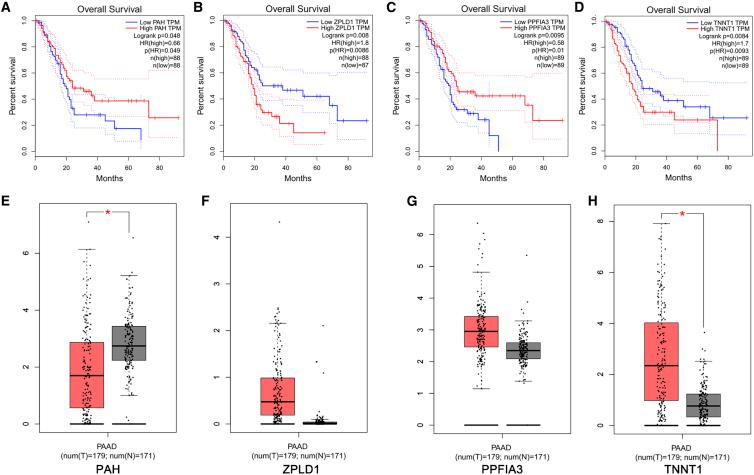
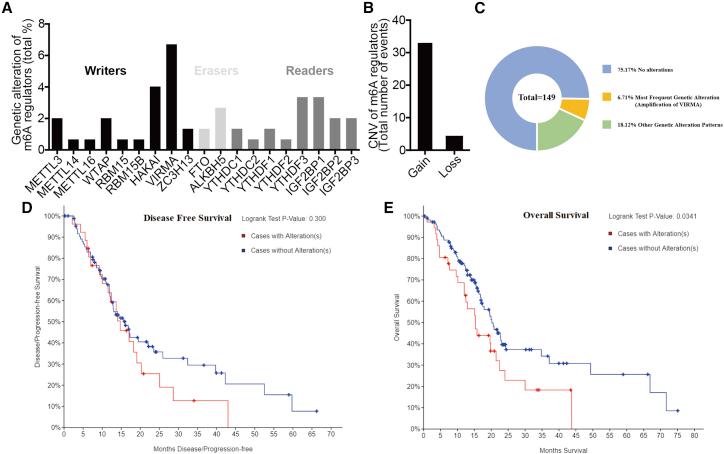
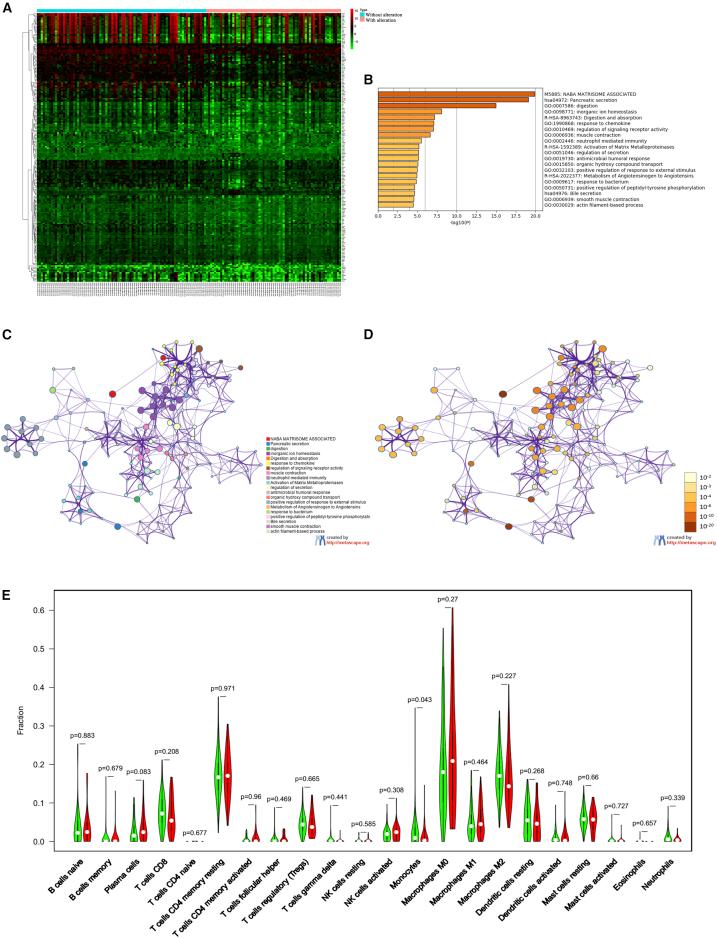
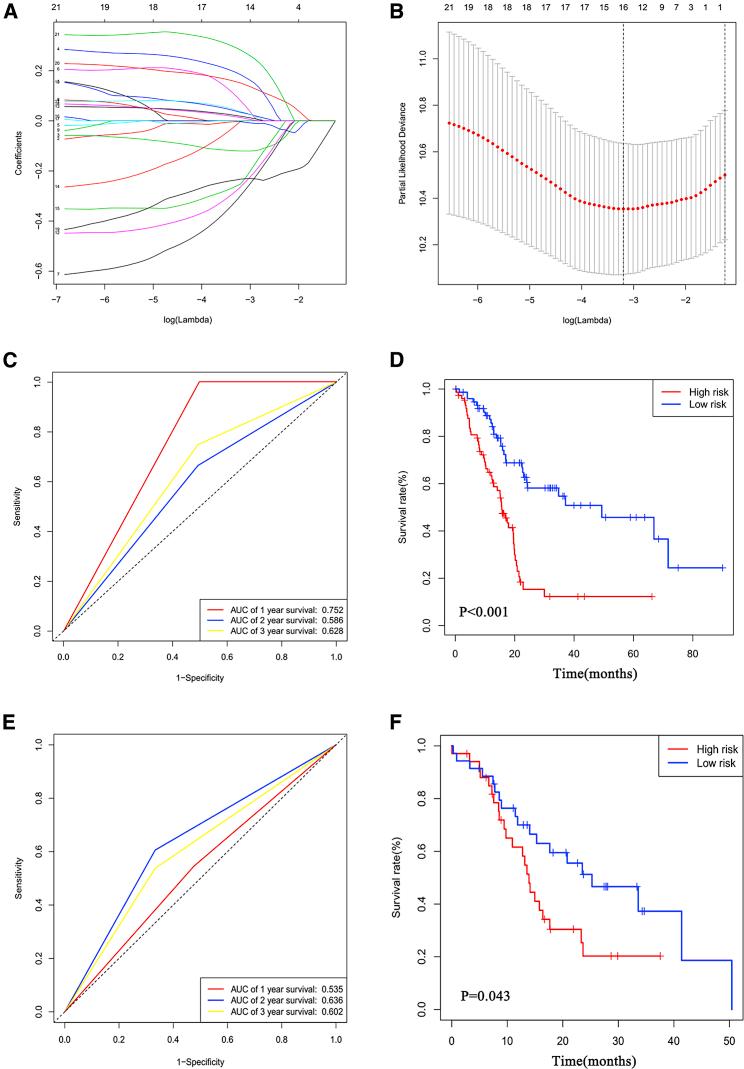
N-methyladenosine (mA) has an important epitranscriptomic modification that controls cancer self-renewal and cell fate. The addition of mA to mRNA is a reversible modification. The deposition of mA is encoded by a methyltransferase complex involving three homologous factors, jargonized as "writers," "erasers," and "readers." However, their roles in pancreatic adenocarcinoma (PAAD) are underexploited. With the use of The Cancer Genome Atlas (TCGA) and International Cancer Genome Consortium (ICGC) databases, we provided an mRNA signature that may improve the prognostic prediction of PAAD patients based on the genetic status of mA regulators. PAAD patients with genetic alteration of mA regulators had worse disease-free and overall survival. After comparing PAAD groups with/without genetic alteration of mA regulators, we identified 196 differentially expressed genes (DEGs). Then, we generated a 16-mRNA signature score system through least absolute shrinkage and selection operator (LASSO) Cox regression analysis. Multivariate cox regression analysis demonstrated that a high-risk score significantly correlates with poor prognosis. Moreover, time-dependent receiver operating characteristic (ROC) curves revealed it was effective in predicting the overall survival in both training and validation sets. PAH, ZPLD1, PPFIA3, and TNNT1 from our signature also exhibited an independent prognostic value. Collectively, these findings can improve the understanding of mA modifications in PAAD and potentially guide therapies in PAAD patients.
N-甲基腺苷(mA)是一种重要的表观转录组修饰,可控制癌症的自我更新和细胞命运。将mA添加到mRNA上是一种可逆修饰。mA的沉积由一个甲基转移酶复合体编码,该复合体涉及三个同源因子,简称为“写入器”“擦除器”和“读取器”。然而,它们在胰腺腺癌(PAAD)中的作用尚未得到充分研究。通过使用癌症基因组图谱(TCGA)和国际癌症基因组联盟(ICGC)数据库,我们提供了一种mRNA特征,可根据mA调节因子的基因状态改善PAAD患者的预后预测。mA调节因子发生基因改变的PAAD患者的无病生存期和总生存期较差。在比较有/无mA调节因子基因改变的PAAD组后,我们鉴定出196个差异表达基因(DEG)。然后,我们通过最小绝对收缩和选择算子(LASSO)Cox回归分析生成了一个16-mRNA特征评分系统。多变量Cox回归分析表明,高风险评分与不良预后显著相关。此外,时间依赖性受试者工作特征(ROC)曲线显示,它在预测训练集和验证集的总生存期方面均有效。我们特征中的PAH、ZPLD1、PPFIA3和TNNT1也表现出独立的预后价值。总的来说,这些发现可以增进对PAAD中mA修饰的理解,并有可能指导PAAD患者的治疗。

 Zotero 插件