
Eomes 在成熟 NK 细胞稳态和细胞毒性中的阶段特异性需求。
Stage-Specific Requirement for Eomes in Mature NK Cell Homeostasis and Cytotoxicity.
机构信息
Department of Medicine, Division of Oncology, Washington University School of Medicine, St. Louis, MO 63110, USA.
Department of Pediatrics, Division of Rheumatology, Washington University School of Medicine, St. Louis, MO 63110, USA.
出版信息
Cell Rep. 2020 Jun 2;31(9):107720. doi: 10.1016/j.celrep.2020.107720.
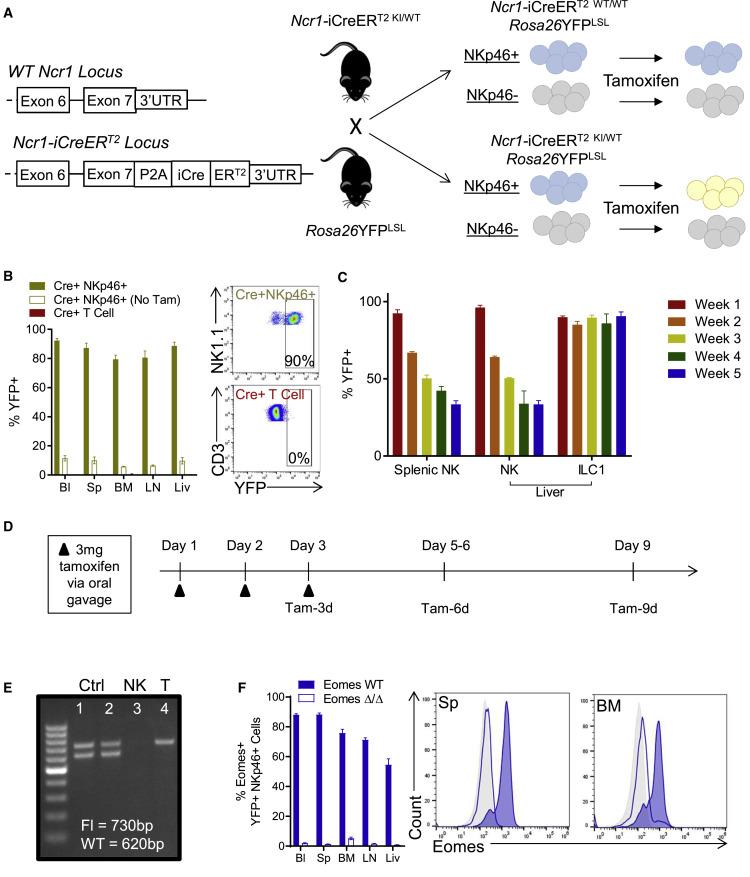
Natural killer (NK) cells are cytotoxic innate lymphoid cells (ILCs) that mediate antiviral and antitumor responses and require the transcriptional regulator Eomesodermin (Eomes) for early development. However, the role of Eomes and its molecular program in mature NK cell biology is unclear. To address this, we develop a tamoxifen-inducible, type-1-ILC-specific (Ncr1-targeted) cre mouse and combine this with Eomes-floxed mice. Eomes deletion after normal NK cell ontogeny results in a rapid loss of NK cells (but not ILC1s), with a particularly profound effect on penultimately mature stage III NK cells. Mechanisms responsible for stage III reduction include increased apoptosis and impaired maturation from stage II precursors. Induced Eomes deletion also decreases NK cell cytotoxicity and abrogates in vivo rejection of major histocompatibility complex (MHC)-class-I-deficient cells. However, other NK cell functional responses, and stage IV NK cells, are largely preserved. These data indicate that mature NK cells have distinct Eomes-dependent and -independent stages.
自然杀伤 (NK) 细胞是细胞毒性先天淋巴细胞 (ILC),可介导抗病毒和抗肿瘤反应,并且其早期发育需要转录调节因子 Eomesodermin (Eomes)。然而,Eomes 及其在成熟 NK 细胞生物学中的分子程序的作用尚不清楚。为了解决这个问题,我们开发了一种他莫昔芬诱导的、1 型 ILC 特异性(Ncr1 靶向)的 cre 小鼠,并将其与 Eomes 基因敲除小鼠结合使用。在正常 NK 细胞发生后,Eomes 的缺失会导致 NK 细胞的快速丢失(但不包括 ILC1),对最后成熟的 III 期 NK 细胞影响尤为显著。导致 III 期减少的机制包括凋亡增加和从 II 期前体成熟受损。诱导的 Eomes 缺失还降低了 NK 细胞的细胞毒性,并消除了对主要组织相容性复合体 (MHC)-I 缺陷细胞的体内排斥。然而,其他 NK 细胞功能反应和 IV 期 NK 细胞在很大程度上得以保留。这些数据表明成熟的 NK 细胞具有不同的、依赖和不依赖 Eomes 的阶段。




 Zotero 插件