
胰腺导管腺癌中的表观遗传学景观:是否有望克服耐药性?
Epigenetic Landscape in Pancreatic Ductal Adenocarcinoma: On the Way to Overcoming Drug Resistance?
机构信息
Department of Genetics, Cancer Research Institute, Biomedical Research Center of the Slovak Academy of Sciences, Dúbravská cesta 9, 845 05 Bratislava, Slovakia.
Molecular Epidemiology and Predictive Tumor Markers Group, Medical Oncology Research Laboratory, Ramón y Cajal Health Research Institute (IRYCIS), Carretera Colmenar Km 9100, 28034 Madrid, Spain.
出版信息
Int J Mol Sci. 2020 Jun 8;21(11):4091. doi: 10.3390/ijms21114091.
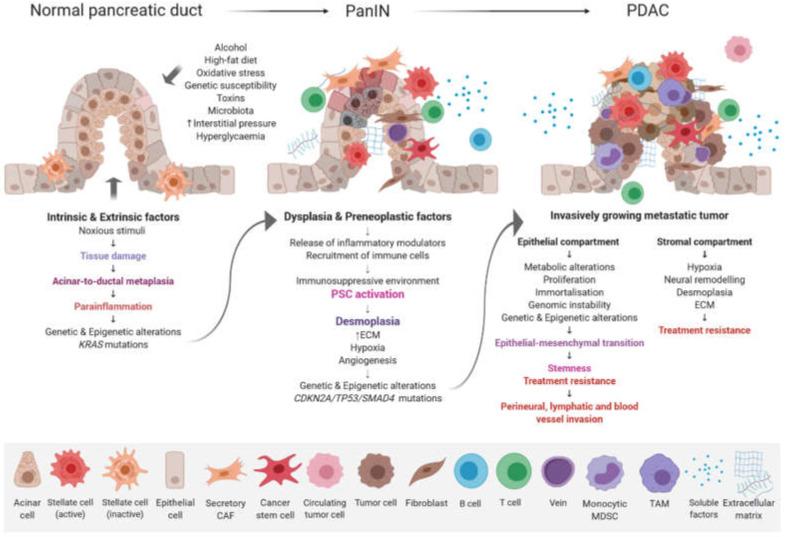
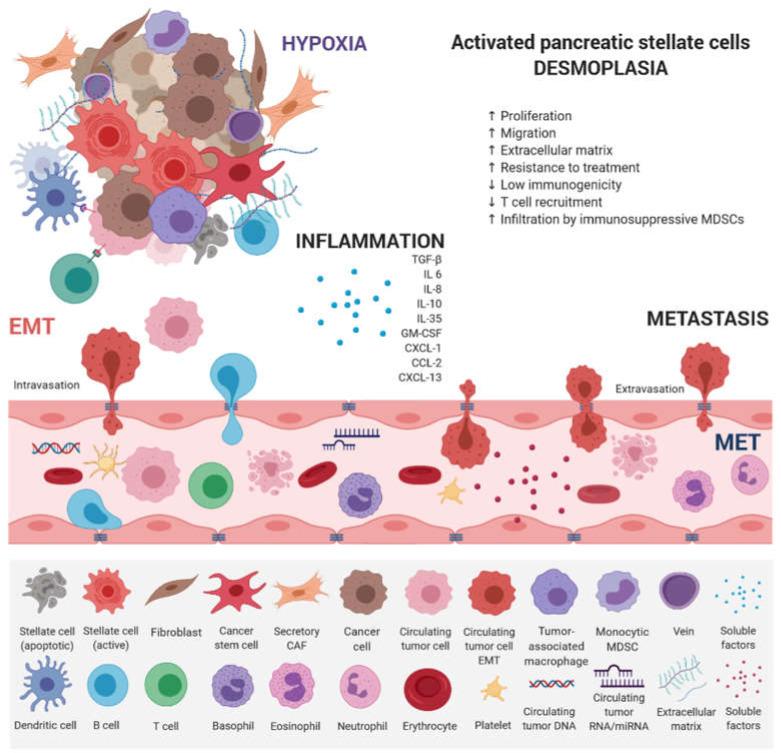
Pancreatic ductal adenocarcinoma (PDAC) is one of the most aggressive solid malignancies due to the rapid rate of metastasis and high resistance to currently applied cancer therapies. The complex mechanism underlying the development and progression of PDAC includes interactions between genomic, epigenomic, and signaling pathway alterations. In this review, we summarize the current research findings on the deregulation of epigenetic mechanisms in PDAC and the influence of the epigenome on the dynamics of the gene expression changes underlying epithelial-mesenchymal transition (EMT), which is responsible for the invasive phenotype of cancer cells and, therefore, their metastatic potential. More importantly, we provide an overview of the studies that uncover potentially actionable pathways. These studies provide a scientific basis to test epigenetic drug efficacy in synergy with other anticancer therapies in future clinical trials, in order to reverse acquired therapy resistance. Thus, epigenomics has the potential to generate relevant new knowledge of both a biological and clinical impact. Moreover, the potential, hurdles, and challenges of predictive biomarker discoveries will be discussed, with a special focus on the promise of liquid biopsies.
胰腺导管腺癌(PDAC)是最具侵袭性的实体恶性肿瘤之一,其转移速度快,对目前应用的癌症治疗具有高度耐药性。PDAC 发生和发展的复杂机制包括基因组、表观基因组和信号通路改变之间的相互作用。在这篇综述中,我们总结了目前关于 PDAC 中表观遗传机制失调的研究发现,以及表观基因组对上皮-间充质转化(EMT)中基因表达变化动态的影响,EMT 是癌细胞侵袭表型的原因,也是其转移潜能的原因。更重要的是,我们概述了揭示潜在可操作途径的研究。这些研究为未来临床试验中与其他抗癌疗法联合测试表观遗传药物疗效提供了科学依据,以逆转获得性治疗耐药性。因此,表观基因组学有可能产生具有生物学和临床意义的相关新知识。此外,还将讨论预测性生物标志物发现的潜力、障碍和挑战,特别关注液体活检的前景。

 Zotero 插件