
弓形虫与其近缘种哈氏弓形体的直接比较揭示了宿主反应和效应物的显著差异,具有物种特异性的功能。
Head-to-head comparisons of Toxoplasma gondii and its near relative Hammondia hammondi reveal dramatic differences in the host response and effectors with species-specific functions.
机构信息
Department of Biological Sciences, Dietrich School of Arts and Sciences, University of Pittsburgh, Pittsburgh, Pennsylvania, United States of America.
University of Bern, Bern, Switzerland.
出版信息
PLoS Pathog. 2020 Jun 23;16(6):e1008528. doi: 10.1371/journal.ppat.1008528. eCollection 2020 Jun.
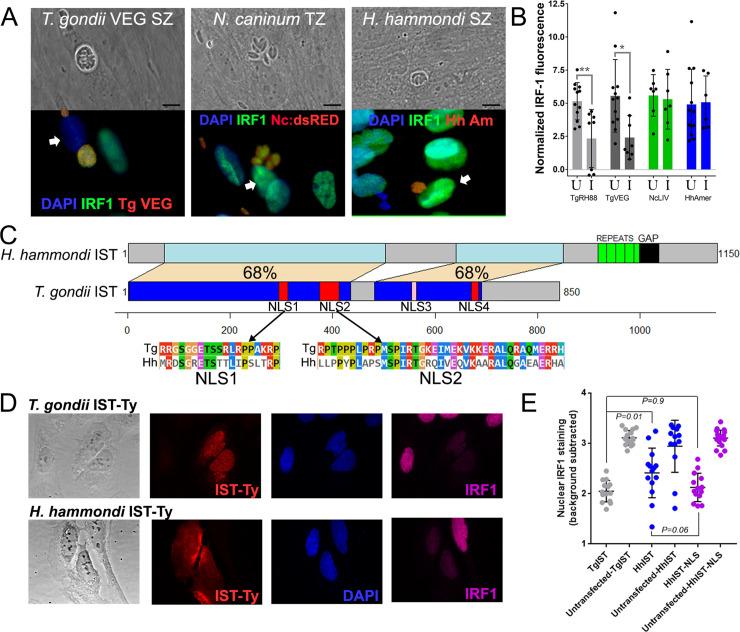
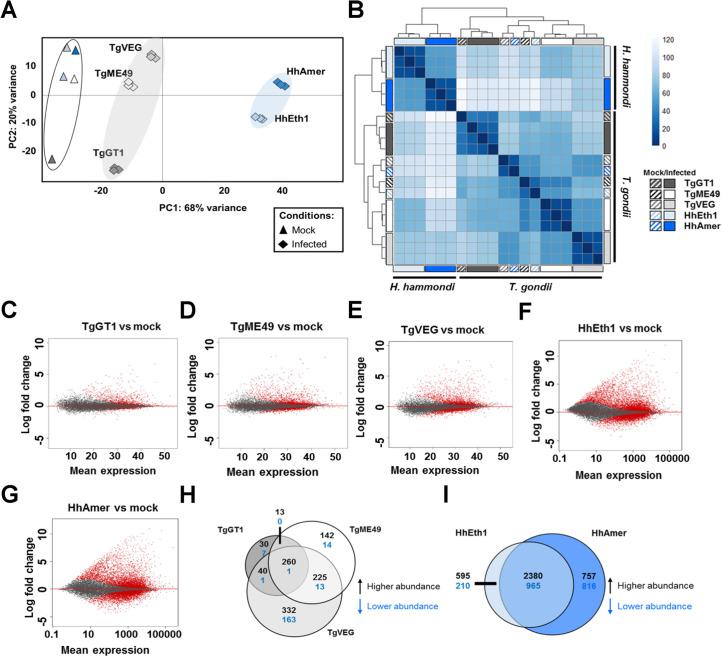
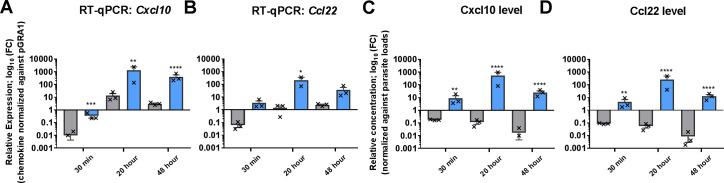
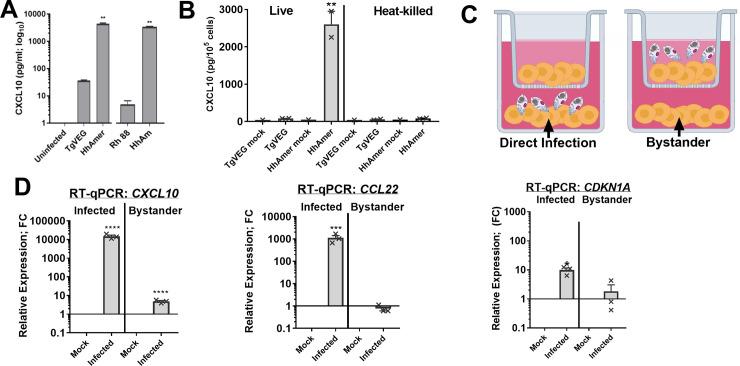
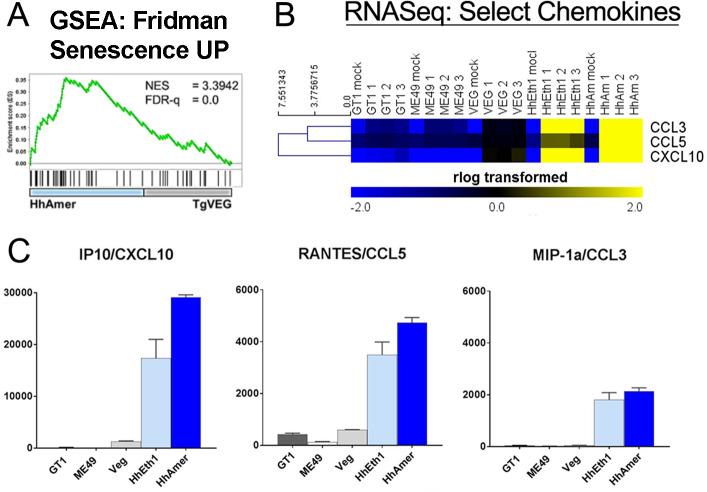
Toxoplasma gondii and Hammondia hammondi are closely-related coccidian intracellular parasites that differ in their ability to cause disease in animal and (likely) humans. The role of the host response in these phenotypic differences is not known and to address this we performed a transcriptomic analysis of a monocyte cell line (THP-1) infected with these two parasite species. The pathways altered by infection were shared between species ~95% the time, but the magnitude of the host response to H. hammondi was significantly higher compared to T. gondii. Accompanying this divergent host response was an equally divergent impact on the cell cycle of the host cell. In contrast to T. gondii, H. hammondi infection induces cell cycle arrest via pathways linked to DNA-damage responses and cellular senescence and robust secretion of multiple chemokines that are known to be a part of the senescence associated secretory phenotype (SASP). Remarkably, prior T. gondii infection or treatment with T. gondii-conditioned media suppressed responses to H. hammondi infection, and promoted the replication of H. hammondi in recipient cells. Suppression of inflammatory responses to H. hammondi was found to be mediated by the T. gondii effector IST, and this finding was consistent with reduced functionality of the H. hammondi IST ortholog compared to its T. gondii counterpart. Taken together our data suggest that T. gondii manipulation of the host cell is capable of suppressing previously unknown stress and/or DNA-damage induced responses that occur during infection with H. hammondi, and that one important impact of this T. gondii mediated suppression is to promote parasite replication.
刚地弓形虫和哈氏弓形体是密切相关的肉孢子虫属细胞内寄生虫,它们在引起动物(可能还有人类)疾病的能力上有所不同。宿主反应在这些表型差异中的作用尚不清楚,为了解决这个问题,我们对单核细胞系(THP-1)感染这两种寄生虫物种进行了转录组分析。感染改变的途径在物种间约有 95%的时间是共享的,但宿主对哈氏弓形体的反应幅度明显高于对刚地弓形虫的反应幅度。伴随着这种不同的宿主反应,宿主细胞周期也受到了同样不同的影响。与刚地弓形虫不同,哈氏弓形体感染通过与 DNA 损伤反应和细胞衰老相关的途径诱导细胞周期停滞,并大量分泌多种趋化因子,这些趋化因子已知是衰老相关分泌表型(SASP)的一部分。值得注意的是,先前的刚地弓形虫感染或用刚地弓形虫条件培养基处理会抑制对哈氏弓形体感染的反应,并促进受感染细胞中哈氏弓形体的复制。对哈氏弓形体感染的炎症反应的抑制被发现是由刚地弓形虫效应物 IST 介导的,这一发现与哈氏弓形体 IST 同源物的功能相对于其刚地弓形虫对应物的降低相一致。总之,我们的数据表明,刚地弓形虫对宿主细胞的操纵能够抑制在感染哈氏弓形体期间发生的未知的应激和/或 DNA 损伤诱导的反应,而这种刚地弓形虫介导的抑制的一个重要影响是促进寄生虫的复制。



 Zotero 插件