
球虫亚纲顶复门各目间阶段转换的比较
A Comparison of Stage Conversion in the Coccidian Apicomplexans , , and .
机构信息
University of Pittsburgh, Department of Biological Sciences, Kenneth P. Dietrich School of Arts and Sciences, Pittsburgh, PA, United States.
出版信息
Front Cell Infect Microbiol. 2020 Dec 3;10:608283. doi: 10.3389/fcimb.2020.608283. eCollection 2020.
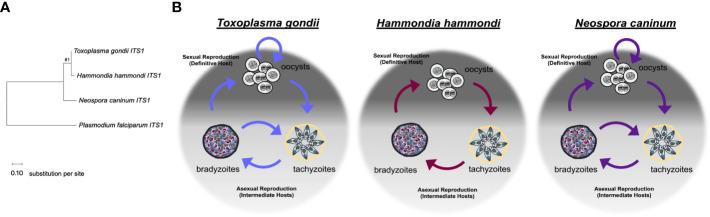
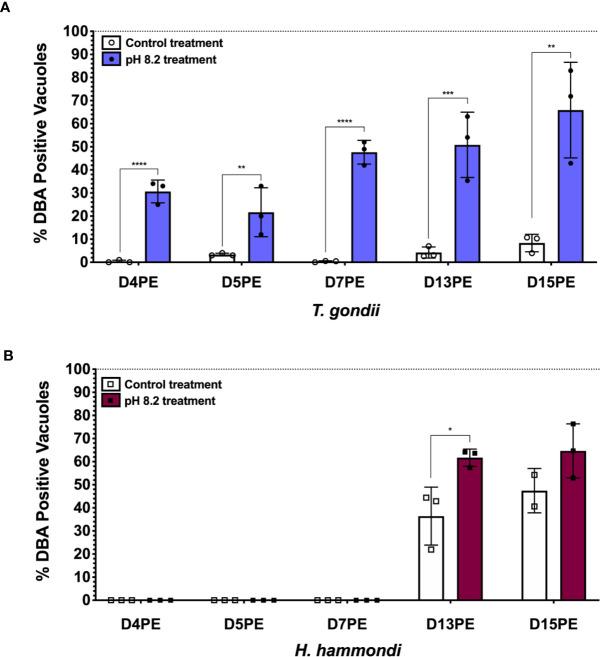
Stage conversion is a critical life cycle feature for several Apicomplexan parasites as the ability to switch between life forms is critical for replication, dissemination, pathogenesis and ultimately, transmission to a new host. In order for these developmental transitions to occur, the parasite must first sense changes in their environment, such as the presence of stressors or other environmental signals, and then respond to these signals by initiating global alterations in gene expression. As our understanding of the genetic components required for stage conversion continues to broaden, we can better understand the conserved mechanisms for this process and unique components and their contribution to pathogenesis by comparing stage conversion in multiple closely related species. In this review, we will discuss what is currently known about the mechanisms driving stage conversion in and its closest relatives and . Work by us and others has shown that these species have some important differences in the way that they (1) progress through their life cycle and (2) respond to stage conversion initiating stressors. To provide a specific example of species-specific complexities associated with stage conversion, we will discuss our recent published and unpublished work comparing stress responses in and .
阶段转换是几种顶复门寄生虫的关键生命周期特征,因为在不同生命形式之间转换的能力对于复制、传播、发病机制以及最终向新宿主传播至关重要。为了发生这些发育转变,寄生虫必须首先感知其环境的变化,例如存在应激源或其他环境信号,然后通过启动基因表达的全局改变来对这些信号做出反应。随着我们对阶段转换所需的遗传成分的理解不断扩大,我们可以通过比较多个密切相关物种的阶段转换,更好地理解该过程的保守机制以及独特成分及其对发病机制的贡献。在这篇综述中,我们将讨论目前已知的 和其最亲近的 和 驱动阶段转换的机制。我们和其他人的工作表明,这些物种在(1)完成生命周期的方式和(2)对启动阶段转换的应激源的反应方面存在一些重要差异。为了提供与阶段转换相关的物种特异性复杂性的具体示例,我们将讨论我们最近发表和未发表的比较 和 应激反应的工作。

 Zotero 插件