
减轻卵清蛋白激发哮喘小鼠模型中的氧化应激和气道炎症
Attenuates Oxidative Stress and Airway Inflammation in a Murine Model of Ovalbumin-Challenged Asthma.
作者信息
Lee Ba-Wool, Ha Ji-Hye, Shin Han-Gyo, Jeong Seong-Hun, Kim Ju-Hong, Lee Jihye, Park Ji-Young, Kwon Hyung-Jun, Jung Kyungsook, Lee Woo-Song, Ryu Young-Bae, Jeong Jae-Ho, Lee In-Chul
机构信息
Functional Biomaterial Research Center, Korea Research Institute of Bioscience and Biotechnology, Jeongeup-si, Jeollabuk-do 56212, Korea.
Department of Veterinary Pharmacology and Toxicology, College of Veterinary Medicine, Chonnam National University, Gwangju 61186, Korea.
出版信息
Antioxidants (Basel). 2020 Jun 27;9(7):563. doi: 10.3390/antiox9070563.
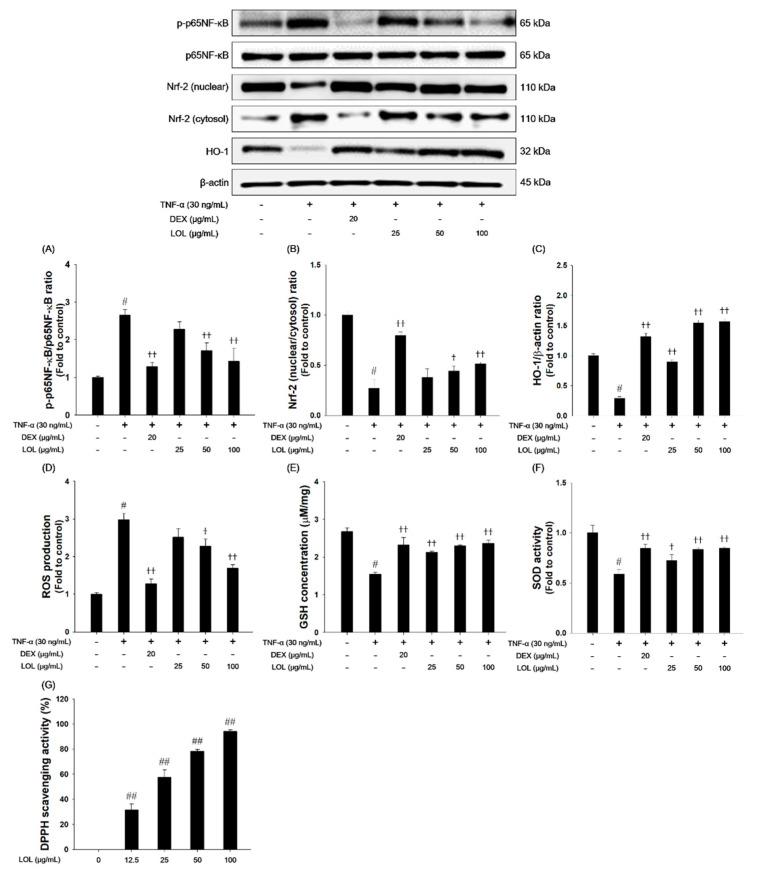
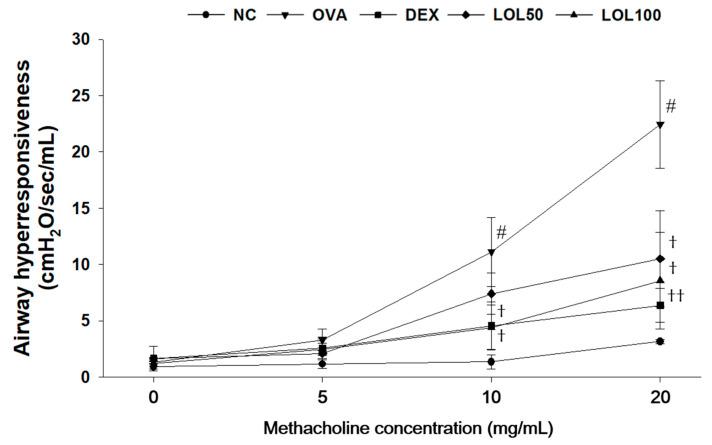
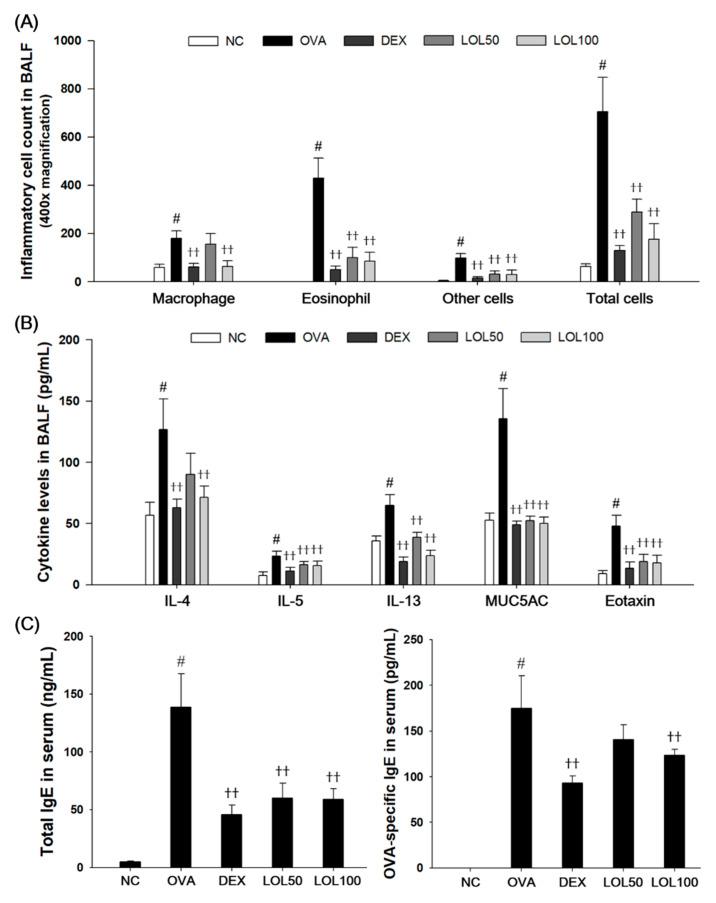
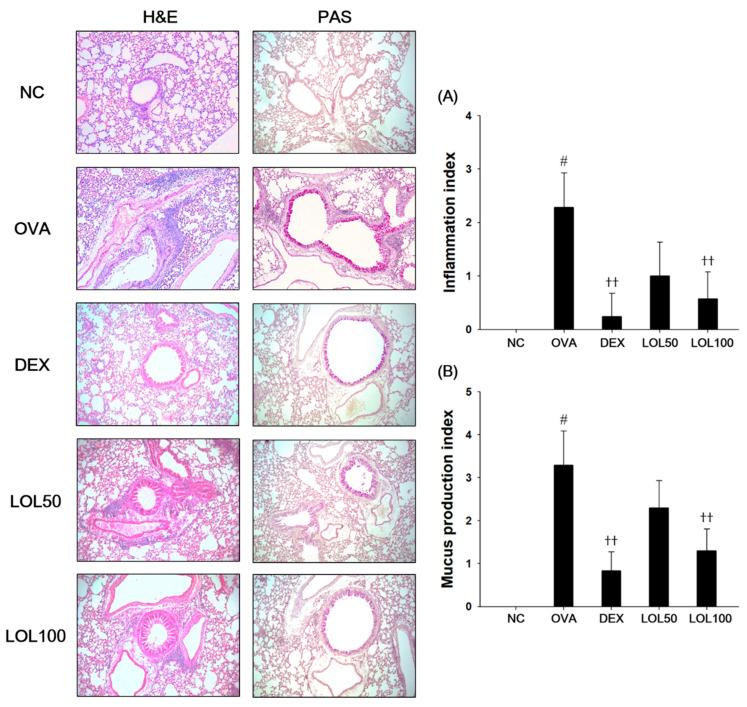
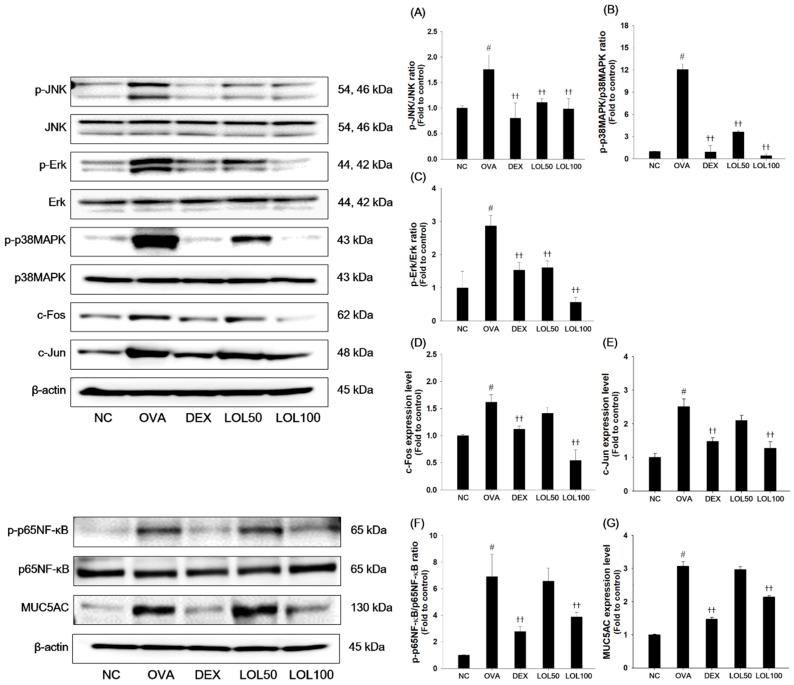
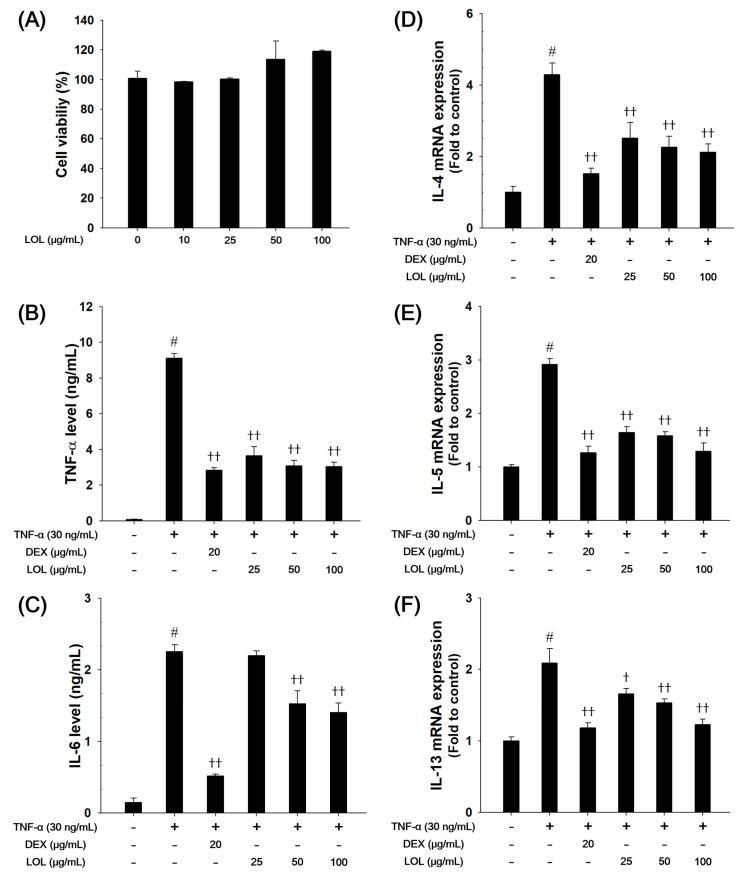
is widespread in northeast Asia and used for treatment of improvement of blood circulation and anti-inflammation. In this study, we investigated anti-inflammatory and anti-oxidant effects of the methanolic extract of leaves (LOL) in an ovalbumin (OVA)-challenged allergic asthma model and tumor necrosis factor (TNF)-α-stimulated NCI-H292 cell. Female BALB/c mice were sensitized with OVA by intraperitoneal injection on days 0 and 14, and airway-challenged with OVA from days 21 to 23. Mice were administered 50 and 100 mg/kg of LOL by oral gavage 1 h before the challenge. LOL treatment effectively decreased airway hyper-responsiveness and inhibited inflammatory cell recruitment, Th2 cytokines, mucin 5AC (MUC5AC) in bronchoalveolar lavage fluid in OVA-challenged mice, which were accompanied by marked suppression of airway inflammation and mucus production in the lung tissue. LOL pretreatment inhibited the phosphorylation of mitogen-activated protein kinases (MAPKs) and nuclear factor-kappa B (NF-κB) with suppression of activator protein (AP)-1 and MUC5AC in the lung tissue. LOL also down-regulated expression of inflammatory cytokines, and inhibited the activation of NF-κB in TNF-α-stimulated NCI-H292 cells. LOL elevated the translocation of nuclear factor-erythroid 2-related factor (Nrf-2) into nucleus concurrent with increase of heme oxyngenase-1 (HO-1) and NAD(P)H quinine oxidoreductase 1 (NQO1). Moreover, LOL treatment exhibited a marked increase in the anti-oxidant enzymes activities, whereas effectively suppressed the production of reactive oxygen species and nitric oxide, as well as lipid peroxidation in lung tissue of OVA-challenged mice and TNF-α-stimulated NCI-H292 cells. These findings suggest that LOL might serve as a therapeutic agent for the treatment of allergic asthma.
在东北亚地区广泛分布,用于改善血液循环和抗炎治疗。在本研究中,我们在卵清蛋白(OVA)激发的过敏性哮喘模型和肿瘤坏死因子(TNF)-α刺激的NCI-H292细胞中研究了叶甲醇提取物(LOL)的抗炎和抗氧化作用。雌性BALB/c小鼠在第0天和第14天通过腹腔注射用OVA致敏,并在第21天至23天用OVA进行气道激发。在激发前1小时通过口服灌胃给予小鼠50和100mg/kg的LOL。LOL治疗有效降低了气道高反应性,抑制了OVA激发小鼠支气管肺泡灌洗液中炎症细胞募集、Th2细胞因子、粘蛋白5AC(MUC5AC),同时伴随着肺组织中气道炎症和粘液产生的显著抑制。LOL预处理抑制了丝裂原活化蛋白激酶(MAPKs)和核因子-κB(NF-κB)的磷酸化,同时抑制了肺组织中活化蛋白(AP)-1和MUC5AC。LOL还下调了炎症细胞因子的表达,并抑制了TNF-α刺激的NCI-H292细胞中NF-κB的活化。LOL提高了核因子-红细胞2相关因子(Nrf-2)向细胞核的转位,同时伴随着血红素加氧酶-1(HO-1)和NAD(P)H醌氧化还原酶1(NQO1)的增加。此外,LOL治疗使抗氧化酶活性显著增加,而有效抑制了OVA激发小鼠肺组织和TNF-α刺激的NCI-H292细胞中活性氧和一氧化氮的产生以及脂质过氧化。这些发现表明LOL可能作为治疗过敏性哮喘的药物。

 Zotero 插件