
植物制剂HX109通过CCL4-STAT3途径抑制巨噬细胞介导的前列腺上皮细胞激活:对HX109抑制前列腺增生潜在机制的启示。
Botanical preparation HX109 inhibits macrophage-mediated activation of prostate epithelial cells through the CCL4-STAT3 pathway: implication for the mechanism underlying HX109 suppression of prostate hyperplasia.
作者信息
Lim Seonung, Kim Hyun-Keun, Lee Wonwoo, Kim Sunyoung
机构信息
School of Biological Sciences, Seoul National University, Seoul, 151-742, Republic of Korea.
Helixmith Co. Ltd., 21, Magokjungang 8-ro 7-gil, Gangseo-gu, Seoul, 07794, Republic of Korea.
出版信息
Heliyon. 2020 Jun 23;6(6):e04267. doi: 10.1016/j.heliyon.2020.e04267. eCollection 2020 Jun.
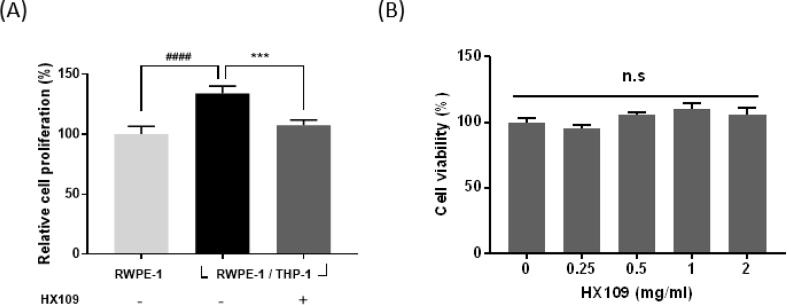
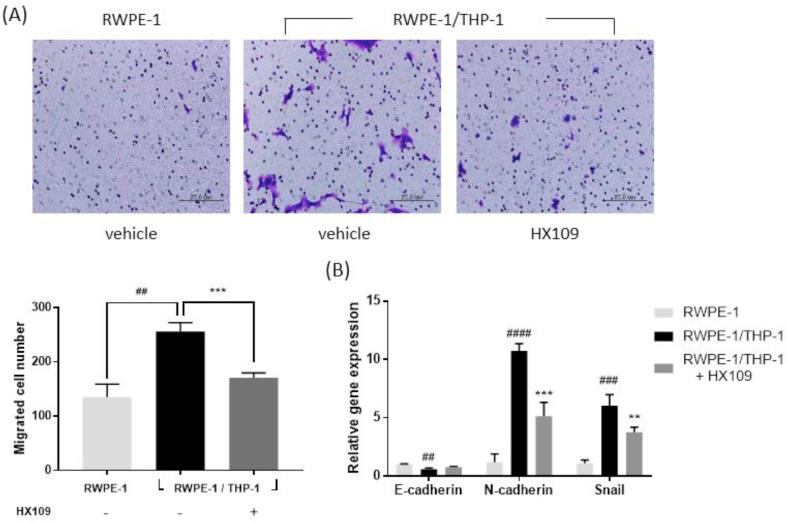
Benign prostatic hyperplasia (BPH) is one of the most frequently observed diseases in the elderly male population worldwide. A variety of factors such as aging, hormonal imbalance, chronic inflammation, and oxidative stress play an important role in its pathogenesis. We have previously shown that HX109, an ethanol extract prepared from 3 plants (, , and ), alleviates prostate hyperplasia in the BPH rat model and suppresses AR signaling by upregulating Ca/CAMKKβ and ATF3. In this study, we used macrophage cell lines to examine the effects of HX109 on inflammation, which is considered an important causative factor in BPH pathogenesis. In the co-culture system involving macrophage-prostate epithelial cells, HX109 inhibited macrophage-induced cell proliferation, migration and epithelial-mesenchymal transition (EMT) by inhibiting the expression of CCL4 and the phosphorylation of STAT3. Furthermore, HX109 inhibited the expression of inflammatory cytokines and the phosphorylation of p65 NF-κB in a concentration dependent manner. Taken together, our results suggested that HX109 could regulate macrophage activation and its crosstalk with prostate cells, thereby inhibiting BPH.
良性前列腺增生(BPH)是全球老年男性人群中最常见的疾病之一。衰老、激素失衡、慢性炎症和氧化应激等多种因素在其发病机制中起重要作用。我们之前已经表明,HX109是一种从3种植物(、和)中制备的乙醇提取物,可减轻BPH大鼠模型中的前列腺增生,并通过上调Ca/CAMKKβ和ATF3来抑制AR信号传导。在本研究中,我们使用巨噬细胞系来研究HX109对炎症的影响,炎症被认为是BPH发病机制中的一个重要致病因素。在涉及巨噬细胞 - 前列腺上皮细胞的共培养系统中,HX109通过抑制CCL4的表达和STAT3的磷酸化来抑制巨噬细胞诱导的细胞增殖、迁移和上皮 - 间质转化(EMT)。此外,HX109以浓度依赖性方式抑制炎性细胞因子的表达和p65 NF-κB的磷酸化。综上所述,我们的结果表明,HX109可以调节巨噬细胞的激活及其与前列腺细胞的相互作用,从而抑制BPH。



 Zotero 插件