
三嵌段聚(乙二醇)-聚(ε-己内酯)-聚乙烯亚胺共聚物的界面性质与胶束化作用
Interfacial properties and micellization of triblock poly(ethylene glycol)-poly(-caprolactone)-polyethyleneimine copolymers.
作者信息
Li Ji, Du Yitian, Su Haitao, Cheng Shixuan, Zhou Yanxia, Jin Yiguang, Qi Xian-Rong
机构信息
Key Laboratory of Molecular Pharmaceutics and New Drug Delivery System, School of Pharmaceutical Sciences, Peking University, Beijing 100191, China.
Department of Pharmaceutical Sciences, Beijing Institute of Radiation Medicine, Beijing 100850, China.
出版信息
Acta Pharm Sin B. 2020 Jun;10(6):1122-1133. doi: 10.1016/j.apsb.2020.01.006. Epub 2020 Jan 20.
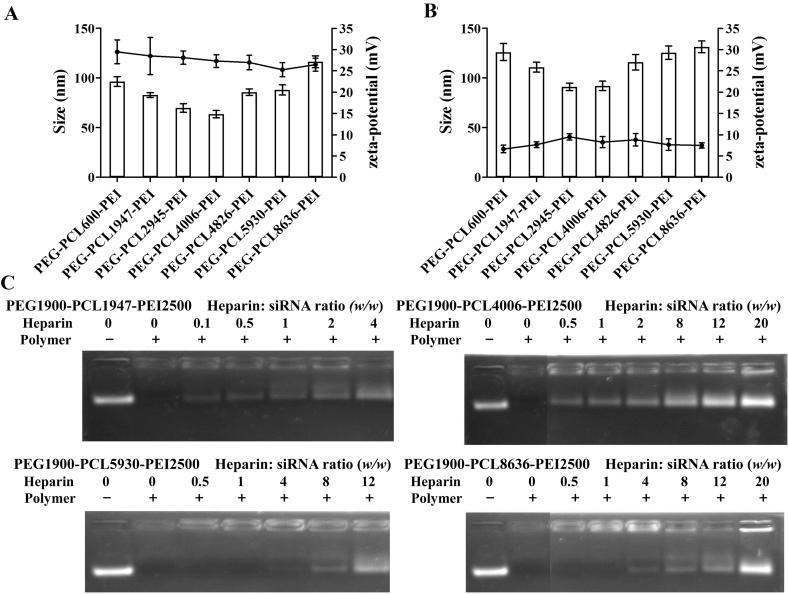
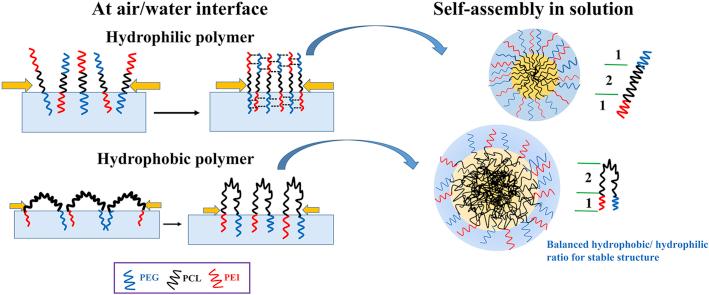
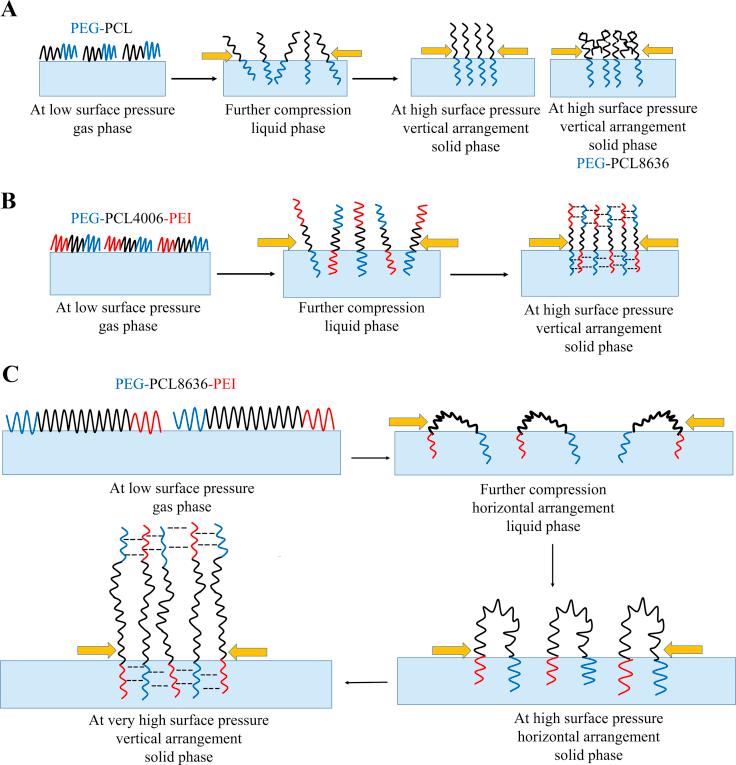
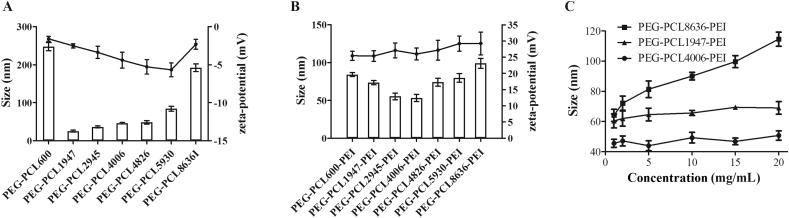
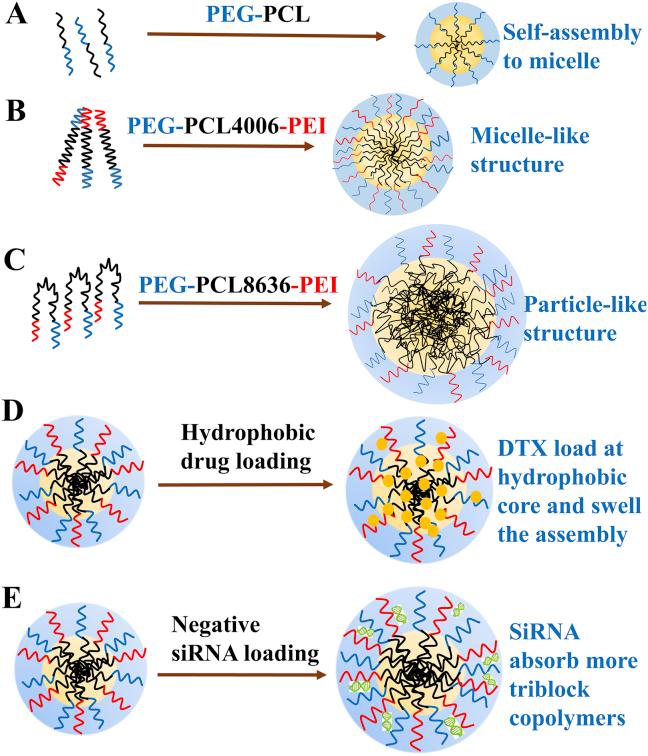
This study aimed to explore the link between block copolymers' interfacial properties and nanoscale carrier formation and found out the influence of length ratio on these characters to optimize drug delivery system. A library of diblock copolymers of PEG-PCL and triblock copolymers with additional PEI (PEG-PCL-PEI) were synthesized. Subsequently, a systematic isothermal investigation was performed to explore molecular arrangements of copolymers at air/water interface. Then, structural properties and drug encapsulation in self-assembly were investigated with DLS, SLS and TEM. We found the additional hydrogen bond in the PEG-PCL-PEI contributes to film stability upon the hydrophobic interaction compared with PEG-PCL. PEG-PCL-PEI assemble into smaller micelle-like (such as PEG-PCL4006-PEI) or particle-like structure (such as PEG-PCL8636-PEI) determined by their hydrophilic and hydrophobic block ratio. The distinct structural architectures of copolymer are consistent between interface and self-assembly. Despite the disparity of constituent ratio, we discovered the arrangement of both chains guarantees balanced hydrophilic-hydrophobic ratio in self-assembly to form stable construction. Meanwhile, the structural differences were found to have significant influence on model drugs incorporation including docetaxel and siRNA. Taken together, these findings indicate the correlation between molecular arrangement and self-assembly and inspire us to tune block compositions to achieve desired nanostructure and drug loading.
本研究旨在探索嵌段共聚物的界面性质与纳米级载体形成之间的联系,并找出长度比对这些特性的影响,以优化药物递送系统。合成了聚乙二醇-聚己内酯(PEG-PCL)二嵌段共聚物库以及带有额外聚乙烯亚胺(PEI)的三嵌段共聚物(PEG-PCL-PEI)。随后,进行了系统的等温研究,以探索共聚物在空气/水界面的分子排列。然后,利用动态光散射(DLS)、静态光散射(SLS)和透射电子显微镜(TEM)研究了自组装过程中的结构性质和药物包封情况。我们发现,与PEG-PCL相比,PEG-PCL-PEI中额外的氢键在疏水相互作用下有助于提高薄膜稳定性。PEG-PCL-PEI根据其亲水和疏水嵌段比组装成较小的胶束状结构(如PEG-PCL4006-PEI)或颗粒状结构(如PEG-PCL8636-PEI)。共聚物在界面和自组装过程中的独特结构架构是一致的。尽管组成比例存在差异,但我们发现两条链的排列保证了自组装过程中亲水-疏水比例的平衡,从而形成稳定的结构。同时,发现结构差异对包括多西他赛和小干扰RNA(siRNA)在内的模型药物掺入有显著影响。综上所述,这些发现表明了分子排列与自组装之间的相关性,并启发我们调整嵌段组成以实现所需的纳米结构和药物负载。

 Zotero 插件