
IL-10 在神经退行性疾病中的调节作用。
The Regulatory Role of IL-10 in Neurodegenerative Diseases.
机构信息
Department of Clinical and Experimental Medicine, University of Foggia, 71122 Foggia, Italy.
Department of Biosciences, Biotechnologies and Biopharmaceutics, University of Bari, 70125 Bari, Italy.
出版信息
Biomolecules. 2020 Jul 9;10(7):1017. doi: 10.3390/biom10071017.
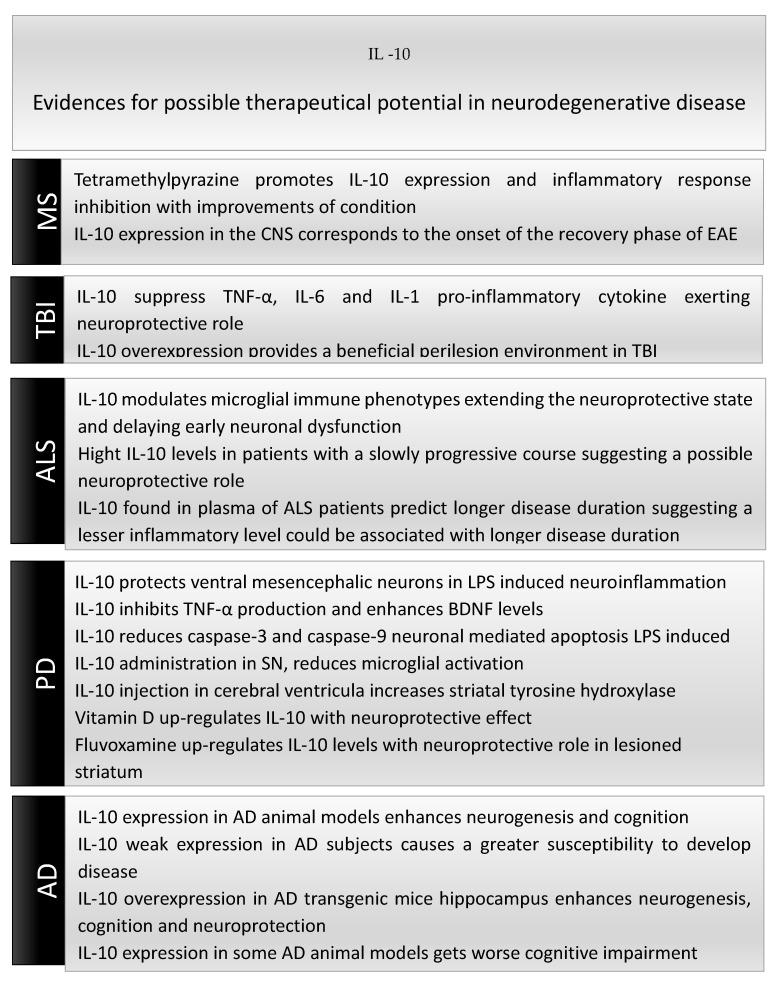
IL-10, an immunosuppressive cytokine, is considered an important anti-inflammatory modulator of glial activation, preventing inflammation-mediated neuronal degeneration under pathological conditions. In this narrative review, we summarize recent insights about the role of IL-10 in the neurodegeneration associated with neuroinflammation, in diseases such as Multiple Sclerosis, Traumatic Brain Injury, Amyotrophic lateral sclerosis, Alzheimer's Disease, and Parkinson's Disease, focusing on the contribution of this cytokine not only in terms of protective action, but also as possibly responsible for clinical worsening. The knowledge of this double face of the same coin, regarding the biological role of the IL-10, could aid the development of targeted therapies useful for limiting neurodegenerative processes.
IL-10,一种免疫抑制细胞因子,被认为是神经胶质细胞激活的重要抗炎调节剂,可防止病理条件下炎症介导的神经元变性。在这篇叙述性综述中,我们总结了最近关于 IL-10 在与神经炎症相关的神经退行性变中的作用的见解,这些疾病包括多发性硬化症、创伤性脑损伤、肌萎缩侧索硬化症、阿尔茨海默病和帕金森病等,重点关注这种细胞因子的作用不仅具有保护作用,而且可能是导致临床恶化的原因。了解这种 IL-10 生物学作用的两面性,可能有助于开发针对限制神经退行性过程的靶向治疗方法。
 Zotero 插件