
临床剂量曲马多和他喷他多的重复给药对Wistar大鼠产生肝毒性和肾毒性作用。
Repeated Administration of Clinical Doses of Tramadol and Tapentadol Causes Hepato- and Nephrotoxic Effects in Wistar Rats.
作者信息
Barbosa Joana, Faria Juliana, Garcez Fernanda, Leal Sandra, Afonso Luís Pedro, Nascimento Ana Vanessa, Moreira Roxana, Queirós Odília, Carvalho Félix, Dinis-Oliveira Ricardo Jorge
机构信息
IINFACTS-Institute of Research and Advanced Training in Health Sciences and Technologies, Department of Sciences, University Institute of Health Sciences (IUCS), CESPU, CRL, 4585-116 Gandra, Portugal.
UCIBIO, REQUIMTE-Laboratory of Toxicology, Department of Biological Sciences, Faculty of Pharmacy, University of Porto, 4050-313 Porto, Portugal.
出版信息
Pharmaceuticals (Basel). 2020 Jul 10;13(7):149. doi: 10.3390/ph13070149.
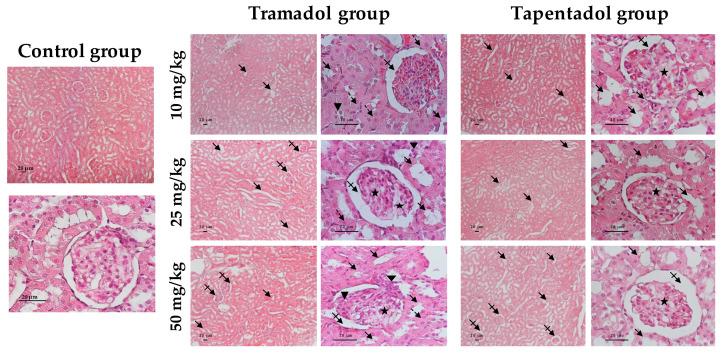
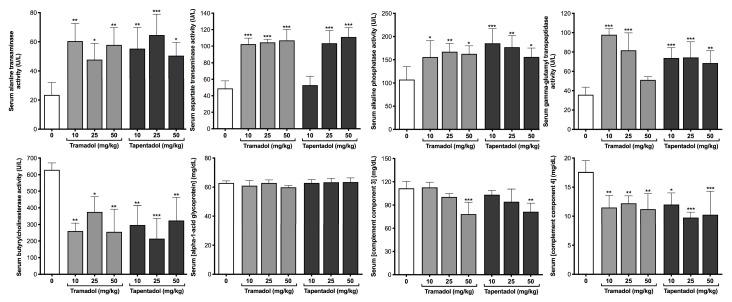
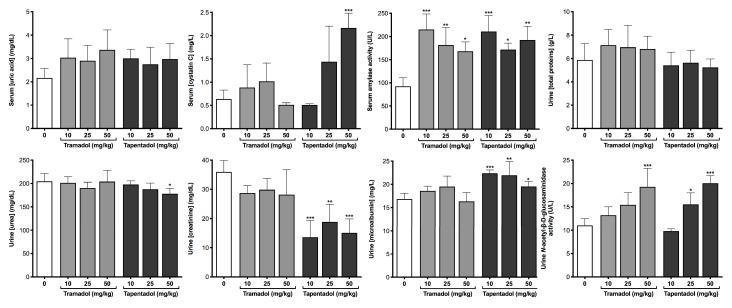
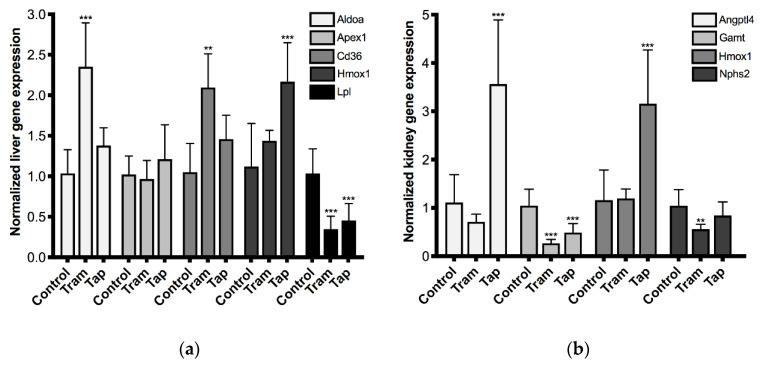
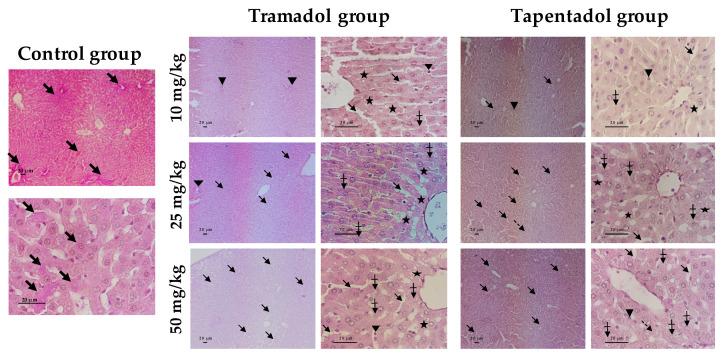
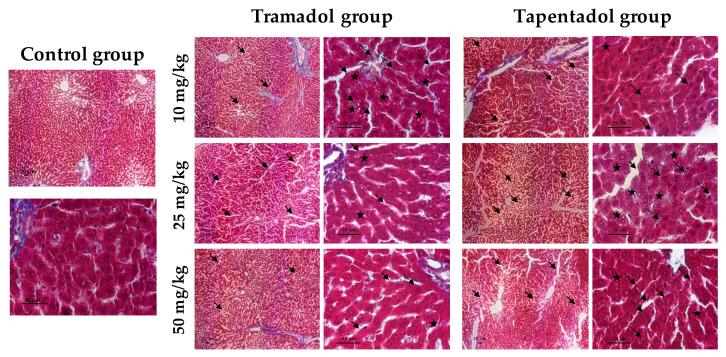
Tramadol and tapentadol are fully synthetic and extensively used analgesic opioids, presenting enhanced therapeutic and safety profiles as compared with their peers. However, reports of adverse reactions, intoxications and fatalities have been increasing. Information regarding the molecular, biochemical, and histological alterations underlying their toxicological potential is missing, particularly for tapentadol, owing to its more recent market authorization. Considering the paramount importance of liver and kidney for the metabolism and excretion of both opioids, these organs are especially susceptible to toxicological damage. In the present study, we aimed to characterize the putative hepatic and renal deleterious effects of repeated exposure to therapeutic doses of tramadol and tapentadol, using an in vivo animal model. Male Wistar rats were randomly divided into six experimental groups, composed of six animals each, which received daily single intraperitoneal injections of 10, 25 or 50 mg/kg tramadol or tapentadol (a low, standard analgesic dose, an intermediate dose and the maximum recommended daily dose, respectively). An additional control group was injected with normal saline. Following 14 consecutive days of administration, serum, urine and liver and kidney tissue samples were processed for biochemical, metabolic and histological analysis. Repeated administration of therapeutic doses of both opioids led to: (i) increased lipid and protein oxidation in liver and kidney, as well as to decreased total liver antioxidant capacity; (ii) decreased serum albumin, urea, butyrylcholinesterase and complement C3 and C4 levels, denoting liver synthesis impairment; (iii) elevated serum activity of liver enzymes, such as alanine aminotransferase, aspartate aminotransferase, alkaline phosphatase and γ-glutamyl transpeptidase, as well as lipid profile alterations, also reflecting hepatobiliary commitment; (iv) derangement of iron metabolism, as shown through increases in serum iron, ferritin, haptoglobin and heme oxygenase-1 levels. In turn, elevated serum cystatin C, decreased urine creatinine output and increased urine microalbumin levels were detected upon exposure to tapentadol only, while increased serum amylase and urine -acetyl-β-D-glucosaminidase activities were observed for both opioids. Collectively, these results are compatible with kidney injury. Changes were also found in the expression levels of liver- and kidney-specific toxicity biomarker genes, upon exposure to tramadol and tapentadol, correlating well with alterations in lipid profile, iron metabolism and glomerular and tubular function. Histopathological analysis evidenced sinusoidal dilatation, microsteatosis, mononuclear cell infiltrates, glomerular and tubular disorganization, and increased Bowman's spaces. Although some findings are more pronounced upon tapentadol exposure, our study shows that, when compared with acute exposure, prolonged administration of both opioids smooths the differences between their toxicological effects, and that these occur at lower doses within the therapeutic range.
曲马多和他喷他多是完全合成且广泛使用的镇痛阿片类药物,与同类药物相比,具有更好的治疗效果和安全性。然而,关于它们不良反应、中毒和死亡的报告一直在增加。由于他喷他多上市时间较晚,目前尚缺乏关于其潜在毒理学分子、生化和组织学改变的信息,尤其是关于曲马多的。考虑到肝脏和肾脏对这两种阿片类药物代谢和排泄的至关重要性,这些器官特别容易受到毒理学损伤。在本研究中,我们旨在使用体内动物模型,描述重复暴露于治疗剂量的曲马多和他喷他多对肝脏和肾脏的假定有害影响。雄性Wistar大鼠被随机分为六个实验组,每组六只动物,分别每日腹腔注射10、25或50mg/kg曲马多或他喷他多(分别为低剂量、标准镇痛剂量、中等剂量和最大推荐日剂量)。另设一个对照组,注射生理盐水。连续给药14天后,对血清、尿液以及肝脏和肾脏组织样本进行生化、代谢和组织学分析。重复给予两种阿片类药物的治疗剂量导致:(i)肝脏和肾脏中脂质和蛋白质氧化增加,同时肝脏总抗氧化能力降低;(ii)血清白蛋白、尿素、丁酰胆碱酯酶以及补体C3和C4水平降低,表明肝脏合成功能受损;(iii)肝脏酶如丙氨酸氨基转移酶、天冬氨酸氨基转移酶、碱性磷酸酶和γ-谷氨酰转肽酶的血清活性升高,以及血脂谱改变,也反映了肝胆受累情况;(iv)铁代谢紊乱,表现为血清铁、铁蛋白、触珠蛋白和血红素加氧酶-1水平升高。仅在暴露于他喷他多时,检测到血清胱抑素C升高、尿肌酐排出量减少和尿微量白蛋白水平增加,而两种阿片类药物均观察到血清淀粉酶和尿N-乙酰-β-D-氨基葡萄糖苷酶活性增加。总体而言,这些结果与肾损伤相符。在暴露于曲马多和他喷他多后,还发现肝脏和肾脏特异性毒性生物标志物基因的表达水平发生了变化,这与血脂谱、铁代谢以及肾小球和肾小管功能的改变密切相关。组织病理学分析显示肝血窦扩张、微脂肪变性、单核细胞浸润、肾小球和肾小管结构紊乱以及鲍曼间隙增大。尽管某些发现在暴露于他喷他多时更为明显,但我们的研究表明,与急性暴露相比,两种阿片类药物的长期给药使它们的毒理学效应差异更加平缓,并且这些效应在治疗范围内的较低剂量时就会出现。




 Zotero 插件