
在骨骼肌再生早期阶段粘附和细胞外基质分子的基因表达谱。
Gene expression profile of adhesion and extracellular matrix molecules during early stages of skeletal muscle regeneration.
机构信息
Cell Biology, Neurosciences and Experimental Myology Laboratory, 'Victor Babeș' National Institute of Pathology, Bucharest, Romania.
Department of Cellular and Molecular Biology and Histology, Faculty of Medicine, 'Carol Davila' University of Medicine and Pharmacy, Bucharest, Romania.
出版信息
J Cell Mol Med. 2020 Sep;24(17):10140-10150. doi: 10.1111/jcmm.15624. Epub 2020 Jul 18.
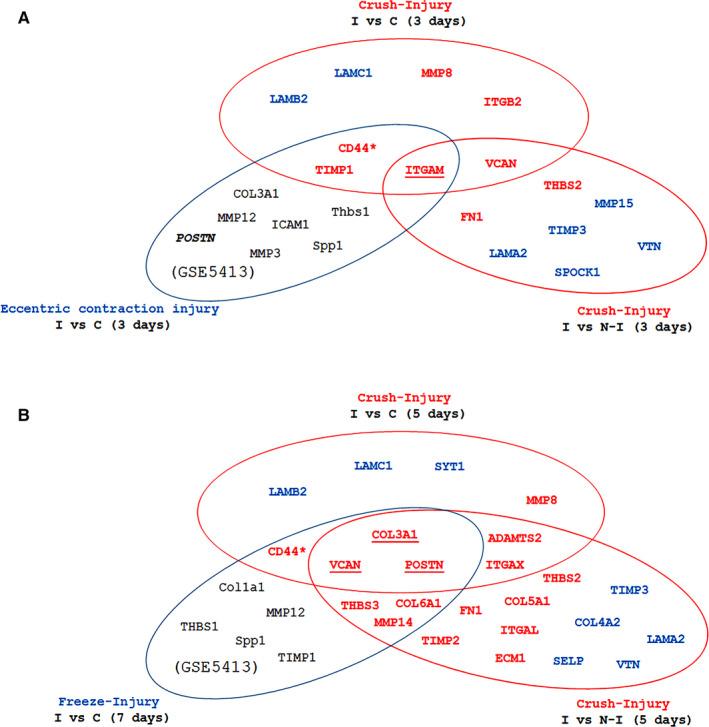
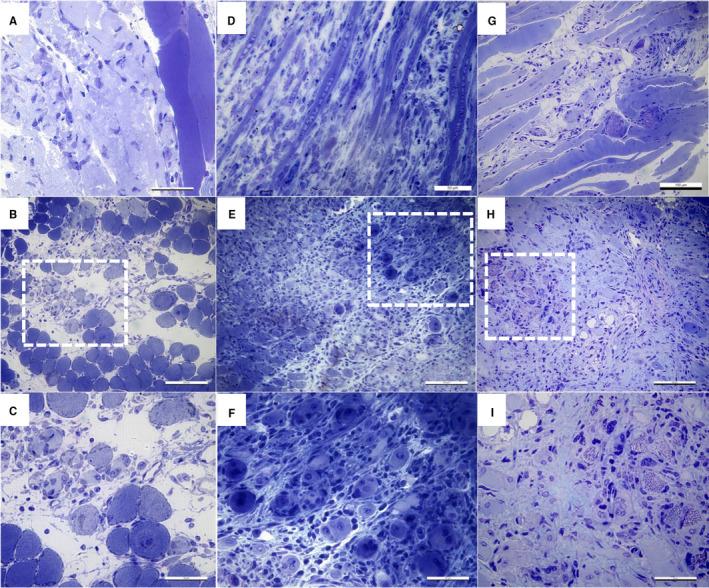
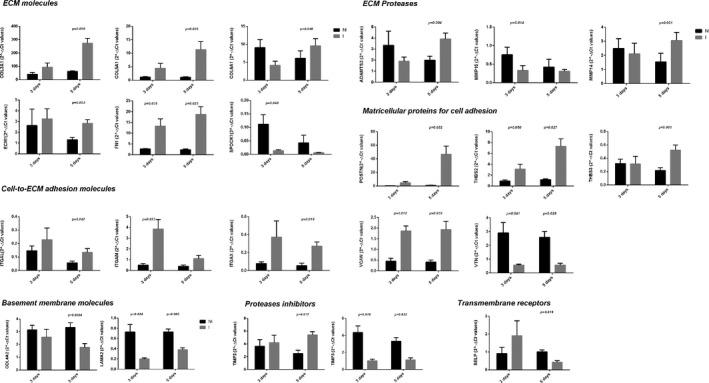
Skeletal muscle regeneration implies the coordination of myogenesis with the recruitment of myeloid cells and extracellular matrix (ECM) remodelling. Currently, there are no specific biomarkers to diagnose the severity and prognosis of muscle lesions. In order to investigate the gene expression profile of extracellular matrix and adhesion molecules, as premises of homo- or heterocellular cooperation and milestones for skeletal muscle regeneration, we performed a gene expression analysis for genes involved in cellular cooperation, migration and ECM remodelling in a mouse model of acute crush injury. The results obtained at two early time-points post-injury were compared to a GSE5413 data set from two other trauma models. Third day post-injury, when inflammatory cells invaded, genes associated with cell-matrix interactions and migration were up-regulated. After day 5, as myoblast migration and differentiation started, genes for basement membrane constituents were found down-regulated, whereas genes for ECM molecules, macrophage, myoblast adhesion, and migration receptors were up-regulated. However, the profile and the induction time varied according to the experimental model, with only few genes being constantly up-regulated. Gene up-regulation was higher, delayed and more diverse following more severe trauma. Moreover, one of the most up-regulated genes was periostin, suggestive for severe muscle damage and unfavourable architecture restoration.
骨骼肌再生意味着肌发生与髓细胞募集和细胞外基质(ECM)重塑的协调。目前,尚无特定的生物标志物可用于诊断肌肉损伤的严重程度和预后。为了研究细胞外基质和黏附分子的基因表达谱,作为同种或异细胞合作的前提和骨骼肌再生的里程碑,我们在急性挤压伤的小鼠模型中进行了与细胞合作、迁移和 ECM 重塑相关的基因表达分析。将损伤后两个早期时间点获得的结果与来自另外两种创伤模型的 GSE5413 数据集进行了比较。损伤后第 3 天,炎症细胞入侵时,与细胞-基质相互作用和迁移相关的基因上调。第 5 天之后,随着成肌细胞的迁移和分化开始,基膜成分的基因下调,而 ECM 分子、巨噬细胞、成肌细胞黏附及迁移受体的基因上调。然而,根据实验模型的不同,其谱和诱导时间也有所不同,只有少数基因持续上调。严重程度较高的创伤会导致基因上调更高、延迟和更多样化。此外,上调最明显的基因之一是骨膜蛋白,提示严重的肌肉损伤和不利的结构修复。
 Zotero 插件