
即时检测 COVID-19:从当前工作到未来展望。
Point-of-Care Diagnostics of COVID-19: From Current Work to Future Perspectives.
机构信息
Virology Department, Animal Health Research Institute (AHRI), Agricultural Research Center (ARC), Dokki, Giza 12619, Egypt.
Nanoscience Program, University of Science and Technology (UST), Zewail City of Science and Technology, 6th October City, Giza 12578, Egypt.
出版信息
Sensors (Basel). 2020 Jul 31;20(15):4289. doi: 10.3390/s20154289.
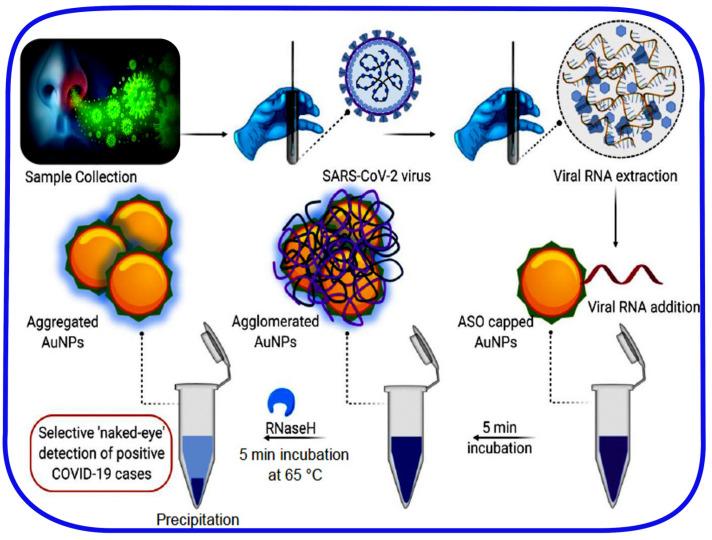
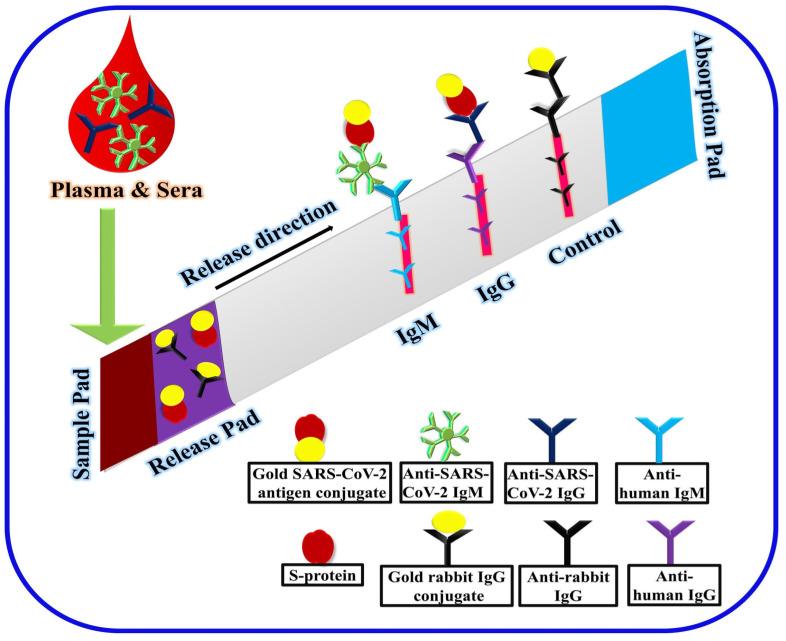
Coronaviruses have received global concern since 2003, when an outbreak caused by SARS-CoV emerged in China. Later on, in 2012, the Middle-East respiratory syndrome spread in Saudi Arabia, caused by MERS-CoV. Currently, the global crisis is caused by the pandemic SARS-CoV-2, which belongs to the same lineage of SARS-CoV. In response to the urgent need of diagnostic tools, several lab-based and biosensing techniques have been proposed so far. Five main areas have been individuated and discussed in terms of their strengths and weaknesses. The cell-culture detection and the microneutralization tests are still considered highly reliable methods. The genetic screening, featuring the well-established Real-time polymerase chain reaction (RT-PCR), represents the gold standard for virus detection in nasopharyngeal swabs. On the other side, immunoassays were developed, either by screening/antigen recognition of IgM/IgG or by detecting the whole virus, in blood and sera. Next, proteomic mass-spectrometry (MS)-based methodologies have also been proposed for the analysis of swab samples. Finally, virus-biosensing devices were efficiently designed. Both electrochemical immunosensors and eye-based technologies have been described, showing detection times lower than 10 min after swab introduction. Alternative to swab-based techniques, lateral flow point-of-care immunoassays are already commercially available for the analysis of blood samples. Such biosensing devices hold the advantage of being portable for on-site testing in hospitals, airports, and hotspots, virtually without any sample treatment or complicated lab precautions.
自 2003 年 SARS-CoV 在中国爆发以来,冠状病毒受到了全球关注。后来,2012 年,MERS-CoV 在沙特阿拉伯引发了中东呼吸综合征。目前,由 SARS-CoV-2 引起的全球大流行引发了这场危机,该病毒属于 SARS-CoV 同一谱系。为应对诊断工具的迫切需求,迄今为止已经提出了几种基于实验室和生物传感的技术。本文从优势和劣势两个方面对五个主要领域进行了讨论和分析。细胞培养检测和微量中和试验仍然被认为是高度可靠的方法。遗传筛选,以成熟的实时聚合酶链反应(RT-PCR)为特征,是鼻咽拭子中病毒检测的金标准。另一方面,免疫测定法也得到了发展,无论是通过 IgM/IgG 的筛选/抗原识别,还是通过检测全病毒,都可以在血液和血清中进行。接下来,基于蛋白质组学的质谱(MS)方法也被提出用于拭子样本的分析。最后,还设计了病毒生物传感设备。电化学免疫传感器和基于眼睛的技术都得到了描述,在引入拭子后,检测时间低于 10 分钟。替代基于拭子的技术,侧向流动即时检测免疫分析已经可用于分析血液样本。这些生物传感设备的优点是便携,可在医院、机场和热点地区进行现场检测,几乎无需任何样本处理或复杂的实验室预防措施。

 Zotero 插件