
18F-FDG PET/MRI同步成像在评估化脓性脊柱感染残留病灶中的应用:一例报告
Application of Simultaneous 18F-FDG PET/MRI for Evaluating Residual Lesion in Pyogenic Spine Infection: a Case Report.
作者信息
Jeon Ikchan, Kong Eunjung
机构信息
Department of Neurosurgery, Yeungnam University Hospital, College of Medicine, Yeungnam University, Daegu, Korea.
Department of Nuclear Medicine, Yeungnam University Hospital, College of Medicine, Yeungnam University, Daegu, Korea.
出版信息
Infect Chemother. 2020 Dec;52(4):626-633. doi: 10.3947/ic.2020.52.4.626. Epub 2020 Jul 24.
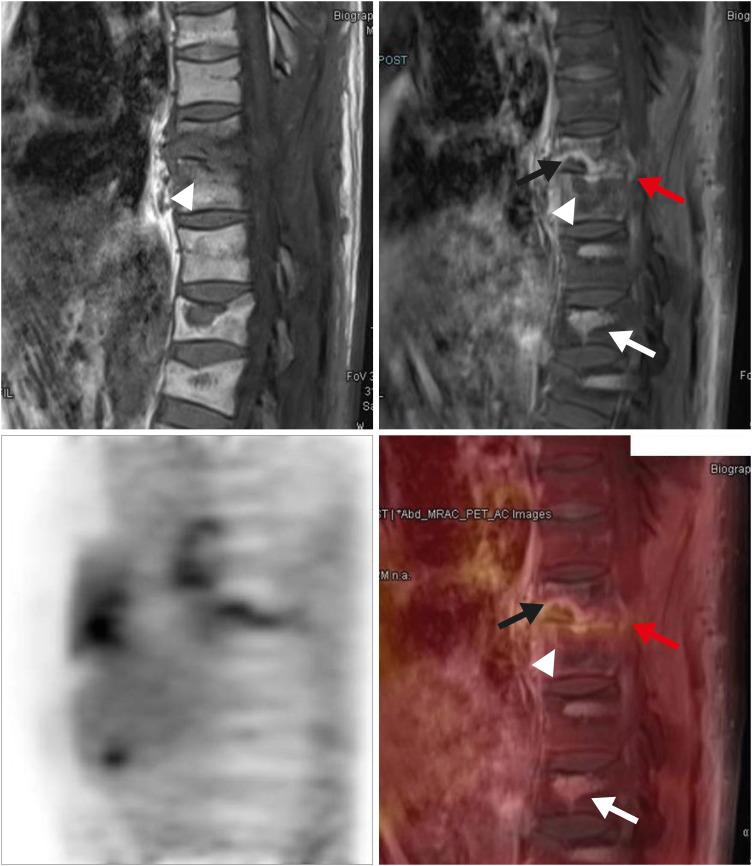
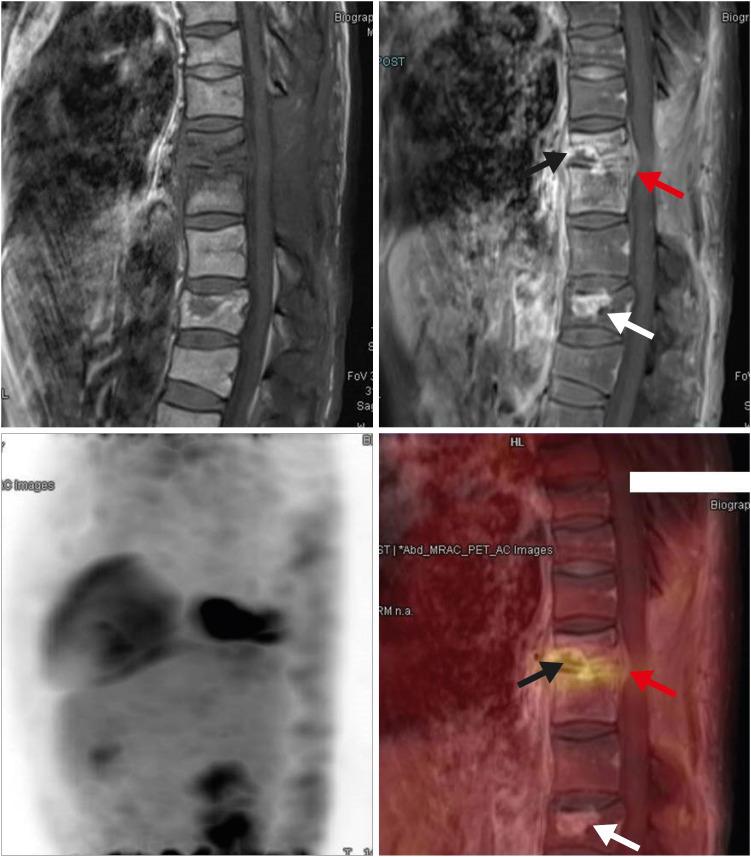
Magnetic resonance imaging (MRI) is the preferred imaging method for evaluating treatment response in spine infection. However, there are still no definite correlation between follow-up MRI findings and clinical status. Recently, Fluorine-18 fluorodeoxyglucose positron emission tomography (18F-FDG PET) shows great potential as diagnostic and monitoring options. Simultaneous 18F-FDG PET/MRI makes us to expect a huge synergic effect on diagnosis and evaluation of treatment response with metabolic and anatomical advantages in spine infection. We introduce an application of 18F-FDG PET/MRI for evaluating residual lesion in the patient with pyogenic spine infection.
磁共振成像(MRI)是评估脊柱感染治疗反应的首选成像方法。然而,随访MRI表现与临床状况之间仍无明确的相关性。最近,氟-18氟脱氧葡萄糖正电子发射断层扫描(18F-FDG PET)作为诊断和监测手段显示出巨大潜力。同时进行的18F-FDG PET/MRI使我们期望在脊柱感染的诊断和治疗反应评估方面产生巨大的协同效应,兼具代谢和解剖学优势。我们介绍了18F-FDG PET/MRI在评估化脓性脊柱感染患者残余病变中的应用。


 Zotero 插件