
优化的丙型肝炎病毒(HCV)E2糖蛋白及其与MVA-HCV联合使用时的免疫原性
Optimized Hepatitis C Virus (HCV) E2 Glycoproteins and their Immunogenicity in Combination with MVA-HCV.
作者信息
Marín María Q, Sliepen Kwinten, García-Arriaza Juan, Koekkoek Sylvie M, Pérez Patricia, Sorzano Carlos Óscar S, Gómez Carmen E, Sanders Rogier W, Esteban Mariano
机构信息
Department of Molecular and Cellular Biology, Centro Nacional de Biotecnología (CNB), Consejo Superior de Investigaciones Científicas (CSIC), 28049 Madrid, Spain.
Department of Medical Microbiology, Amsterdam Infection & Immunity Institute, Amsterdam UMC, University of Amsterdam, 1105AZ Amsterdam, The Netherlands.
出版信息
Vaccines (Basel). 2020 Aug 5;8(3):440. doi: 10.3390/vaccines8030440.
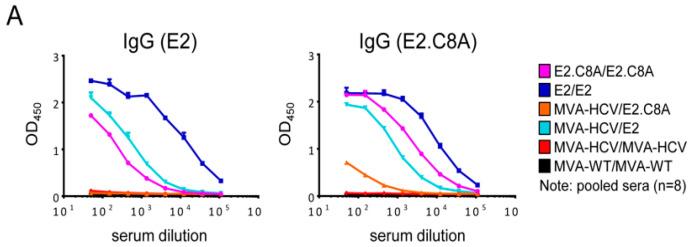
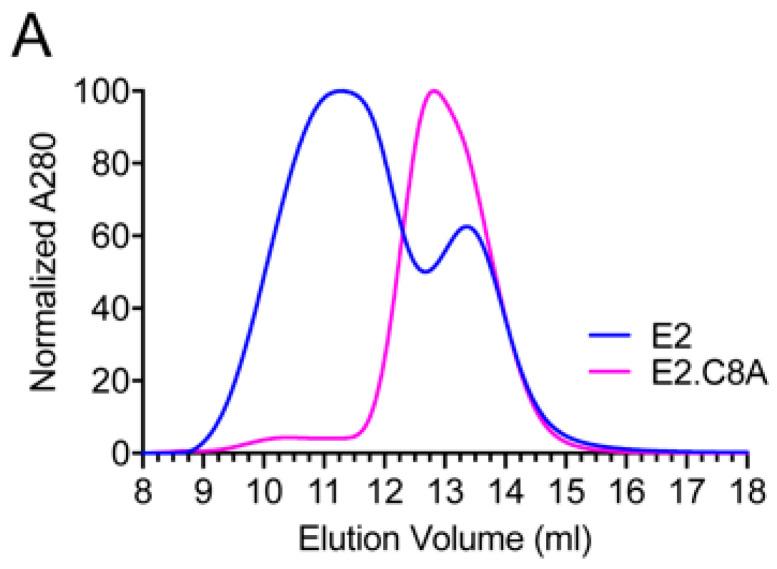
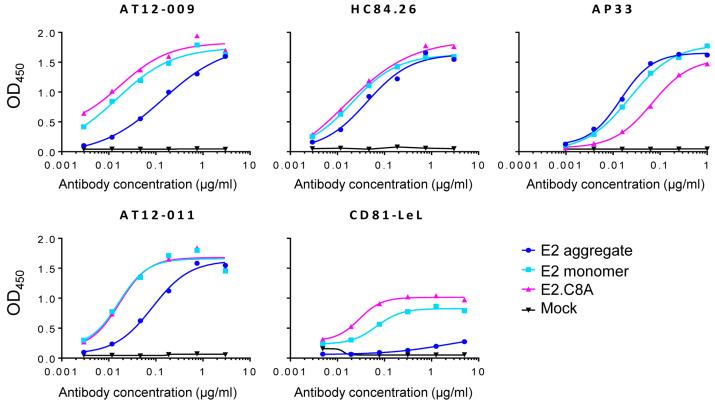
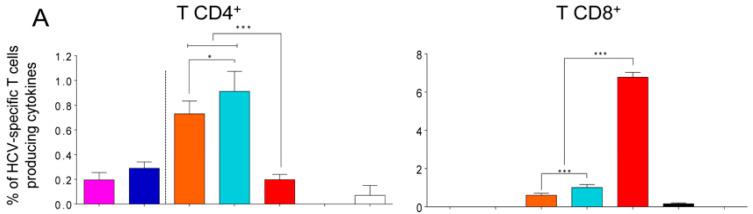
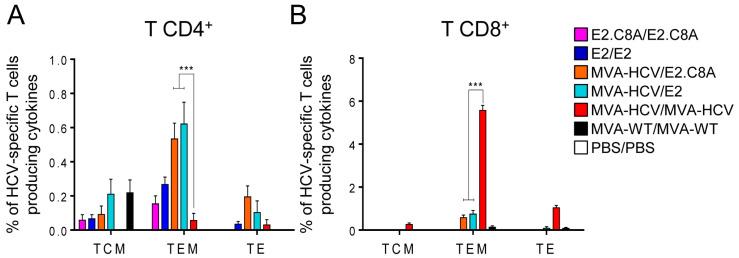
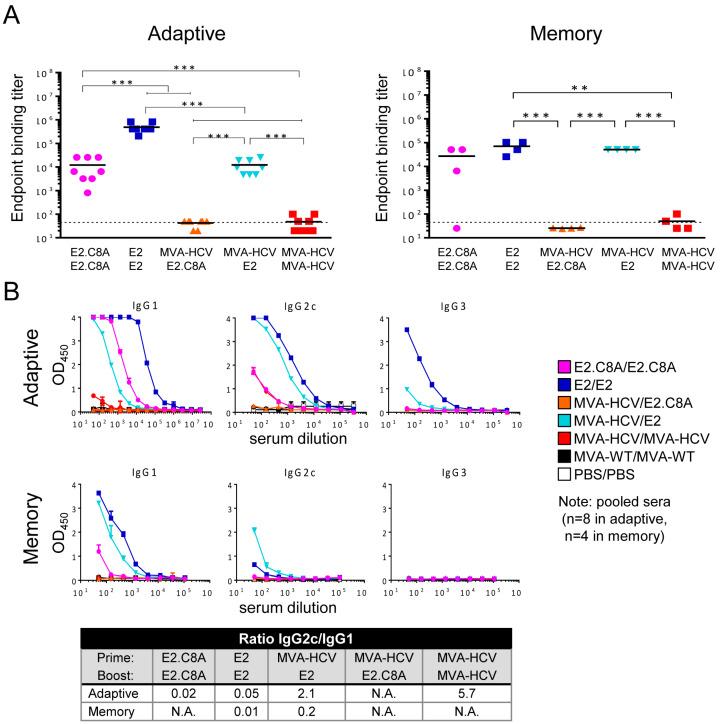
Hepatitis C virus (HCV) represents a major global health challenge and an efficient vaccine is urgently needed. Many HCV vaccination strategies employ recombinant versions of the viral E2 glycoprotein. However, recombinant E2 readily forms disulfide-bonded aggregates that might not be optimally suited for vaccines. Therefore, we have designed an E2 protein in which we strategically changed eight cysteines to alanines (E2.C8A). E2.C8A formed predominantly monomers and virtually no aggregates. Furthermore, E2.C8A also interacted more efficiently with broadly neutralizing antibodies than conventional E2. We used mice to evaluate different prime/boost immunization strategies involving a modified vaccinia virus Ankara (MVA) expressing the nearly full-length genome of HCV (MVA-HCV) in combination with either the E2 aggregates or the E2.C8A monomers. The combined MVA-HCV/E2 aggregates prime/boost strategy markedly enhanced HCV-specific effector memory CD4 T cell responses and antibody levels compared to MVA-HCV/MVA-HCV. Moreover, the aggregated form of E2 induced higher levels of anti-E2 antibodies in vaccinated mice than E2.C8A monomers. These antibodies were cross-reactive and mainly of the IgG1 isotype. Our findings revealed how two E2 viral proteins that differ in their capacity to form aggregates are able to enhance to different extent the HCV-specific cellular and humoral immune responses, either alone or in combination with MVA-HCV. These combined protocols of MVA-HCV/E2 could serve as a basis for the development of a more effective HCV vaccine.
丙型肝炎病毒(HCV)是一项重大的全球健康挑战,迫切需要一种有效的疫苗。许多HCV疫苗接种策略采用病毒E2糖蛋白的重组形式。然而,重组E2很容易形成二硫键连接的聚集体,可能不太适合用作疫苗。因此,我们设计了一种E2蛋白,其中我们有策略地将8个半胱氨酸替换为丙氨酸(E2.C8A)。E2.C8A主要形成单体,几乎没有聚集体。此外,与传统E2相比,E2.C8A与广泛中和抗体的相互作用也更有效。我们使用小鼠评估了不同的初免/加强免疫策略,这些策略涉及表达HCV几乎全长基因组的改良安卡拉痘苗病毒(MVA)(MVA-HCV),并与E2聚集体或E2.C8A单体联合使用。与MVA-HCV/MVA-HCV相比,联合的MVA-HCV/E2聚集体初免/加强策略显著增强了HCV特异性效应记忆CD4 T细胞反应和抗体水平。此外,E2的聚集形式在接种疫苗的小鼠中诱导产生的抗E2抗体水平高于E2.C8A单体。这些抗体具有交叉反应性,主要为IgG1同种型。我们的研究结果揭示了两种在形成聚集体能力上不同的E2病毒蛋白如何单独或与MVA-HCV联合,在不同程度上增强HCV特异性细胞免疫和体液免疫反应。这些MVA-HCV/E2联合方案可作为开发更有效HCV疫苗的基础。


 Zotero 插件