
基于现场的空气污染对传粉媒介亚致死效应的定量分析。
A field-based quantitative analysis of sublethal effects of air pollution on pollinators.
机构信息
National Centre for Biological Sciences, Tata Institute of Fundamental Research, Bangalore, India 560065;
Massachusetts Institute of Technology, Cambridge, MA 02139.
出版信息
Proc Natl Acad Sci U S A. 2020 Aug 25;117(34):20653-20661. doi: 10.1073/pnas.2009074117. Epub 2020 Aug 10.
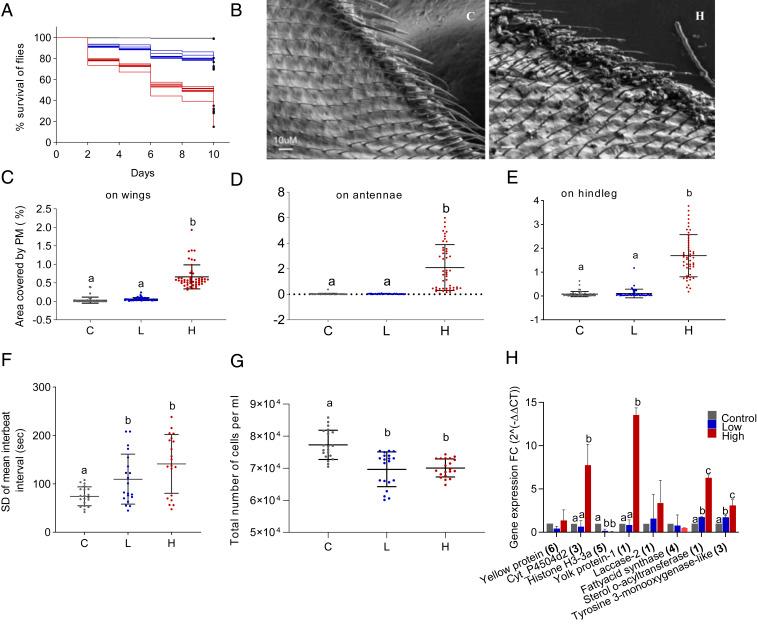
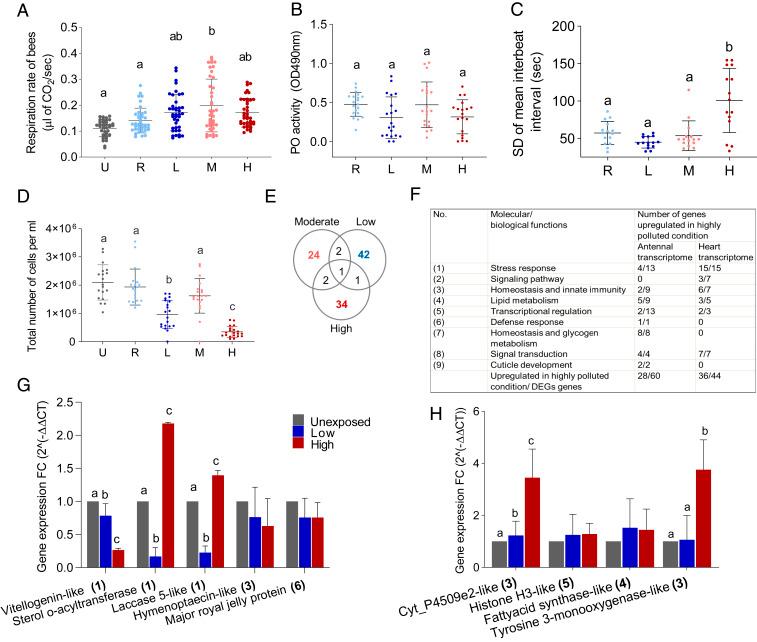
While the impact of air pollution on human health is well studied, mechanistic impacts of air pollution on wild systems, including those providing essential ecosystem services, are largely unknown, but directly impact our health and well-being. India is the world's largest fruit producer, second most populous country, and contains 9 of the world's 10 most polluted cities. Here, we sampled Giant Asian honey bees, , at locations with varying air pollution levels in Bangalore, India. We observed significant correlations between increased respirable suspended particulate matter (RSPM) deposition and changes in bee survival, flower visitation, heart rate, hemocyte levels, and expression of genes related to lipid metabolism, stress, and immunity. Lab-reared exposed to these same sites also exhibited similar molecular and physiological differences. Our study offers a quantitative analysis on the current impacts of air pollution on insects, and indicates the urgency for more nonhuman studies to accurately assess the effects of pollution on our natural world.
虽然空气污染对人类健康的影响已经得到了充分的研究,但空气污染对包括提供重要生态系统服务在内的野生系统的机制影响在很大程度上仍是未知的,但它们直接影响着我们的健康和幸福。印度是世界上最大的水果生产国,人口第二多的国家,拥有世界上污染最严重的 10 个城市中的 9 个。在这里,我们在印度班加罗尔的空气污染水平不同的地点,对巨型亚洲蜜蜂进行了采样。我们观察到,可吸入悬浮颗粒物(RSPM)沉积量的增加与蜜蜂存活率、采花率、心率、血球计数、与脂质代谢、应激和免疫相关的基因表达的变化之间存在显著相关性。在这些相同地点暴露的实验室饲养的蜜蜂也表现出类似的分子和生理差异。我们的研究对当前空气污染对昆虫的影响进行了定量分析,并表明需要进行更多的非人类研究来准确评估污染对我们自然世界的影响。


 Zotero 插件