
利用纳米技术方法对巨噬细胞进行治疗性调控以治疗骨关节炎
Therapeutic Manipulation of Macrophages Using Nanotechnological Approaches for the Treatment of Osteoarthritis.
作者信息
Ummarino Aldo, Gambaro Francesco Manlio, Kon Elizaveta, Torres Andón Fernando
机构信息
Department of Biomedical Sciences, Humanitas University, Via Rita Levi Montalcini 4, 20090 Pieve Emanuele, Milan, Italy.
IRCCS Istituto Clinico Humanitas, Via A. Manzoni 56, 20089 Rozzano, Milan, Italy.
出版信息
Nanomaterials (Basel). 2020 Aug 9;10(8):1562. doi: 10.3390/nano10081562.
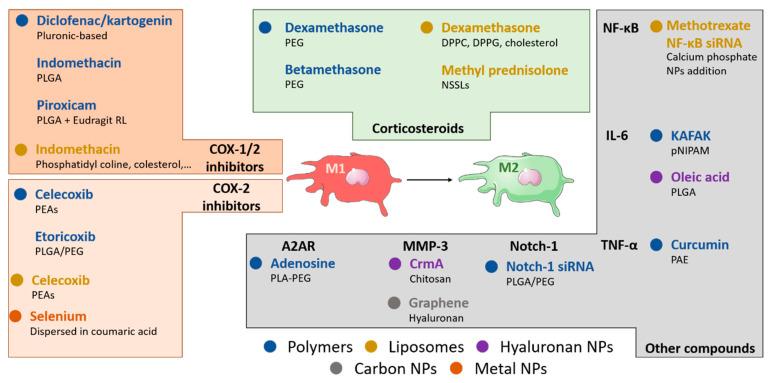
Osteoarthritis (OA) is the most common joint pathology causing severe pain and disability. Macrophages play a central role in the pathogenesis of OA. In the joint microenvironment, macrophages with an M1-like pro-inflammatory phenotype induce chronic inflammation and joint destruction, and they have been correlated with the development and progression of the disease, while the M2-like anti-inflammatory macrophages support the recovery of the disease, promoting tissue repair and the resolution of inflammation. Nowadays, the treatment of OA in the clinic relies on systemic and/or intra-articular administration of anti-inflammatory and pain relief drugs, as well as surgical interventions for the severe cases (i.e., meniscectomy). The disadvantages of the pharmacological therapy are related to the chronic nature of the disease, requiring prolonged treatments, and to the particular location of the pathology in joint tissues, which are separated anatomical compartments with difficult access for the drugs. To overcome these challenges, nanotechnological approaches have been investigated to improve the delivery of drugs toward macrophages into the diseased joint. This strategy may offer advantages by reducing off-target toxicities and improving long-term therapeutic efficacy. In this review, we describe the nanomaterial-based approaches designed so far to directly or indirectly manipulate macrophages for the treatment of osteoarthritis.
骨关节炎(OA)是导致严重疼痛和残疾的最常见关节疾病。巨噬细胞在OA的发病机制中起核心作用。在关节微环境中,具有M1样促炎表型的巨噬细胞会引发慢性炎症和关节破坏,它们与疾病的发生和发展相关,而M2样抗炎巨噬细胞则有助于疾病的恢复,促进组织修复和炎症消退。目前,临床上OA的治疗依赖于全身性和/或关节内给予抗炎和止痛药物,以及对严重病例(如半月板切除术)进行手术干预。药物治疗的缺点与疾病的慢性性质有关,需要长期治疗,也与病变在关节组织中的特殊位置有关,关节组织是解剖上分隔的区域,药物难以进入。为了克服这些挑战,人们研究了纳米技术方法,以改善药物向患病关节中的巨噬细胞的递送。这种策略可能通过降低脱靶毒性和提高长期治疗效果而具有优势。在这篇综述中,我们描述了迄今为止设计的基于纳米材料的方法,这些方法直接或间接操纵巨噬细胞来治疗骨关节炎。

 Zotero 插件